Why we are seeing a dramatic decrease in violent crime in ‘blue cities’
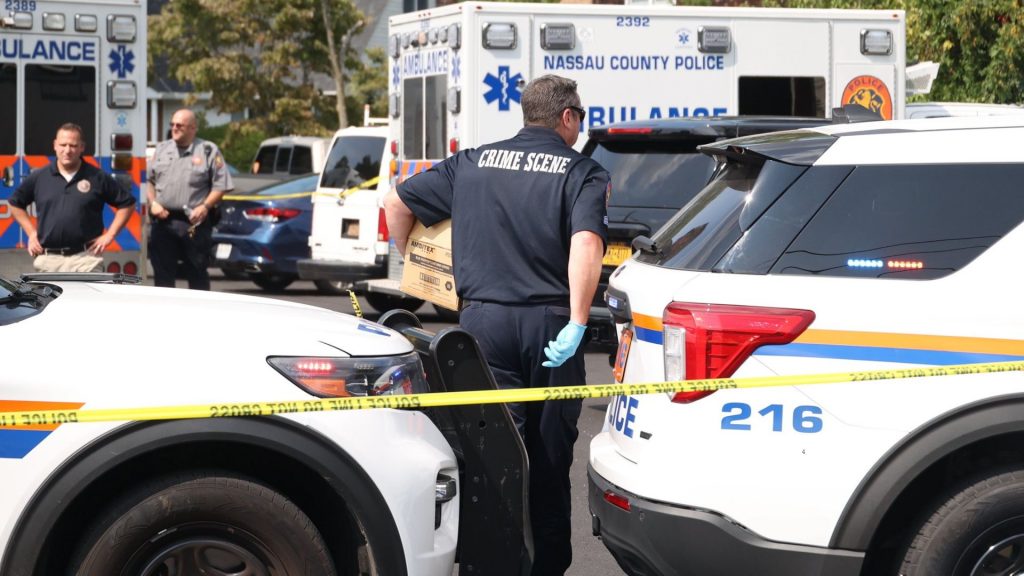
President Donald Trump has repeatedly claimed that plummeting violent crime rates are because of his tough-on-crime policies. The president is half right: violent crime is falling, but the decline began before Trump returned to office.
But the decrease is not universal. Recent studies from groups like the Council on Criminal Justice show that the drop happened mostly in major cities.
Trump says the drop is because of his hardline stance on illegal immigration, but police departments from several major cities tell Straight Arrow News it’s from their work in the community.
The decrease comes after a large increase in violent crime following the onset of the COVID-19 pandemic in 2020. Data from the FBI and the Council on Criminal Justice show that violent crime increased slightly in 2019 before it spiked in 2020 and 2021. The impacts of the pandemic played a major role in the increase in violence during that time, according to Brookings, a nonpartisan think tank.
Why did crime rise so much during the pandemic?
Brookings stated that some researchers speculated that the murder of George Floyd and the ensuing protests led to an increase in violence. However, the think tank reports that homicides were already on track to hit record levels before Floyd’s death in May.

Instead, Brookings found that violent crime exploded in poorer areas and neighborhoods where there were more boys and young men who didn’t go to school or work. Since the pandemic caused every public school to shut down and millions to lose their jobs, researchers said more boys and young men were out of school or out of work.
They said school closures and layoffs also explain why the violent crime stayed high in 2021 and 2022. During the 2021-2022 school year, more than half of the public schools serving low-income communities reported “extreme levels of chronic absenteeism,” Brookings said.
Why did crime go down?
Denver, which saw a nearly 50% decrease in homicides last year, says the decrease came from efforts by the police department and other agencies.
One of the programs the department highlighted was the Downtown Action Plan. The program created extra foot patrols, mounted police units and a satellite police kiosk in downtown Denver.
Baltimore, a city that Trump threatened to send National Guard troops to if they didn’t “clean up” crime, saw a more than 31% drop in homicides. Baltimore Police officials said that logistical changes, like better information sharing between investigative units and expanded use of “data-driven deployments,” accounted for the large decrease.
The department also increased pay and invested in modern equipment for its officers, which they say helped retain officers. Officials said they lost 14% fewer officers last year compared to 2024.
Brookings determined that the pandemic’s end was the major reason violent crime decreased so dramatically in the past three years. By 2023, it found employment numbers had begun to return to pre-pandemic levels, and schools were almost back to normal. This led fewer young men and boys to turn to crime because schools were closed and jobs were scarce.
The think tank suggested that if cities want to maintain their lower violent crime rates, they should increase resources for programs that complement their policing. Programs that support young men and boys and help them pursue higher education or jobs after high school are great examples.
“The analyses in this report suggest that cities that help more boys from low-income neighborhoods to graduate high school and find work are less likely to experience high levels of homicide,” researchers wrote. “Evidence from the recent past shows most communities are actually well-prepared to do this.”
The post Why we are seeing a dramatic decrease in violent crime in ‘blue cities’ appeared first on Straight Arrow News.
Ella Rae Greene, Editor In Chief