Why Pope Leo XIV doesn’t want your Sunday homily written by a robot
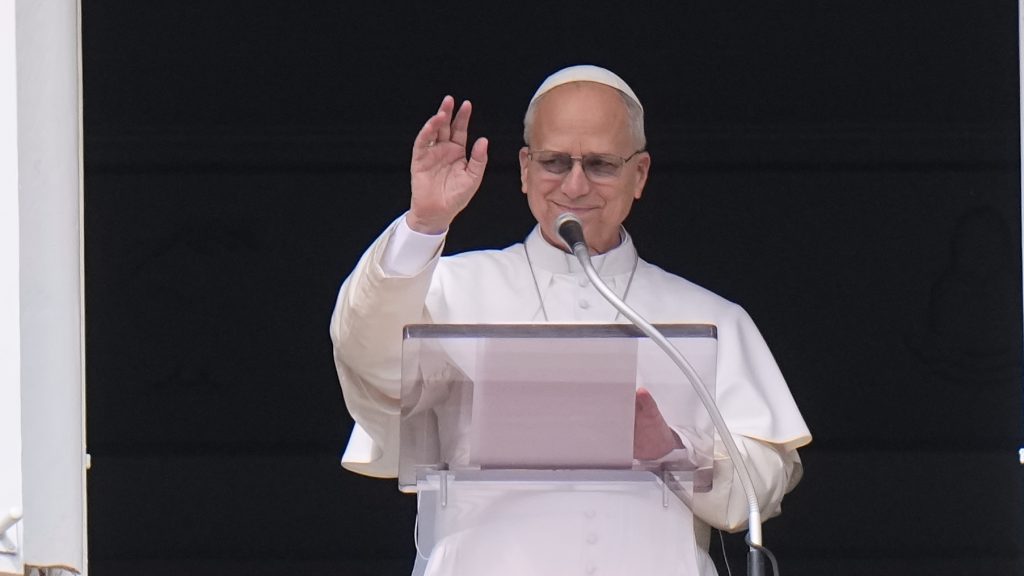
When the new pope stepped onto the balcony of St. Peter’s Basilica on May 8 and announced he would take the name Leo XIV, it was more than a nod to history.
In his first meeting with the College of Cardinals, Leo XIV said he chose the name to honor Pope Leo XIII, the author of the landmark 1891 encyclical Rerum Novarum. Written during the height of the industrial transformation in Europe, the document defended workers against exploitation while rejecting both unrestrained capitalism and socialism.
Now, the Pontiff argues, the Church faces a parallel disruption. Just as industrial machinery transformed manual labor in the 19th century, artificial intelligence is transforming intellectual labor in the 21st.
Grant Kaplan, a theology professor at St. Louis University, sees the connection clearly.
“The last Pope Leo insisted on the dignity of human labor at a time when machines seemed to be replacing workers,” Kaplan explained in an interview with Straight Arrow News. “Now we’re in a similar crisis — not of physical labor, but of intellectual work.”
Recently the pope called on his flock warning clergy about using AI to write homilies.
Kaplan notes that plagiarism scandals among clergy aren’t new. But AI creates a new temptation — instead of copying someone else’s sermon, a priest can generate an original-looking homily with a prompt.
“If 400 priests type in the same prompt,” Kaplan said, “you’re going to get 400 nearly identical homilies.”
For the pope, the concern isn’t just originality — it’s authenticity.
In the Catholic Church, a homily comes from prayer, study and meditation on Scripture. If a priest outsources that reflection to a machine, something essential is lost. The issue becomes not merely technological but ethical and spiritual.
As Kaplan put it, clergy are trained to meditate on the Word of God. Replacing that work with AI “doesn’t reflect well on their ethical standards.”
The Pope’s stance comes amid what Kaplan describes as a leadership gap in politics. Across party lines, there has been little sustained moral argument about the risks of AI — from labor displacement to surveillance to transhumanist visions of merging humans with machines.
Many parents, Kaplan noted, felt relief when schools began banning smartphones after years of anxiety about screen time and mental health. He suggests something similar may be happening with AI — people sense unease but are waiting for a credible moral voice.
The Vatican is not anti-technology. The Church has long embraced tools — from the printing press to radio and television. Even Pope Francis previously urged global leaders to regulate AI to prevent a “technological dictatorship” and ensure it serves peace and fraternity.
Leo XIII cautioned against reducing workers to interchangeable parts in an industrial system. Leo XIV now confronts a digital equivalent: what happens when creativity itself is automated?
Kaplan believes the pope’s choice of name was deliberate and strategic.
“In the 19th century, the Church addressed the social question of industrial labor,” he said. “Now it’s addressing the social question of artificial intelligence.”
Whether in a factory or in front of a screen, the Church insists that human beings must never become tools of their own tools.
Ella Rae Greene, Editor In Chief