Why America is falling out of love with cocaine
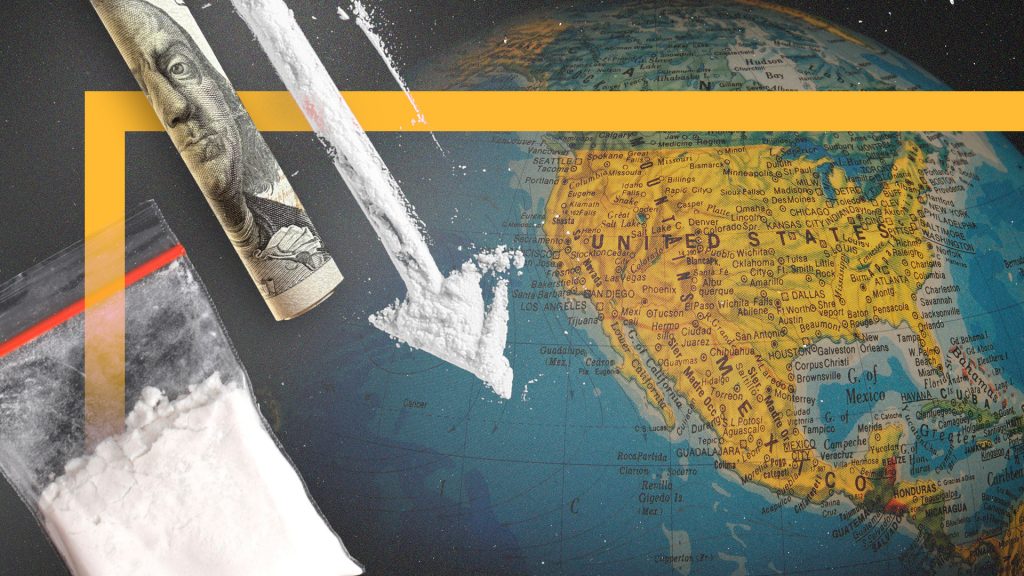
Since last year, the United States’ attempts to stem the flow of cocaine through the southern border have taken new turns, in what is the sixth decade of its war on drugs.
The White House has used the cocaine threat as a pretext to conduct military strikes on more than 45 alleged narco boats, killing 163 people in the Caribbean, and to detain Venezuela’s leader, Nicolás Maduro. It has repeatedly discussed deploying the military to fight drug trafficking organizations, labeling them “narco-terrorists”, and has threatened Colombia’s President Gustavo Petro. Cocaine seizures at the U.S. border are up, and so are overdoses linked to the drug.
Given the scale of these efforts to shut down supply, people would be excused for presuming that the demand for cocaine in America is as robust as ever. Yet the data reveals that, unlike most of the world, where cocaine use is on the rise, the drug is actually losing traction in the U.S. Why this is the case reveals some interesting insights into modern America, from a cultural shift in the way people are choosing to get high, to the continued spread of questionable government-backed messaging about drugs.
“I think there is a level of shame around using cocaine in certain circles now, especially among Gen Z,” Mattha Busby, a freelance journalist in his early thirties who writes about international drug culture, told Straight Arrow News. “Cocaine’s not an aspirational drug anymore. There is a sense of cocaine being this grubby thing, a growing consciousness around the violence associated with the cocaine trade, from Latin America to the streets of Philly, and its impact on the environment in the Amazon.”
But this is just one part of a trend that in some ways feels counterintuitive.
Almost 6 million people (5.9 million) in the U.S. admitted to prior-year use of cocaine in 2017, according to the annual National Survey on Drug Use and Health. By 2024, this number had fallen to 4.3 million. Among 18-25 year olds, the drop over these 7 years has been steeper, from 2.1 million to 811,000 — a trend reflected in a fall since 2017 in the number of people aged under 30 admitted into treatment for cocaine addiction.

In the drug’s heyday in the mid 1980s, 6.7% of Americans, including 13% of 12th graders, said they had used cocaine in the last year, compared with 1.5% and 1.4% respectively in 2024. Yet the narrative in some spheres is that “America Loves Cocaine Again.”
In reality, Americans are walking away from the drug at a time when it has never been more abundant. Since Colombia’s 2016 peace deal with the rebel group FARC helped spark a free-for-all in the country’s cocaine trade, production has reached record levels.
This cocaine bonanza has led to rising levels of the drug’s use across the world, from Canada and South America to Europe and Australia. In Europe, wastewater analysis across multiple European cities released in March found cocaine residues had more than doubled since 2017. So much of the drug is being seized in the Belgian port of Antwerp that they can’t incinerate it quickly enough, while suppliers are burying huge stashes of the drug to be dug up and sold when it returns to a more respectable wholesale price.
Increased supply has meant interdiction efforts only slow the tide. Traffickers continue to face familiar, surmountable difficulties smuggling it into America, especially as the Department of Homeland Security’s focus appears to have switched from drugs to deportation. Increased production also means purity has gone up. According to the Drug Enforcement Administration, in 2020, wholesale cocaine seizures in the U.S. had an average purity level of 54%, while last year it was 88%. Unlike most products, the street price of cocaine has not spiraled upwards, and has instead remained steady in the U.S. at around $80-100 a gram.
One driver for the downturn is fear. People are more scared of taking cocaine than they have ever been before because of the much-repeated story the drug is being intentionally laced or contaminated with fentanyl, a highly potent opioid designated a Weapon of Mass Destruction by the White House in 2025. Over and above cocaine’s well-known risk of causing heart problems, fear of fentanyl in cocaine has become a mounting concern that, due to both the nature of the U.S. drug trade as well as public health messaging, has remained largely unique to North America.
In 2018, New York City’s Department of Health and Hygiene declared that the average weekend cocaine user was at “exceptionally high risk of overdose” from fentanyl-laced cocaine. Since then, a line-up of institutions, from the DEA and the White House to the National Institute on Drug Abuse and the national media, have asserted that drug suppliers are intentionally lacing America’s cocaine with fentanyl at the wholesale level. This attention has likely depressed American appetites for the drug.

“It’s possible that fear of fentanyl adulteration is making some people stay away from cocaine,” said Joseph Palamar, professor of Population Health at NYU Langone Health, and an expert on New York City’s drug scene. His research found New York clubbers “have become increasingly aware of the possibility of cocaine being adulterated with fentanyl,” although he said these fears were more common among people who did not use cocaine.
Yet fears about America’s cocaine being awash with deadly fentanyl have most likely been exaggerated. New data Palamar has collected, but has yet to publish, suggests New York clubbers have “rarely detected fentanyl in their cocaine.” Of 462 people who said they tested their cocaine for fentanyl, 29 (6%) said they either detected or suspected it contained fentanyl based on a test.
Adams Sibley, a researcher at the UNC Injury Prevention Research Center’s Opioid Data Lab, which tests hundreds of cocaine samples from community drug checking services around the U.S. each year, told Straight Arrow News that “fentanyl showing up in appreciable amounts in cocaine is very rare in our data.” Sibley said tests carried out between 2025 and 2026 found only 2-5% of samples bought as cocaine tested positive for fentanyl.
In Philadelphia, just six cocaine samples submitted by city drug outreach staff to the Center for Forensic Science Research and Education for drug checking in the first half of 2023 contained fentanyl. In New York City, a detailed analysis of 131 cocaine samples collected between 2021 and 2023 from five syringe programs and tested by the city’s health department found no fentanyl in any of the samples.
There has been a steep rise, between 2017 and 2023, in cocaine-related overdoses, mainly involving victims with both cocaine and fentanyl in their bodies. This has been widely interpreted as people dying after using cocaine that had been mixed with fentanyl by unscrupulous drug gangs hoping to get people more addicted. But experts suspect most of those who have died with cocaine and fentanyl in their bodies intentionally used both drugs, either together or at different times on the same day, rather than by accidentally consuming fentanyl in their cocaine.
It’s reflective of two diverging realities for drug users: Cocaine contaminated with fentanyl is most often sold by street dealers selling to people with heavy opioid addictions, while the cocaine being sold to more bourgeois markets is less likely to become contaminated. “It appears that in certain types of neighborhood — primarily low-income — the cocaine supply has a higher likelihood of being cut with fentanyl, while much of the cocaine obtained by EDM party attendees is at lower risk for being adulterated with fentanyl,” said Palamar.

At the distribution level, SAN has found no reported evidence of police or border forces unearthing wholesale-level seizures of cocaine containing fentanyl, and dealers themselves have rejected the idea of mixing the two as bad for business. Of course, there is still a real risk. There have been groups of middle-class cocaine users who have died because their cocaine has contained fentanyl, and there was also the case of New York criminals who sold people cocaine they had laced with fentanyl in order to incapacitate and rob them.
For the U.S. government, reducing demand by producing media campaigns and PSAs to warn people off using drugs is one of the two key factors in tackling the drug trade, alongside reducing supply. The pretense that drug dealers are purposefully lacing America’s drug supply with fentanyl has resulted in increased punishment for people who sell drugs, knowingly or not, that contain fentanyl. Convictions under new drug-induced homicide (“‘death by dealer”) laws have rocketed during the fentanyl era.
Rather than stopping taking drugs altogether, researchers say fears about fentanyl in cocaine are most likely shifting people to use other drugs. Daniel Ciccarone, professor of addiction medicine at UCSF, accepts that “contamination fears may be a player” in the reduction in cocaine use “for at least one generation now,” but he suspects people are switching to other drugs for purely economic reasons too.
While the prevalence of cocaine has fallen, rates of methamphetamine, ketamine and hallucinogen use have increased significantly since 2017. The number of people who said they had used methamphetamine, a drug much less prevalent in Europe, in the last year rose from 1.6 million in 2017 to 2.3 million in 2024.
As the cost of living has hit harder over the last decade, cocaine’s relatively high price compared with similar drugs — around four times that of meth and double that of ketamine — is prohibitive to some.
“There is a good reason for cocaine use to be flat or down: meth use is on the rise and spreading geographically. It is not a pure competitor, but it will compete for some of the population. And this meth is cheap and super strong,” said Ciccarone.
Cocaine use has also been impacted by the shifting sands of American culture, as new generations ditch the drugs used by their parents. For some, it’s a drug that no longer suits their lifestyle or their ethics. Cocaine has always been heavily associated with alcohol, and the two drugs spur each other on: cocaine enables longer drinking sessions and alcohol increases risky behavior. American alcohol use is now at a record low. This decline is much more pronounced in the U.S. than in Europe, and especially among young Americans, who are also less likely than before to go out to bars and clubs.
“I’ve always considered cocaine more of a social and bar, party-focused drug, and it appears that Generation Z are much less likely to go out than previous generations. Maybe a lot of these young people simply have no reason to use cocaine because they’re sitting at home,” said Palamar.
Busby, the drugs journalist, said that more than most drugs, “cocaine’s cultural cache has diminished” in the last decade. He said people now want different highs.
“People are moving towards more mind-expanding drugs. The nature of the cocaine experience, this sort of moorish buzz, just doesn’t really fit into the current zeitgeist. Why would you want to be more glued to your screen watching World War III happen? Surely you want to dissociate from that,” he said.
On Reddit’s drugs forum, when asked why Americans had fallen out of love with cocaine, one proclaimed Gen Z poster said: “Cocaine isn’t cool no more.”
But America’s love affair with cocaine is far from over. It’s still thriving in some circles, especially amongst the stereotypical upper-class nightlife demographic. Last year’s college survey on drug use trends among teenagers found that, although cocaine use has been trending downwards, last year it detected a small jump in use among 13 to 18-year-olds, and warned: “Future surveys will clarify if the increases observed in 2025 mark the beginning of a resurgence in adolescent cocaine use or instead represent a short-term fluctuation.”
For now, a drug whose popularity in America launched the careers of some of the world’s biggest gangsters, and became a symbol of rock & roll and capitalist excess, appears to be fading from view, maybe as people retreat from today’s harsh reality.
“Cocaine, at least the version of cocaine that is loud, aggressive and stupid, really does embody this age of ‘might is right’, of violent chaos, this world of anarchy,” said Toby Muse, a filmmaker and author who has investigated the cocaine trade. “Maybe people are so profoundly disappointed by this world of chaos they are living through, they are rejecting the ‘out there’-ness of cocaine, and retreating into their homes, to pass out in the corner.”
Ella Rae Greene, Editor In Chief