What’s next after Senate votes down effort to rein in Trump in Iran
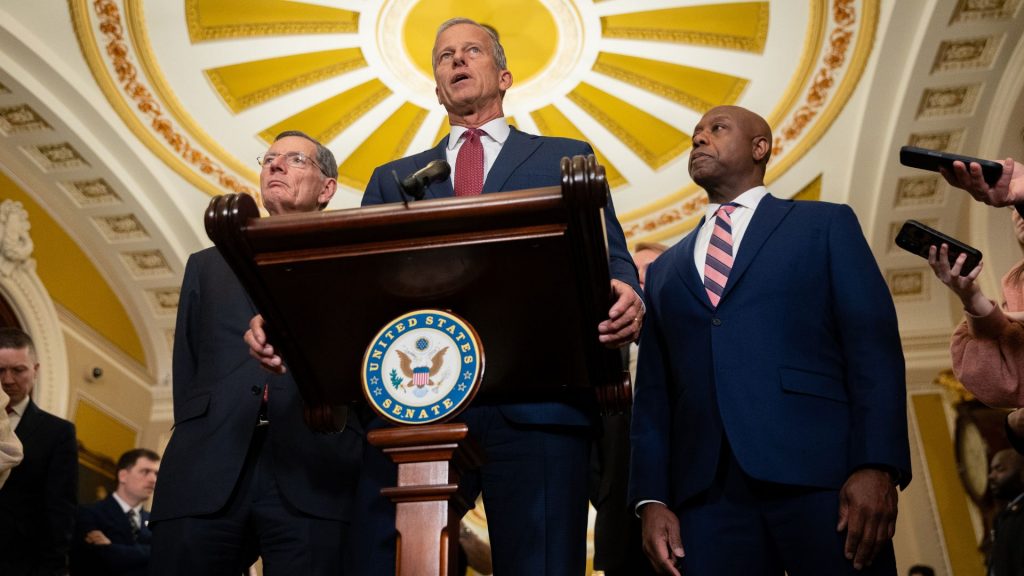
The Senate voted down a Democratic-backed war powers resolution that would’ve prevented President Donald Trump from continuing air strikes in Iran.
The vote was 47-53, split mostly along party lines.
The legislation was widely expected to fail after Sen. John Fetterman, D-Pa., said he would cross the aisle and vote with Republicans against the resolution. Senate Majority Leader John Thune, R-S.D., also lowered expectations after he said he would not support the proposal.
On Tuesday, Thune said he believed Trump properly used his presidential power to initiate the conflict.
“I think the president is acting in the best interest of the nation and our national security interests by ensuring that he’s protecting Americans and American bases and installations in that region, as well as those of our allies,” Thune said during a press briefing.
Sen. Chris Murphy, D-Conn., believed the bill wouldn’t have enough support to pass the Senate but was still important to consider whether the conflict was justified, according to The Guardian.
“We shouldn’t be voting to proceed to other pieces of legislation until we get a debate on this deeply unpopular, immoral and illegal war with Iran,” Murphy said Tuesday.
House votes next
Reps. Ro Khanna, D-Calif., and Thomas Massie, R-Ky., have introduced their own version of the bill in the House of Representatives, with a vote expected Thursday. However, most Republicans in the lower chamber are also opposed to the bill. House Speaker Mike Johnson, R-La., said forcing an end to the conflict would be “dangerous.”
“The idea that we would take the ability of our commander in chief, the president, take his authority away right now to finish this job, is a frightening prospect to me. It’s dangerous,” he said, according to Politico. “I am certainly hopeful and I believe we do have votes to put it down.”
However, even if lawmakers were able to pass either bill through Congress, it would still need Trump’s signature or a veto-proof supermajority.
“No presidential administration has ever accepted the War Powers Act as constitutional — not Republican presidents, not Democratic presidents,” Secretary of State Marco Rubio said Monday, according to CBS News. “All that said, we complied with the law 100%, and we’re going to continue to comply with it.”
Congress passed the War Powers Act in 1973 during the Vietnam War, which checked the president’s power to enter a conflict without congressional consent. Specifically, it requires the president to notify Congress within 48 hours of deployment and says he must withdraw troops within 60 days, unless Congress formally declares war.
Under the Constitution, only Congress has the authority to formally declare war. However, the last time that happened was in June 1942, after the U.S. entered WWII. Since then, administrations have relied on Authorizations for Use of Military Force approved by Congress to enter conflicts.
In 2001, after the 9/11 terror attacks, the U.S. invaded Afghanistan after Congress passed an AUMF. Two years later, it passed another to start the Iraq War.
Legal questions persist over whether Trump needed at least an AUMF to begin the operation in Iraq or to take other actions. Those include ordering the military to strike suspected drug-smuggling boats in the Caribbean and the eastern Pacific Ocean and deploying troops to Venezuela to capture that country’s president, Nicolás Maduro.
Since the conflict with Iran began over the weekend, America has lost at least six service members. CNN reports that 16 others were seriously injured.
Ella Rae Greene, Editor In Chief