What US strikes on Venezuela could mean for oil production
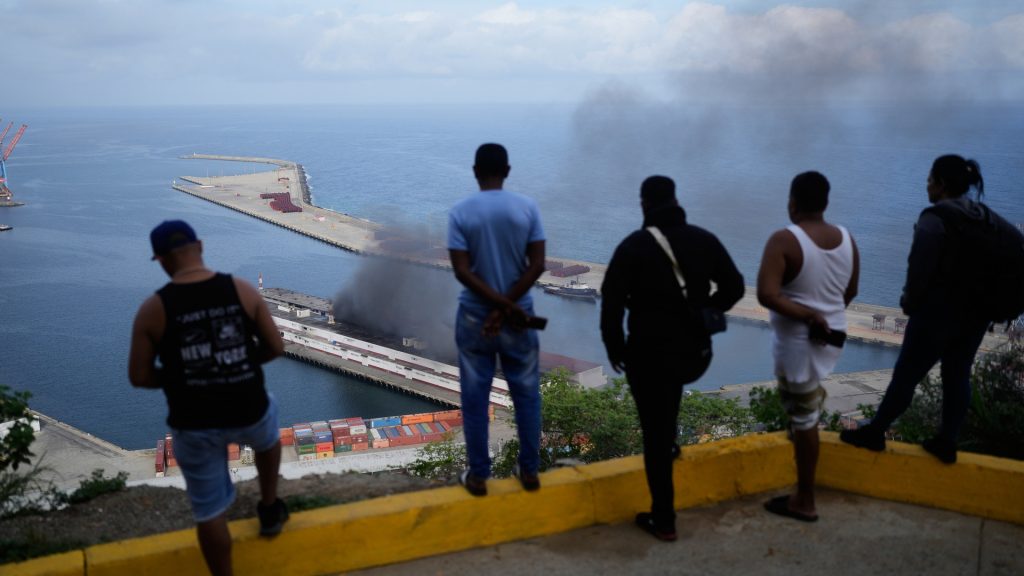
The United States military launched air strikes in Venezuela early Saturday morning. U.S. President Donald Trump said on Truth Social President Nicolás Maduro and his wife were captured and are being taken to New York. What this means for oil and gas prices is still unclear.
Venezuela makes a large share of the world’s oil reserves, although the U.S. Energy Information Administration notes that several factors, “most notably government mismanagement, international sanctions and the country’s economic crisis” have “severely hampered” the country’s energy sector.
Phil Flynn, a senior market analyst at the Price Futures Group, told CNN Saturday’s military operation “has the potential for a historic event” for the oil industry.
“The Maduro regime and (former Venezuelan President) Hugo Chavez basically ransacked the Venezuelan oil industry,” Flynn said.
Arne Lohmann Rasmussen from Global Risk Management, said to Reuters that if developments lead to genuine regime change, there could be more oil on the market over time.
“However, it will take time for production to recover fully,” Lohmann Rasmussen noted.
Should a regime change be successful in Venezuela, its exports could grow if sanctions are lifted and foreign investment returns, MST Marquee analyst Saul Kavonic told Reuters. Though Jorge Leon, head of geopolitical analysis at Rystad Energy, noted that a forced regime change rarely stabilizes oil supply quickly.
The Atlantic Council says that for oil production to rebound in Venezuela, capitol and labor will need to return, the state-run energy company Petroleos de Venezuela S.A (PDVSA) will need to be overhauled, and the country’s reservoirs will need to be restored.
Venezuela strikes
The attack on Venezuela comes after months of strikes in international waters on what that Trump administration alleges are boats carrying drugs.
While these strikes were unlikely to affect energy production, The Atlantic Council previously wrote, “any action attacking the regime itself or damaging single points of failure in the energy system, such as ports, is another matter altogether.”
Venezuelan production and exports would “almost certainly” plummet if a U.S. military intervention were to take place, The Atlantic Council wrote, and there’s the possibility of retaliation from the regime. Still, the council points out, there’s a ceiling on global oil prices even in the case of Venezuelan production outages because of an oil market glut; spare production capacity in Gulf states; as well as high U.S. production of domestic crude and natural liquids.
Venezuela isn’t as powerful of a force in the oil industry as it used once used to be.
Venezuela produced as many as 3.5 million barrels of oil per day back in the 1970s, when it nationalized its oil industry and created PDVSA. Production decreased to 2 million bpd in the 2010s, and last year, Venezuela put out an average of 1.1 million bpd.
Two sources told Reuters PDVSA was still operating normally as of Saturday morning, and that it didn’t suffer any damage. Bloomberg is also reporting that key facilities such as Jose port, the Amuay refinery and oil areas in the Orinoco Belt are still operational.
Oil futures do not trade on the weekend, so people will have to wait until Monday to see exactly how the markets react.
Trump’s remarks on oil
Donald Trump, at a news conference Saturday, called the oil business in Venezuela a “total bust” and that it was “pumping almost nothing” compared to what they could have been.
“We’re going to have our very large United States oil companies, the biggest anywhere in the world, go in, spend billions of dollars fix the badly broken infrastructure, the oil infrastructure, and start making money for the country,” Trump said.
If U.S. companies are allowed to go back in to rebuild the oil industry in Venezuela, “it could be a game-changer for the global oil market,” Flynn said to CNN.
However, the Trump administration, before the airstrikes, had asked U.S. oil companies if they would be interested in returning to Venezuela after Maduro’s ouster, Politico reported last month. They said “no,” according to the news outlet. One person who spoke to Politico said “it’s not as straightforward to convince companies to risk capital in an uncertain political environment,” while another cited “lower oil prices and more attractive fields globally” for the lack of interest from the industry.
The post What US strikes on Venezuela could mean for oil production appeared first on Straight Arrow News.
Ella Rae Greene, Editor In Chief