Venezuela escorts oil ships amid heightened US military readiness
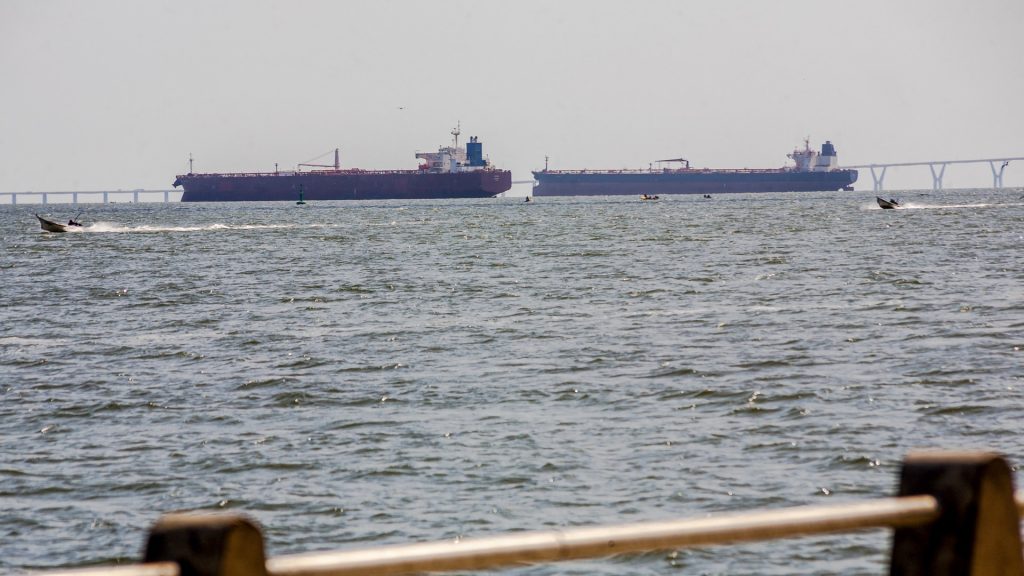
Venezuela has begun escorting oil-related shipments with its navy after President Donald Trump ordered what he calls a “total and complete blockade” of sanctioned oil tankers tied to the country, according to new reporting. The move raises the risk of a direct confrontation at sea as the U.S. ramps up military pressure across the Caribbean.
Naval escorts at the center of the standoff
According to The New York Times, several ships carrying petroleum-related products departed Venezuela’s eastern coast between Tuesday night and Wednesday morning under naval escort. The vessels left the Port of José bound for Asian markets, including China.
The timing was deliberate. The escorts came just hours after Trump said the U.S. would move to block oil tankers that violate American sanctions on Venezuela’s energy sector.

This story is featured in today’s Unbiased Updates. Watch the full episode here.
Some of the ships traveling with military protection, according to the reporting, do not appear on current U.S. sanctions lists. This adds uncertainty over how, or whether, they could be targeted under the proposed blockade. A U.S. official confirmed to The Times that Washington is aware of the escorts and is weighing possible responses but declined to provide details.
Venezuela’s state oil company, PDVSA, said ships connected to its operations are continuing to sail “with full security.” It framed the move as a legitimate exercise of free navigation.
Trump doubles down on ‘blockade’ language
Trump has been blunt about his intentions, repeatedly using the word “blockade.” It’s a term that carries legal and military implications.
Speaking to reporters at Joint Base Andrews Wednesday, the president demanded that Venezuela return stolen U.S. assets. According to Fortune, it’s a reference to the Chávez-era seizure of American-owned oil projects beginning in 2007, including investments held by ExxonMobil and ConocoPhillips. Those expropriations remain tied up in long-running arbitration disputes.
“It’s a blockade. I’m not going to let anybody going through that shouldn’t be going through,” Trump said. “You remember they took all of our energy rights. They took all of our oil from not that long ago, and we want it back. But they took it. They illegally took it.”

Venezuela’s government sharply rejected Trump’s rhetoric, calling it “warmongering.” They accused the U.S. of trying to steal its oil wealth and filed a formal complaint with the United Nations Security Council.
Why oil matters so much
Oil is Venezuela’s economic lifeline. According to reporting cited by The New York Times, petroleum accounts for roughly 88% of the country’s export revenue.
With most Western buyers sidelined by sanctions, China has become Venezuela’s dominant customer. Analysts say constraining those shipments could deal a devastating blow to an already fragile economy and further tighten pressure on President Nicolás Maduro’s government.
As Straight Arrow News reported last week, U.S. authorities seized a sanctioned tanker carrying nearly two million barrels of Venezuelan crude. It was a significant escalation that has already prompted other vessels to turn away from Venezuelan ports.

A growing U.S. military presence nearby
While the blockade is centered on oil, the backdrop is an expanding U.S. military footprint across the region.
That pressure was visible again on Wednesday. The Pentagon said four people were killed in a U.S. military strike on an alleged drug-running boat in the Eastern Pacific. U.S. Southern Command said the vessel was operating along a known narco-trafficking route and described the victims as “narco-terrorists.” However, it did not provide evidence that the boat was carrying drugs.
Southern Command released unclassified video of the strike, which it said Defense Secretary Pete Hegseth ordered.
According to BBC Verify, satellite imagery and flight-tracking data show at least six U.S. naval vessels operating in the Caribbean in recent days, with analysts identifying several more likely in the area. That presence includes the aircraft carrier USS Gerald R. Ford, amphibious assault ships, guided-missile destroyers, and support vessels positioned within striking distance of Venezuela.

The buildup also extends to the air. BBC Verify tracked U.S. surveillance aircraft, refueling tankers, fighter jets, and long-range bombers operating near Venezuelan airspace in recent weeks. Experts say the flights suggest heightened intelligence-gathering rather than a confirmed plan for military action.
The Pentagon, however, has said the deployments are tied to counter-narcotics operations, part of a campaign known as Operation Southern Spear.
What happens next
For now, the confrontation remains economic and symbolic, but tense. Analysts say Venezuela has limited options to retaliate without harming itself further, while the U.S. faces practical and legal questions about how far a tanker blockade could actually go.
The unanswered question is whether Trump’s blockade threat stays a pressure tactic, or becomes something enforced at sea.
The post Venezuela escorts oil ships amid heightened US military readiness appeared first on Straight Arrow News.
Ella Rae Greene, Editor In Chief