US, Iran fail to make deal after 21 hours of negotiations
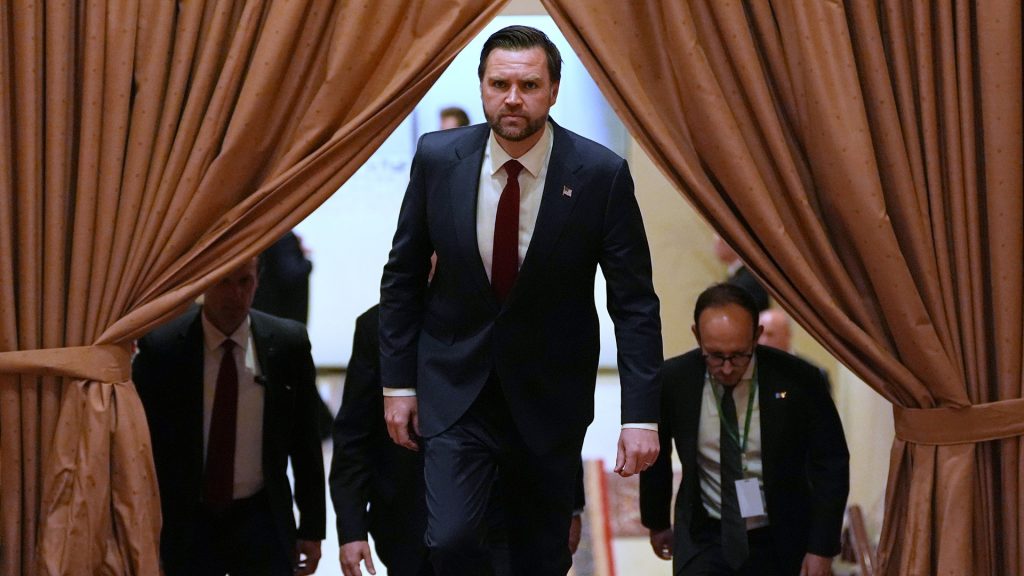
The U.S. and Iran failed to reach a deal to end the war after 21 hours of negotiations over the weekend, Vice President JD Vance said.
Vance said the U.S. delegation had “a number of substantive discussions with the Iranians” during the talks, which took place in Pakistan.
Still, “we go back to the United States having not come to an agreement,” Vance said.
“We’ve made very clear what our red lines are, what things we’re willing to accommodate them on, and what things we’re not willing to accommodate them on,” he said. “We’ve made that as clear as we possibly could, and they have chosen not to accept our terms.”
Iranian Foreign Ministry spokesman Esmaeil Baqaei said while the two parties “reached an understanding on a number of issues,” there were still “differences of opinion” on a couple of important matters.
“These negotiations were held after 40 days of imposed war and were held in an atmosphere of mistrust and suspicion. It is natural that we should not have expected from the beginning to reach an agreement within one meeting,” he said, according to Iranian state media.
This is a developing story. An older version of this article can be seen below.
Negotiations between Iran and the U.S. are underway in Pakistan, following the announcement earlier in the week of a fragile ceasefire between the two countries.
“The U.S., Pakistan and Iran are holding a trilateral face-to-face meeting today,” a senior White House official said, according to The Washington Post. Iranian officials also confirmed to CNN that the talks are being held directly.
Vice President JD Vance arrived in Islamabad on Saturday morning. He leads the U.S. coalition, which includes Middle East special envoy Steve Witkoff and Jared Kushner, President Donald Trump’s son-in-law. The vice president’s national security adviser, Andy Baker, and Michael Vance, a special adviser to the vice president for Asian affairs, are also present.
Iran’s delegation is being led by Parliament Speaker Mohammad Bagher Ghalibaf, Foreign Minister Abbas Araghchi and negotiator Ali Bagheri Kani.
Before he left for Pakistan on Friday, Vance told reporters President Donald Trump gave the U.S. delegation “pretty clear guidelines” regarding the talks, and that he expected them to be “positive.”
“If the Iranians are willing to negotiate in good faith, we’re certainly willing to extend the open hand. If they’re going to try to play us, then they’re going to find the negotiating team is not that receptive,” Vance said.
So far, both sides have accused each other of violating the ceasefire agreement.
Pakistani Prime Minister Shehbaz Sharif and Field Marshal Asim Munir facilitated the 10-point deal, Trump said in a Truth Social post, under which Iran must immediately withdraw any forces blocking ships from passing through the Strait of Hormuz.
On Wednesday morning, the Iranian government said the Strait of Hormuz was closed again. Israel’s continued attacks in Lebanon, Iran said, violated the agreement. More than 300 people were killed in Israeli airstrikes on Wednesday, with the Lebanese Health Ministry saying more than a third of them were women and children. The BBC reported that some of these attacks hit densely populated neighborhoods.
The Israeli military struck what it said Saturday were over 200 “Hezbollah targets” in Lebanon in the last 24 hours.
While Israeli and U.S. officials said the ceasefire does not apply to Israel’s attacks on Lebanon, this contradicts what Sharif has said, as well as the plan reported on by Iranian state media.
In light of the “current internal circumstances,” Lebanon’s Prime Minister, Nawaf Salam, said Saturday he will postpone his trip to the United Nations and the United States.
At least 3,000 people in Iran have been killed since the war started on Feb. 28 with U.S. and Israeli strikes on the country, according to The Associated Press. There have been 2,020 reported killed in Lebanon, 23 in Israel and over 12 in Gulf Arab states.
Thirteen U.S. service members have been killed, and hundreds injured.
On Friday, Iran’s Ghalibaf said two of the measures agreed to in the ceasefire agreement “have yet to be implemented: a ceasefire in Lebanon and the release of Iran’s blocked assets prior to the commencement of negotiations.”
Trump, meanwhile, posted on Truth Social that the Iranians “have no cards, other than a short-term extortion of the World by using International Waterways.”
“The only reason they are alive today is to negotiate!” Trump said.
During a televised address to Pakistan on Friday, Sharif said while the two-week-long, temporary ceasefire was announced, the real challenge would be for a long-term end to the fighting.
He said it will be “a make-or-break” stage.
The Trump administration said it sent a 15-point plan to Tehran in March, but didn’t disclose the details publicly.
Officials speaking anonymously to The Washington Post said it involves sanctions relief in return for the removal of all enriched uranium from Iran, as well as limits to its nuclear and missile programs.
This article has been updated to reflect the correct number of notes in the Trump administration’s plan. Straight Arrow News regrets the error.
Ella Rae Greene, Editor In Chief