Trump says the US beat Iran. Then why are troops heading to the Middle East?
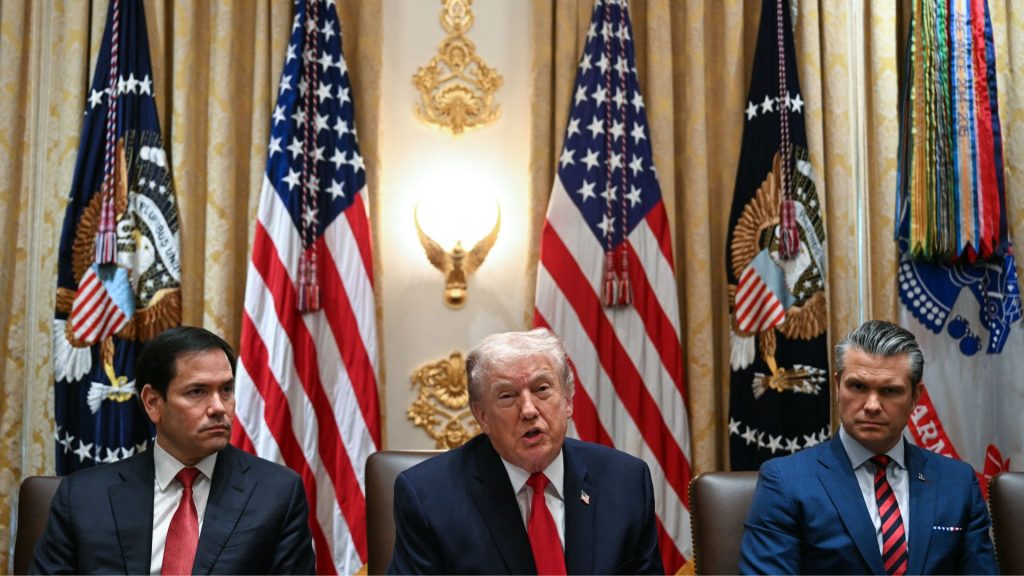
“You said the war is ‘very complete,’ but your defense secretary says this is ‘just the beginning,’” a reporter told President Donald Trump at a recent press conference. “So which is it?”
“I think you could say both,” Trump responded.
Since the war in Iran began in late February, the Trump administration has shifted its narrative on why the U.S. got involved in another Middle Eastern conflict, especially after Trump ran specifically against that. A recent CBS News/YouGov survey found that 68% of respondents said the administration hasn’t clearly explained the goals of the attacks.
On Monday, Trump posted on Truth Social, saying he was delaying an American bombing campaign for five days as he was satisfied with the way recent negotiations had progressed. The announcement was positive news, and the markets reacted accordingly. The discussions were apparently news to Iranian officials, who said no such talks were taking place.
The next day, Trump said Iran extended an appealing offer to the U.S. to end the war, saying the offer was “a very significant prize” relating to the Strait of Hormuz, NPR reports. Following his announcement, Trump declared that the U.S. had won the war.
“We’ve won this. This war has been won,” Trump said.
While Iran said it received the Trump administration’s 15-point plan to end the war, they have denied ever negotiating with them, going as far as to suggest American delegates were negotiating among each other.
“Has the level of your internal conflicts reached the point where you are negotiating with yourselves?” Iran military spokesperson Ebrahim Zolfaqari said.
What has the Trump administration said?
Days before military operations began, Iranian leadership and mediators from Oman said a deal was within reach, with Oman’s foreign minister saying the two sides had reached a “breakthrough.” Iran agreed never to stockpile enriched, weapons-grade uranium and to a full International Atomic Energy Agency verification for its nuclear energy program.
Both sides expected to resume talks on March 2, but on Feb. 28, Trump announced that the U.S. had begun a military operation against Iran. The initial strikes killed Iranian Supreme Leader Ali Khamenei and other top-ranking Iranian leaders.
In his announcement speech, Trump said the U.S. entered the conflict to “defend the American people by eliminating imminent threats from the Iranian regime.” He said the U.S.’s main goal was to prevent Tehran from developing a nuclear weapon.
After the initial strikes, the administration claimed there was an “imminent threat,” but the Pentagon later contradicted those statements, which said Iran wasn’t planning an attack unless an enemy attacked first, CNN reports.
The contradictions continued after Secretary of State Marco Rubio told reporters that the U.S. attacked because Israel was going to attack first.
“We went proactively in a defensive way to prevent them from inflicting higher damage,” he said.
Trump contradicted Rubio, saying, “They [Iran] were going to attack. If we didn’t do it, they [Iran] were going to attack first.” The next day, press secretary Karoline Leavitt said Trump had a “good feeling” that Iran was about to strike first, and that’s why the U.S. began its assault.
But the administration also cited regime change as a main reason for the attacks, with Trump saying he wanted Iranians to “take back your country.” Since the first days of the war, the White House has been quiet on the subject, but has since said the U.S. had accomplished that goal. While speaking with reporters on Tuesday, Trump said that Iran’s leaders were “all gone,” adding that “Nobody knows who to talk to.”
However, during the same meeting, Roll Call reports that he contradicted that statement.
“But we’re actually talking to the right people, and they want to make a deal so badly,” Trump told reporters in the Oval Office.
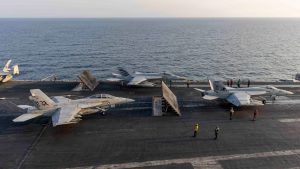
Despite the Trump administration’s claims that the U.S. won the war, the Pentagon continues to increase its military presence in the Middle East. On Tuesday, the military announced it was sending thousands of troops from the Army’s 82nd Airborne Division to the Middle East.
What is Iran saying?
Iran has contradicted many of the Trump administration’s claims. After Trump said both parties had “very good conversations” on ending the war, Iran’s leadership disputed that.
On Tuesday, Iran’s parliamentary speaker, Mohammad Bagher Ghalibaf, used Trump’s own rhetoric, calling the reports of negotiations “fake news intended to manipulate financial and oil markets and to escape the quagmire in which America and Israel are trapped.”
Iranians linked to the government went further, saying Trump is saying whatever he needs to say to improve the stock market.
“Every week, when markets open, Trump makes these kinds of statements to drive down oil prices,” Iranian academic Seyed Mohammad Marandi wrote on X. “Even his five-day deadline aligns with the closure of the energy market.”
Marandi added that Trump doesn’t have the power to open the Strait of Hormuz.
Iran proposed its own ceasefire after it rejected Trump’s proposal, which includes safeguards against future attacks on Iran and sovereignty over the strait. The U.S. has not responded to the proposal but would likely reject it, as it allows Iran to keep its chokehold on the strait.
The Iranian military has also pushed back on the notion that it’s almost out of weapons. A spokesperson for the Iranian Republican Guard said most of the country’s weapons cache remains intact. They said the missiles used so far were produced “a decade ago,” and Iran hasn’t used weapons produced since its 12-day war with Israel in 2025.
So, what is actually happening in the war?
While Trump suggests the war is coming to a close, it’s clear that the U.S. is still very much entangled in the conflict — militarily and economically.
The U.S. currently has about 50,000 troops in the region and up to 8,000 more moving towards the Persian Gulf. The White House has not announced a ground troop deployment but has emphasized that everything is on the table.
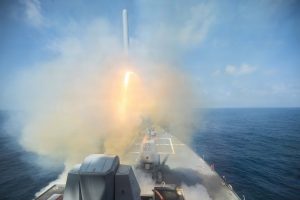
The conflict has killed thousands of people across the Middle East, including as many as 175 after a U.S. Tomahawk missile hit an Iranian girls’ school. Iranian attacks on U.S. targets have killed at least 13 American service members.
International shipping through the Strait of Hormuz remains largely blocked, leaving the oil market in constant fluctuation, worrying many economists.
The war in Iran has ignited conflicts in other regions. Al Jazeera reports described Iraq as a “secondary battleground” where the U.S. is fighting against Iran-backed groups. Israel has begun an additional military operation in Lebanon against the Iran-backed militant group Hezbollah.
The war’s consequences have stretched far beyond the Middle East.
Since the conflict began, gas prices have increased by more than 30% in the U.S., and it has cost the American taxpayer potentially hundreds of billions of dollars.
Trump is in a precarious spot, Iraq veteran and New York Times analyst David French wrote. He believes there are two outcomes, and neither looks great for the U.S.
“Iran perversely can claim that it won. It took a huge punch, absorbed the blow, and still forced America to climb down,” he said. But if Trump goes forward with his plan to keep the strait open by force, French said, “the U.S. may well find itself in yet another open-ended, costly conflict with at least some American soldiers on Iranian soil.”
Ella Rae Greene, Editor In Chief