Trump says Navy to block Strait of Hormuz after US, Iran talks end without deal
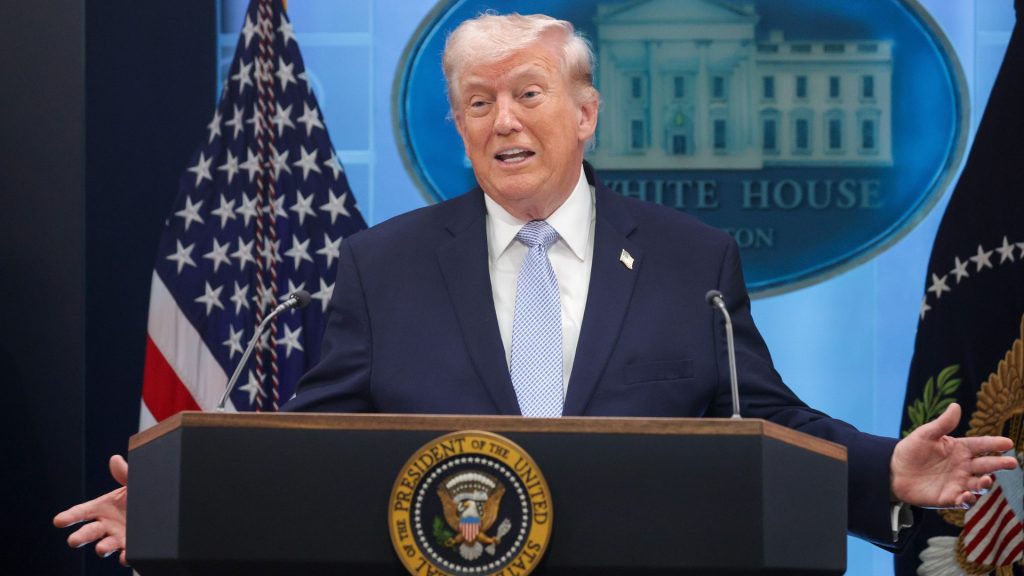
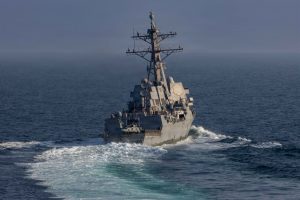
President Donald Trump said Sunday the U.S. Navy will start blockading ships trying to enter, or leave, the Strait of Hormuz after negotiations between the U.S. and Iran failed to produce a deal to end the war.
“I have also instructed our Navy to seek and interdict every vessel in International Waters that has paid a toll to Iran,” Trump said on Truth Social. “No one who pays an illegal toll will have safe passage on the high seas.”
Other countries will be involved with the blockade, Trump said, though he did not specify which ones.
The Strait of Hormuz, through which about 20% of the world’s oil flows through, has been effectively closed since the war with Iran began with U.S. and Israeli strikes against the country in late February.
Trump said he ordered the Navy to interdict any vessel that has paid a toll to Iran to get through the Strait.
“No one who pays an illegal toll will have safe passage on the high seas,” Trump said.
In addition, he said U.S. forces will destroy any mines Iran laid in the Strait of Hormuz.
“Any Iranian who fires at us, or at peaceful vessels, will be BLOWN TO HELL!” he wrote.
US, Iran talks end with no agreement
The U.S. and Iran’s inability to come to an agreement came after 21 hours of negotiations over the weekend.
Vice President JD Vance said the U.S. delegation had “a number of substantive discussions with the Iranians” during the talks, which took place in Pakistan.
Still, “we go back to the United States having not come to an agreement,” Vance said.
“We’ve made very clear what our red lines are, what things we’re willing to accommodate them on, and what things we’re not willing to accommodate them on,” he said. “We’ve made that as clear as we possibly could, and they have chosen not to accept our terms.”
Asked by a reporter what the Iranian side rejected, Vance said the U.S. needs to see “an affirmative commitment that they will not seek a nuclear weapon, and they will not seek the tools that would enable them to quickly achieve a nuclear weapon. “
“That is the core goal of the President of the United States, and that’s what we’ve tried to achieve through these negotiations,” Vance said.
Iranian Foreign Ministry spokesman Esmaeil Baqaei said while the two parties “reached an understanding on a number of issues,” there were still “differences of opinion” on a couple of important matters.
“These negotiations were held after 40 days of imposed war and were held in an atmosphere of mistrust and suspicion. It is natural that we should not have expected from the beginning to reach an agreement within one meeting,” he said, according to Iranian state media.
Ella Rae Greene, Editor In Chief