Trump says affordability ‘doesn’t mean anything’ despite rising costs
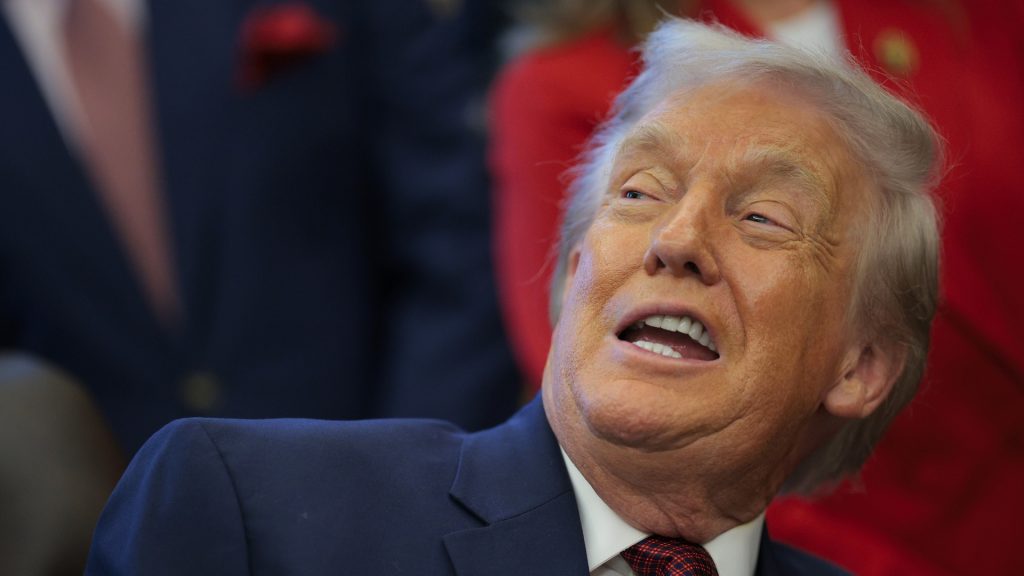
President Donald Trump dismissed concerns over affordability in America, calling it a “con job” and adding, “It doesn’t mean anything to anybody.” Despite those assertions from the president, concerns over the cost of living and the economy are among the top three concerns for Americans, according to recent polling.
Cost of living/affordability
“The word ‘affordability’ is a con job by the Democrats,” Trump said during a Tuesday cabinet meeting. “They say afford — I watched the other day where some very low-IQ congresswoman talked about affordability, affordability, affordability.”
When it comes to cost of living and affordability, most economists use the Consumer Price Index, or CPI. In essence, the CPI tracks the average prices of a fixed number of goods and services (including food, energy, commodities, etc.) over time, which reflects the overall cost of living for Americans.
The CPI has risen 3% from September 2024 to September of this year. That’s significantly down from COVID-19 pandemic-era data but much higher than what Americans saw on average each year during the first Trump administration and much of the Obama administration, according to the Bureau of Labor Statistics, or BLS.
The most recent data comes from September due to the government shutdown. New numbers from the BLS aren’t expected until Dec. 18.
Food costs
That same data from the BLS showed food costs are up 3% during that same time frame.
Three percent may not seem like a large number, but it’s a big enough increase for people to notice.
“Food prices always hit people particularly hard because they see them every day, or almost every day,” Thomas Gremillion, director of food policy at the Consumer Federation of America, told Straight Arrow News. “And so, while 3% doesn’t sound like a lot, if you’re seeing all of the things that you purchase on a fairly frequent basis just steadily rising in price, it can create quite a psychological effect.”
He said some of the president’s policies are part of the price increases.
“The tariffs, I think, had a pronounced effect that was pretty directly observable, and with a lot of products like bananas and coffee, there wasn’t a lot of mystery there,” Gremillion said.
Gremillion said other Trump policies may have also contributed to the rising costs.
“Immigration, particularly for food, food away from home,” Gremillion said. “There’s just a lot of people leaving the United States and less labor.”
Those numbers follow a similar pattern to the overall CPI, where inflation is down since the pandemic but significantly higher than the decade before the pandemic.
“Eggs were four or five times higher than they had ever been,” Trump said. “They said don’t order eggs for Easter at the White House. And we ended up doing it. And we got the egg prices way down, lower than what they were before.”
While it’s true egg prices are down significantly, that’s mostly because the country is getting closer to the end of an avian flu outbreak.
“It’s true on its face that the price of eggs went down from these extraordinary highs that were created by this disease outbreak, but it’s not an indication of food prices more broadly,” Gremillion said.
Food prices became an even bigger issue when paying out SNAP benefits was affected during the shutdown.
Energy costs
“Electricity is coming down,” Trump said. “And when that comes down, everything comes down.”
Despite that claim, energy costs are also up significantly in the last year, especially electricity and utility gas services. Electricity has risen more than 5% while those utility gas services are up nearly 12% over that same period, which was the largest increase in any sector.
Part of that spike is the need to upgrade infrastructure and an increase in demand from the proliferation of data centers.
Overall, gas prices are down about three cents from this time last year.
“We have 20 states that are now selling gasoline at less than the $2.75,” Trump said.
Data from AAA shows 21 states are averaging prices under $2.81.
Presidents since Richard Nixon have spoken on lowering gas prices and distanced themselves from high gas prices, but in reality, U.S. presidents have very little to do with the cost of gas, whether it’s high or low.
Housing costs
Rising electricity prices are just part of increasing housing costs in the U.S. Prices have been on the rise for more than two decades, with the average home price now more than $340,000.
“I think in most communities across the country, housing affordability has been the number one issue,” Shane Phillips, housing initiative manager for the UCLA Lewis Center for Regional Policy Studies, told SAN. “And you know, if it’s not number one right now, it’s certainly number two or number three.”
Phillips also pointed to administration policies like tariffs and immigration as potential factors for increased costs.
“I don’t think there’s any question that tariffed goods are going to be more expensive, and that’s going to have an impact on things,” Phillips said. “As is people either being deported or not coming to work because of fear of being picked up by ICE or border patrol. The residential construction market is heavily represented by undocumented workers.”
Construction costs have already been on the rise as well over the last few years.
“There was already kind of a depressed amount of production happening compared to a few years ago,” Phillips said.
The president has also made significant cuts to the Department of Housing and Urban Development.
Health care costs
Health care costs in the U.S. have been on the rise for decades, an issue that persisted through 2025.
“Ultimately, the reason health care is so much more expensive in America than it is in many European countries is because our prices for things are so much higher,” Ashish Jha, dean of the public health school at Brown University, told SAN. “And not just for pharmaceuticals, but really for everything.”
Jha laid out three main reasons for increasing costs. First, the U.S. population continues to get older.
“We want to get a population where people are living longer lives, but that means that people will consume more health care,” Jha said.
Second, there’s a lot of innovation in the industry, and that comes with a cost.
“We’ve had a lot of new technologies, new treatments, new types of procedures, and they’re often very, very expensive,” Jha said. “So a lot of new drugs have come on the market, and a lot of them are really wildly expensive, and that’s driving a chunk of health care spending. Some of those drugs are very effective, like GLP-1, Ozempic, but they are very expensive.”
Third, Jha pointed to the complexity of our system and the lack of regulation from lawmakers.
“Our health care system is incredibly administratively complicated,” Jha said. “There’s been very little policy effort to try to address all the kind of inefficiencies in the administrative complexity. And then the other part is our healthcare system is very consolidated. We have these large, behemoth health systems that have a lot of market power driving prices higher. And there really hasn’t been much policy action to try to deal with that either.”
America is already, by far, the most expensive country in the world for health care and that’s about to get worse for many Americans.
That shutdown was, in large part, over health care, with Democrats attempting to stop the loss of Obamacare subsidies but ultimately failing.
“I think you’re going to see in 2026, Americans just really feeling the pain of how expensive health care is, either through premium increases or through all their copays and deductibles,” Jha said.
The post Trump says affordability ‘doesn’t mean anything’ despite rising costs appeared first on Straight Arrow News.
Ella Rae Greene, Editor In Chief