Trump officials push Cuba to oust president; Trump says ‘I can do anything I want’
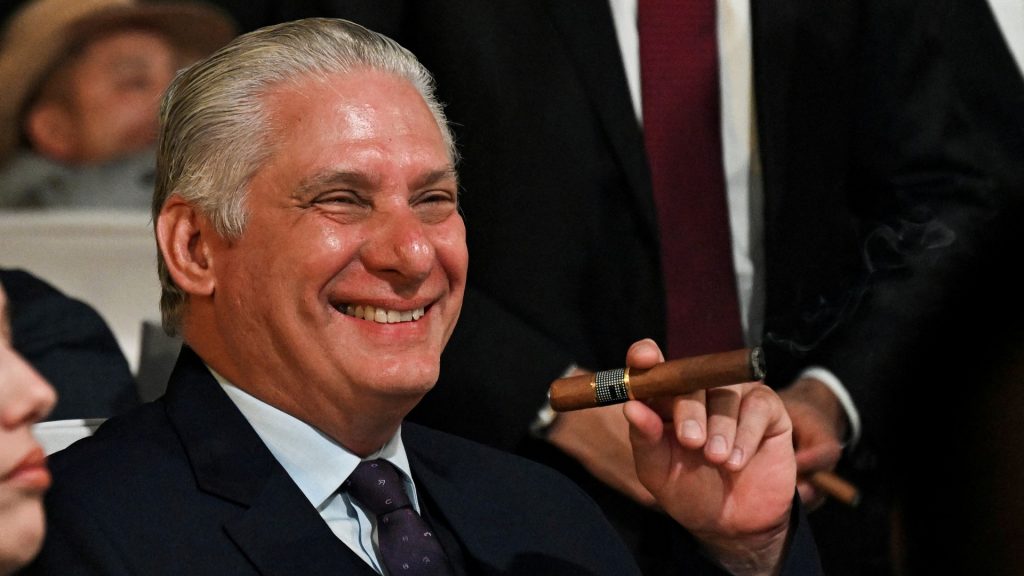
U.S. officials have told Cuban negotiators that President Miguel Díaz-Canel must step aside if Washington and Havana are going to reach a broader agreement. The demand places Cuba’s current president directly at the center of negotiations.
The position, reported by The New York Times, reflects a strategy focused on removing the island’s head of state without dismantling the Communist system that has governed Cuba for more than six decades.
People familiar with the talks told the newspaper that some U.S. officials believe Díaz-Canel’s removal could clear the way for economic changes and potential agreements with American businesses.
US pushes leadership change in Cuba
According to people familiar with the discussions, U.S. negotiators have told Cuban counterparts that no deal will move forward with Díaz-Canel still in office, The Times reported. The message has been framed as a step that would allow negotiations to proceed, rather than a direct ultimatum.
The proposal would remove a visible figure at the top of Cuba’s government while leaving the country’s political system intact. That approach aligns with the Trump administration’s broader foreign policy strategy of forcing governments to comply with U.S. demands without attempting full regime change, as seen in Venezuela.
Díaz-Canel, 65, has served as Cuba’s president since 2018 and also leads the Communist Party. He became the first Cuban leader since the 1959 revolution whose last name was not Castro, though members of the Castro family still hold significant influence within the government.

Some U.S. officials consider Díaz-Canel resistant to economic reforms that could open parts of Cuba’s economy to American investment, according to The Times report.
Power grid failure deepens crisis on island
The negotiations are happening during a deepening economic and energy crisis across Cuba.
As Straight Arrow News reported, officials reported a nationwide blackout Monday after the country’s electrical system suffered what the government described as a “complete disconnection.” The failure left most of the island’s roughly 11 million residents without power.
State media later said electricity had been restored to a small portion of Havana, including some hospitals, while technicians worked to stabilize the grid.

It was the third major nationwide blackout reported in Cuba in the past four months.
Cuba’s electrical system has deteriorated in recent years as aging infrastructure and fuel shortages strain power generation. Daily outages have become common across the island.

This story is featured in today’s Unbiased Updates. Watch the full episode here.
Energy shortages and sanctions strain economy
Fuel shortages have compounded the country’s energy problems. Long lines have formed outside gas stations, and tanker shipments have stalled as Cuba searches for new energy supplies.
Díaz-Canel said Friday that the country has gone three months without oil imports. He blamed the situation on U.S. sanctions and an energy blockade that has restricted Cuba’s ability to obtain fuel.

President Donald Trump has suggested the United States could play a larger role in the island’s future.
Speaking Monday, Trump said he believes he could have the “honor of taking Cuba,” though he did not clarify whether he meant diplomatically or otherwise.
“I mean, whether I free it, take it. I think I could do anything I want with it,” Trump said.
Cuban officials have confirmed that discussions with the United States are underway, but the government has not publicly addressed the demand involving Díaz-Canel’s position.
Ella Rae Greene, Editor In Chief