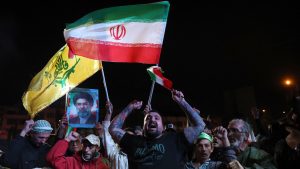
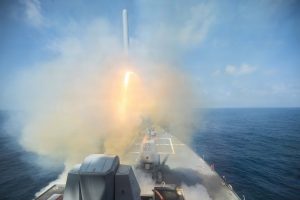
Trump faces accusations of war crimes, genocide as he vows to destroy Iran
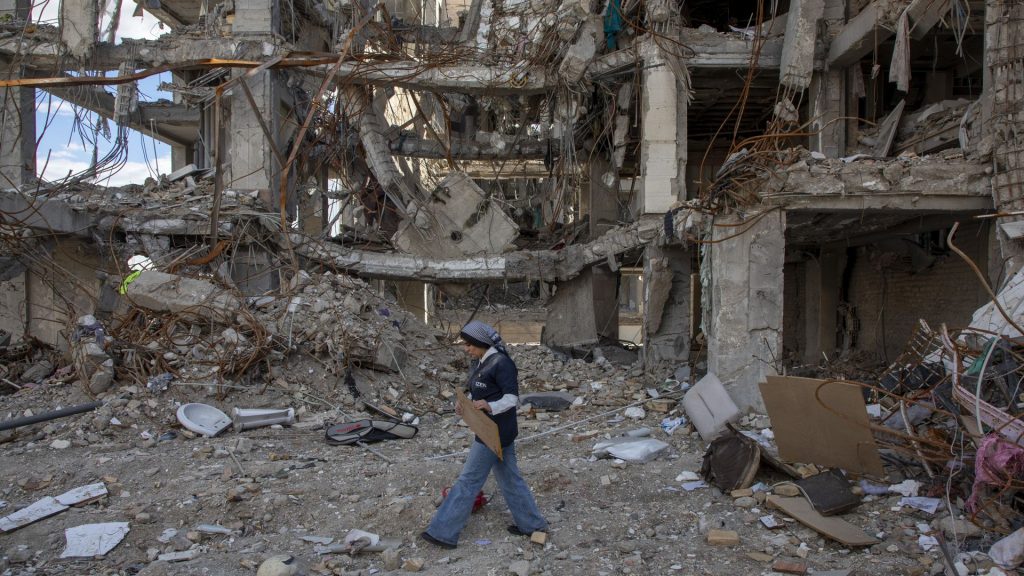
As he prepared to drop an atomic bomb on Hiroshima in 1945, President Harry Truman uttered one of history’s most chilling threats.
“If they do not now accept our terms,” Truman said of Japanese leaders near the end of World War II, “they may expect a rain of ruin from the air, the like of which has never been seen on this earth.”
For 81 years, no other U.S. president vowed to exact such a devastating toll on an enemy. Until Tuesday.
“A whole civilization will die tonight, never to be brought back again,” President Donald Trump wrote on TruthSocial as he made plans for a massive assault on Iran.
Trump may yet back down, or Iran’s leaders could accept a cease-fire proposal.
But if he follows through on the threat, Trump could be guilty of war crimes and — depending on the scale of civilian harm — genocide, according to legal, military and human rights experts.
“After two world wars, we decided to end the kind of total wars that failed to distinguish between civilians and soldiers,” Rebecca Hamilton, a law professor at American University, told Straight Arrow News. “The threat to destroy a ‘whole civilization’ completely obliterates that distinction. It attacks the defining feature of lawful conduct in war.”
Hamilton is one of more than 100 international law experts who signed a letter last week saying U.S. strikes in Iran already have violated the United Nations Charter and may be war crimes.
Hamilton pointed to a section of the U.N. Charter that also appears in the U.S. military’s Law of War Manual: “Threats of violence, the primary purpose of which is to spread terror among the civilian population, are prohibited.”
“You cannot harm civilians in order to pressure a government,” Hamilton said. “That is illegal under international law. … If he were to actually act on it, then we would be looking at the core international crimes of war crimes, crimes against humanity and/or genocide.”
‘It is unlawful to target a civilian object’
Trump first ordered strikes on Iran in late February, saying they were necessary to keep the Islamic Republic from developing nuclear weapons — even though he had said a brief air assault last summer had crippled the country’s nuclear capabilities.
In recent days, Trump has suggested that the U.S. has achieved its military objectives in this war, but has demanded that Iran open the Strait of Hormuz, a key shipping channel for global oil supplies. If the strait remained closed, Trump said, the U.S. would bomb Iran “back to the Stone Ages.”
Trump also has called on Iranian citizens to rise up against their oppressive government and has said the U.S. military action aims to “liberate” them. Then, on Tuesday, he escalated his rhetoric with a threat to obliterate Iran unless its leaders agreed to a cease-fire within hours.
Some say his words alone do not constitute war crimes.
“In general, to consider a threat a war crime, it would fall under the rubric of ‘terrorism,’” Justin Logan, director of defense and foreign policy studies at the Cato Institute, a libertarian think tank, told SAN. “You cannot do anything with the intent of terrorizing civilian populations.”
Others interviewed Tuesday, however, said international law exists to keep civilians out of harm’s way during military conflict.
“It is unlawful to target a civilian object,” Tom Dannenbaum, a Stanford University law professor, told SAN.
Dannenbaum, the Frank Stanton professor of nuclear security at Stanford’s Center for International Security and Cooperation, was also among the signers of the recent letter condemning U.S. strikes in Iran.
“Even when a specific object qualifies as a military objective … it is unlawful to direct an attack against it if the civilian harm expected from doing so would be excessive in relation to the military advantage anticipated,” Dannenbaum said. “These are cumulative requirements, so a failure to comply with either would entail an unlawful attack.”
“To be lawful you cannot target civilians or civilian objects,” Dannenbaum said. “You can potentially target objects being used for both civilian and military purposes, subject to some very specific restrictions, including ones that minimize civilian harm.”
Trump’s knowledge of the potential harm could come into play if a war crimes investigation results from additional strikes.
“Intent is a factor in determining an individual’s liability for war crimes,” Dannenbaum said. “For example, to be criminally liable for targeting a protected object, an individual must have at least recklessly directed the attack at a civilian object. Some jurisdictions, such as the International Criminal Court apply an intent threshold higher than recklessness, requiring that the attack be directed either purposefully or knowingly at a civilian object.”
‘This is not just unfortunate, it is unnecessary’
Top military officials also could face consequences.
“This is putting U.S. commanders in a terrible dilemma,” Geoffrey Corn, director of the Center for Military Law & Policy, told SAN. “I suspect they are committed to complying with the law of war. And we know many of these objects will qualify as lawful targets. But no matter how compelling the information is that supports those findings, once attacked they will be perceived as war crimes. This is not just unfortunate, it is unnecessary.”
Corn, who served as a top law-of-war expert at the U.S. Army in Iraq in 2004 and 2005, drew a parallel to another recent conflict.
“I hate to say this,” Corn said, “but it feels a bit like [Russian President Vladimir] Putin attacking Ukrainian civilian infrastructure to inflict suffering on the civilian population.”
Ella Rae Greene, Editor In Chief