Trump contradicts Rubio on why US struck Iran, ‘They were going to attack’
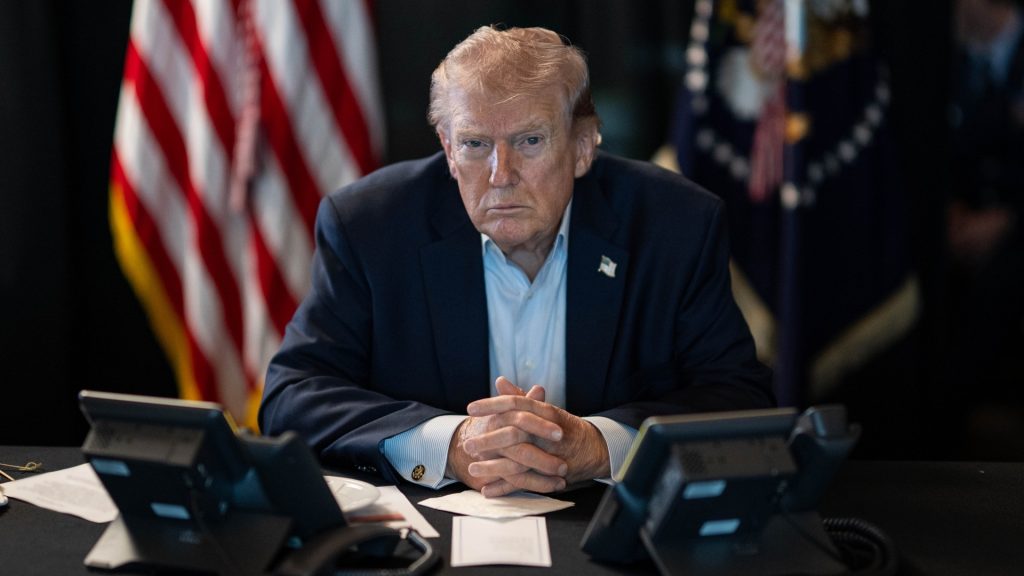
President Donald Trump said Tuesday the United States struck Iran because he believed Tehran was preparing to attack first. That explanation diverges from the rationale Secretary of State Marco Rubio delivered to lawmakers just one day earlier.
In the Oval Office, Trump rejected the idea that Israel forced his hand and said it was his judgment that Iran was about to strike.
“If anything, I might have forced their hand,” he said, referring to Israel. He added that negotiations with Tehran were failing and that he believed Iran was preparing an attack.
“It was my opinion that they were going to attack first. They were going to attack. If we didn’t do it, they were going to attack first. I felt strongly about that,” he said.
Rubio’s comments
But Rubio had told lawmakers Monday that the United States acted after learning Israel was preparing to strike Iran and that Iranian retaliation would likely target U.S. forces. He framed the operation as a preemptive step to prevent higher American casualties.
“We knew that there was going to be an Israeli action, we knew that that would precipitate an attack against American forces,” Rubio told reporters Monday after briefing lawmakers. “And we knew that if we didn’t preemptively go after them before they launched those attacks we would suffer higher casualties, perhaps higher than those killed.”
On Tuesday afternoon, Rubio addressed questions about the gap between his comments and the president’s.
“This was a question of timing, of why this had to happen as a joint operation, not the question of the intent. Once the president made a decision that negotiations were not going to work, that they were playing us on the negotiations and that this was a threat that was untenable, the decision was made to strike them,” Rubio said Tuesday. “That’s what I said yesterday. And you guys need to play it. And if you’re going to play these statements, you need to play the whole statement, not clip it to reach a narrative that you want to do.”

Defense Secretary Pete Hegseth backed the president’s account, posting on X that Trump’s explanation was “100% correct.”
Letter to Congress cites broader objectives
In a letter to Congress required under the War Powers Act, Trump wrote that the strikes were ordered to advance U.S. national interests and eliminate Iran as a global threat. The letter cited Iran’s missile stockpile, nuclear program and navy as targets. It also referenced protecting U.S. forces and ensuring maritime commerce through the Strait of Hormuz.
That explanation aligns more closely with Rubio’s Monday testimony. The letter describes the operation as collective self-defense with regional allies, including Israel. It does not cite a specific imminent Iranian attack on the U.S. homeland.
The administration said no U.S. ground forces were used. The letter states that the full scope and duration of military operations remain uncertain.

This story is featured in today’s Unbiased Updates. Watch the full episode here.
Democrats prepare war powers vote
Democratic leaders criticized the shifting explanations and are moving forward with votes that would require congressional authorization for continued military action.
Senate Majority Leader Chuck Schumer said the administration is offering “a different rationale every hour” and argued that Congress must assert its authority over war powers.
“America wants this President to pay attention to the problems at home, not the problems overseas,” Schumer said. “Particularly when no one has any idea of what the real rationale is, it changes every hour.”

House Minority Leader Hakeem Jeffries said Democrats will strongly support a War Powers Resolution.
“There is going to be very strong Democratic support for the War Powers Resolution across the ideological spectrum. That I can guarantee you,” Jeffries said. “Having been briefed now not once but twice, there is no evidence that has been presented to us that the United States was under threat of imminent attack from Iran. Zero evidence of that.”
But a small number of Democrats aligned closely with Israel have expressed reservations about backing the measure.
The Senate is expected to take up a vote on Wednesday, with the House set to follow on Thursday. Republicans are likely to block the resolutions.
Intelligence claim faces scrutiny
According to The New York Times, officials with access to U.S. intelligence have said Trump overstated how immediate any Iranian threat to the United States was. The administration has not publicly released intelligence supporting the president’s assertion that Iran was preparing to strike first.
Ella Rae Greene, Editor In Chief