Trump calls off second Venezuela strike as Senate moves to rein him in
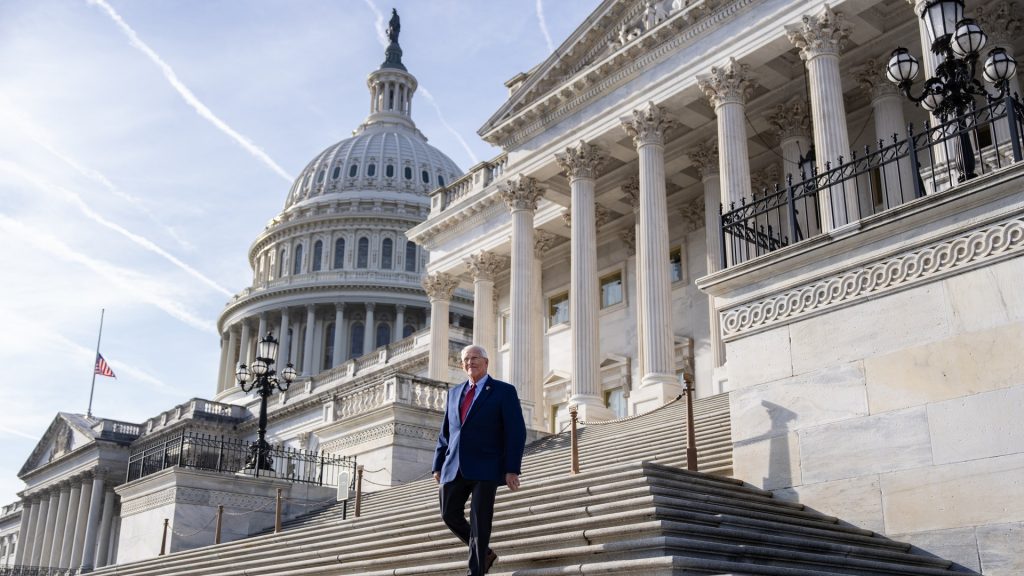
The Senate put President Donald Trump on notice over Venezuela, and five Republicans helped make it happen. The 52–47 vote Thursday to advance a War Powers resolution sets up a rare challenge to the president’s authority, days after a U.S. operation seized Venezuelan President Nicolás Maduro.
Early Friday morning, Trump signaled a shift. In a Truth Social post, he said he had canceled a “previously expected second Wave of Attacks,” arguing that Venezuela is now cooperating by releasing political prisoners and working with the U.S. on rebuilding its oil and gas infrastructure.
Trump framed the move as progress, not restraint, adding that U.S. ships would remain in place “for safety and security purposes.”
The timing was notable. Trump’s announcement came only after the Senate had already moved to assert its authority.
A procedural vote that landed like a rebuke
This was a procedural step, but it matters because it signals there’s likely enough support to pass the measure in the Senate when it comes up for a final vote next week. All Democrats backed it, along with five Republicans: Rand Paul of Kentucky, Lisa Murkowski of Alaska, Susan Collins of Maine, Todd Young of Indiana and Josh Hawley of Missouri.
Unbiased. Straight Facts.TM
Congress has challenged the War Powers Act multiple times since it was passed in 1973, but it has never successfully used it to force the withdrawal of troops.
The resolution is sponsored by Sens. Tim Kaine, D-Va., and Rand Paul.
If it passes next week, it moves to the House, where Republicans already had a slim majority, now slimmer after Rep. Doug LaMalfa, R-Calif., died earlier this week.
Trump goes after the Republicans — by name
In a Truth Social post after the vote, he framed the resolution as a national security threat and called out the Republican senators who voted with Democrats.
“Republicans should be ashamed of the Senators that just voted with Democrats in attempting to take away our Powers to fight and defend the United States of America,” Trump wrote, adding that Collins, Murkowski, Paul, Hawley, and Young “should never be elected again.”
The senators Trump targeted quickly moved to explain why they broke rank, and their justifications show the fault line inside the GOP right now: support for the Maduro operation, but real unease about what comes next.
What the GOP defectors are saying
Collins said her vote was driven by Trump’s own comments about the future, specifically the possibility of “boots on the ground” and a sustained U.S. role “running” Venezuela.
“I believe invoking the War Powers Act at this moment is necessary,” Collins wrote, “given the President’s comments about the possibility of ‘boots on the ground’ and a sustained engagement ‘running’ Venezuela, with which I do not agree.”
Hawley pointed to the Constitution, arguing that a president should get congressional approval before conducting military operations.
Young said he supported Trump’s action to capture Maduro, but drew a bright line on escalation.
“President Trump campaigned against forever wars, and I strongly support him in that position,” Young said in a statement. “A drawn-out campaign in Venezuela involving the American military, even if unintended, would be the opposite of President Trump’s goal of ending foreign entanglements.”

What happens next
Next week will be the real test.
Thursday’s vote sets up a full Senate vote on the resolution. Passage would require only a simple majority. But even if the Senate passes it, the path from there is steep: the House would need to approve it, and Trump would still have to sign it.

Paul argued Thursday’s vote is about Congress taking responsibility for war-making authority instead of handing it off.
“Make no mistake,” Paul said, “bombing another nation’s capital and removing their leader is an act of war, plain and simple.”
The House is the tougher climb
If the resolution reaches the House, Democrats are expected to vote yes, but the outcome will hinge on how many Republicans are willing to cross the White House.
One Republican already raising alarms is Rep. Thomas Massie, R-Ky., who argued the administration’s legal rationale doesn’t hold up.
In a post on X, Massie wrote, “If this action were constitutionally sound, the Attorney General wouldn’t be tweeting that they’ve arrested the President of a sovereign country and his wife for possessing guns in violation of a 1934 U.S. firearm law.”
Even if the House did pass the measure, Trump is unlikely to sign it. And without a veto-proof margin, this vote may be less about law and more about forcing Congress to take a public stand on what comes next.
The post Trump calls off second Venezuela strike as Senate moves to rein him in appeared first on Straight Arrow News.
Ella Rae Greene, Editor In Chief