The US and Israel broke the Olympic Truce. Their Paralympians will still compete
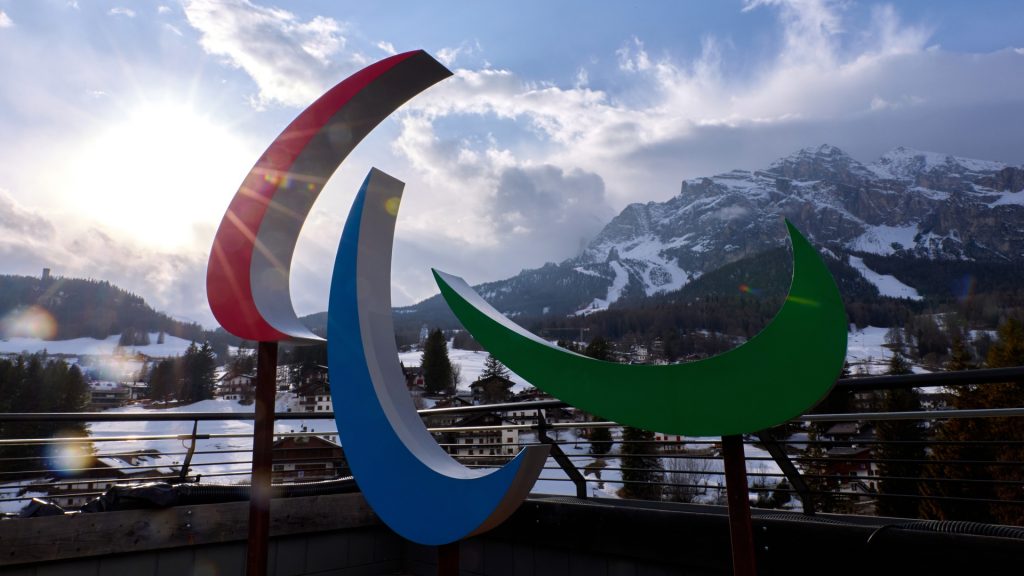
When the 2026 Paralympics officially open on Friday, several participating nations will be entering a second week of warfare in violation of the Olympic Truce. The International Paralympic Committee (IPC) is still allowing athletes from the U.S., Israel and Iran to compete, despite some calls for their removal, while it monitors the situation.
What is the Olympic Truce?
The Olympic Truce is a United Nations (UN) resolution calling for global peace beginning seven days before the opening ceremony of the Olympic Games and continuing for seven days after the close of the Paralympic Games. Its goal is to promote peace and unity – Olympic principles – and allow athletes to safely travel to and from the Games without the threat of attack.
The Truce, however, is a non-binding agreement, a flaw the International Olympic Committee (IOC) recognised in a statement Tuesday.
“The Olympic Truce Resolution is an aspirational and non-binding resolution which the UN Member States agree on for each edition of the Olympic and Paralympic Games,” the statement said. “It is tabled by the host nation of the Games and is adopted by the UN Member States themselves. The IOC, with its Permanent Observer Status at the UN, has no means of enforcing the implementation of the resolution. We recognise that this is entirely in the remit of the UN system and outside the remit of the IOC.”
On paper, the IOC has the authority to take action against participating nations that violate its policies. But that rarely happens because the IOC has affirmed its stance as a politically neutral organization above all else.
The IOC’s stance on neutrality was spotlighted during the Milan Cortina Games after it banned a Ukrainian skeleton athlete from competition after he wore a helmet honoring fellow countrymen killed during Russia’s invasion, calling it political speech.
Comparing conflicts
This year’s truce should have run from Jan. 30 to March 22. When the U.S. began airstrikes on Iran last Saturday, it officially violated that agreement, and it’s not the first time America has done so.
“Countries ignore it all the time, the United States included,” said Jules Boykoff, a professor at Pacific University who studies the connection between sport and politics. “It’s not like the U.S. stopped the wars in Afghanistan and Iraq when the Truce went into effect. The most recent bombing of Iran is yet another example.”
While the decision not to enforce the Truce was unsurprising to many after 2001, the 2026 decision is being made in direct comparison to four years ago. Russia invaded Ukraine just days after the close of the Beijing Olympics and before the Beijing Paralympics began. That action also violated the Olympic Truce, but the IOC and IPC took a different approach than they had previously, banning Russian and Belarusian athletes from Paralympic competition.
“Many Olympic mavens were shocked when the IOC listed the Olympic Truce as one of two reasons it was banning Russia from participating under its flag and anthem ahead of the Paris 2024 Summer Games,” Boykoff said.
The IOC kept that ban in place for 2024 and 2026. Thirteen athletes from Russia and seven from Belarus cleared the IOC’s Individual Neutral Athlete Eligibility Review Panel to compete independently in 2026. In addition to passing the review, those athletes also had to sign a pledge that “contains a commitment to respect the Olympic Charter, including ‘the peace mission of the Olympic Movement.’”
So, why is 2026 different from 2022? The IOC does not intervene until sport is impacted.
“The IOC gave two reasons for banning Russia: the Olympic Truce and the fact that it had snapped up Ukrainian territory and absorbed Ukrainian sports clubs into their own sporty orbit,” Boykoff said.
Russia had not been banned from the Games for its military action in Ukraine, despite annexing Crimea before that point, Boykoff pointed out. That stance was further cemented in 2024, when calls grew to ban Israel from the Paris Games for its role in the Gaza conflict.
At the time, Bach said while the situation had “horrifying consequences,” Israel could compete because it had not attempted to annex Palestine’s national governing bodies and therefore had not violated the Olympic Charter.
“We must be politically neutral but not apolitical,” former IOC President Thomas Bach said in 2024. “We know well that our decisions have political implications, and we have to include that in our thinking.”
Unless the U.S. and Israel attempt to take over sports organizations under the Iranian Olympic Committee’s oversight, the committee will likely continue to ignore the violation of the Truce.
Ella Rae Greene, Editor In Chief