Starlink becomes lifeline, and target, in Iran’s protest blackout
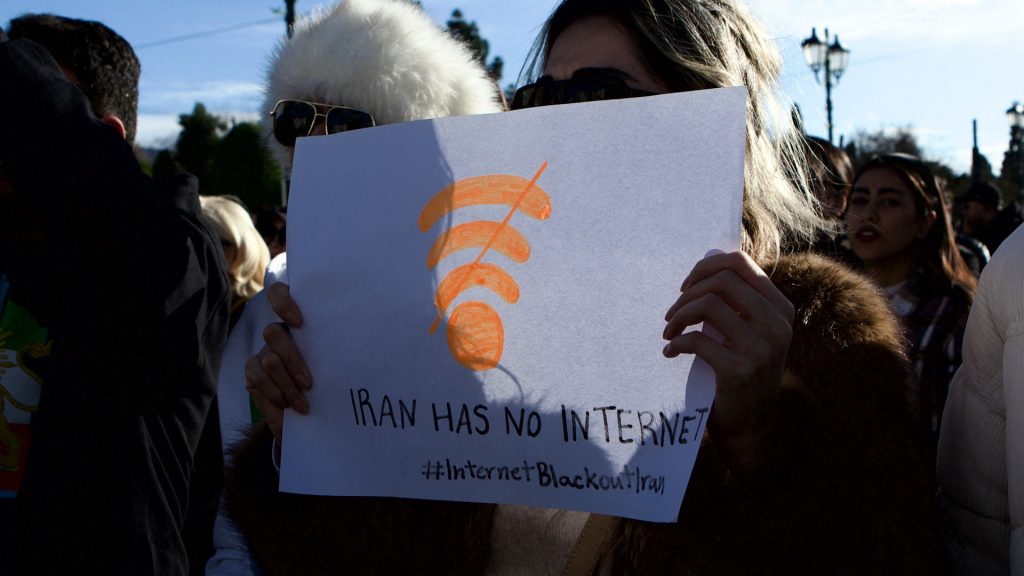
Iranian authorities are hunting for and confiscating illegal Starlink satellite dishes in Tehran in an effort to stop protest videos from reaching the outside world. The campaign was first reported by The Wall Street Journal and has been detailed by activists and human rights groups.
According to the Journal, authorities are combining door-to-door searches and signal jamming with a sweeping internet shutdown, leaving many protesters reliant on Starlink as their only connection.
“It is the only way,” said Mahmood Amiry-Moghaddam, co-founder of Iran Human Rights.
Why Starlink access matters in Iran’s deadly crackdown
Unbiased. Straight Facts.TM
An estimated 85 to 90 million people have been under a near-total internet and telecommunications blackout since Jan. 8.

The information battle is unfolding alongside a crackdown that activists say has killed thousands, making it one of the deadliest episodes in the Islamic Republic’s recent history.
The group Human Rights Activists in Iran places the death toll above 2,000, while a related group, Hengaw, has circulated a graphic video it says shows large numbers of bodies in a morgue in south Tehran.
According to The Associated Press, activist monitors now estimate the death toll has climbed past 2,500 since late December. That figure reportedly includes both demonstrators and security forces.
The protests erupted after a currency collapse pushed Iran’s 85 million people into an economic crisis. Authorities responded by shutting down most internet and phone services nationwide — paralyzing businesses already strained by sanctions and strikes.
Inside the covert network – and state response
With much of the country offline, activists and technologists describe a covert network of Starlink terminals as a critical lifeline.
Because the hardware is banned, reports say smugglers are moving terminals into Iran via small boats from Dubai or overland routes from Iraqi Kurdistan. Mehdi Yahyanejad, co-founder of NetFreedom Pioneers, told the Journal his organization sent hundreds of kits to nonprofits inside Iran, adding that when users briefly get a connection, “they transmit as many videos as they can.”
In response, the government has intensified its countermeasures. Tehran has pressed the U.S., via the International Telecommunication Union, to ban Starlink service within Iran, The Journal reports. Inside Iran, the state has sent text messages urging citizens to rely on state-linked news agencies and inviting them to pro-regime rallies “against US & Israel.”
‘Cat-and-mouse’ warfare on the ground
The AP describes the battle over connectivity as a high-stakes game of “cat-and-mouse.”
Hashemi told Euronews that the government is running a targeted campaign to disable Starlink devices, using GPS jamming, radio-frequency scanners to detect transmissions and raids on the homes of suspected users. He said upload speeds have been “drastically reduced,” calling the situation “very scary.”
Hashemi also relayed accounts of escalating force on the streets. One witness in Shiraz, he said, saw Basij forces deploying teenagers as young as 15, including one youth with a shotgun who behaved “as if he was playing a video game.”
Despite these tactics, Ahmad Ahmadian of Holistic Resilience told the AP that the government’s interference appears effective only in certain urban areas. He said SpaceX responded to jamming attempts by releasing a software patch to bypass the blocks – and argued the growing number of terminals has made it increasingly difficult to cut communications.
Trump’s options and the risks of a single lifeline
The Journal reports that President Donald Trump was scheduled to receive a briefing Tuesday on options to respond to the crackdown, including a proposal to send additional Starlink terminals into Iran.
Trump told reporters he would ask Elon Musk whether the U.S. could “get the internet going if that’s possible.”
Separately, AP reports that activists say SpaceX has effectively made the service free for existing users in Iran to increase the flow of evidence out of the country.
But experts warn that relying on a single company carries risks. Julia Voo of the International Institute for Strategic Studies told the AP that this dependency creates a “single point of failure,” warning that as Starlink becomes more effective at piercing government blackouts, states are less likely to intensify efforts to destroy or control such systems.
The post Starlink becomes lifeline, and target, in Iran’s protest blackout appeared first on Straight Arrow News.
Ella Rae Greene, Editor In Chief