SCOTUS sides with street preacher who challenged law restricting protests
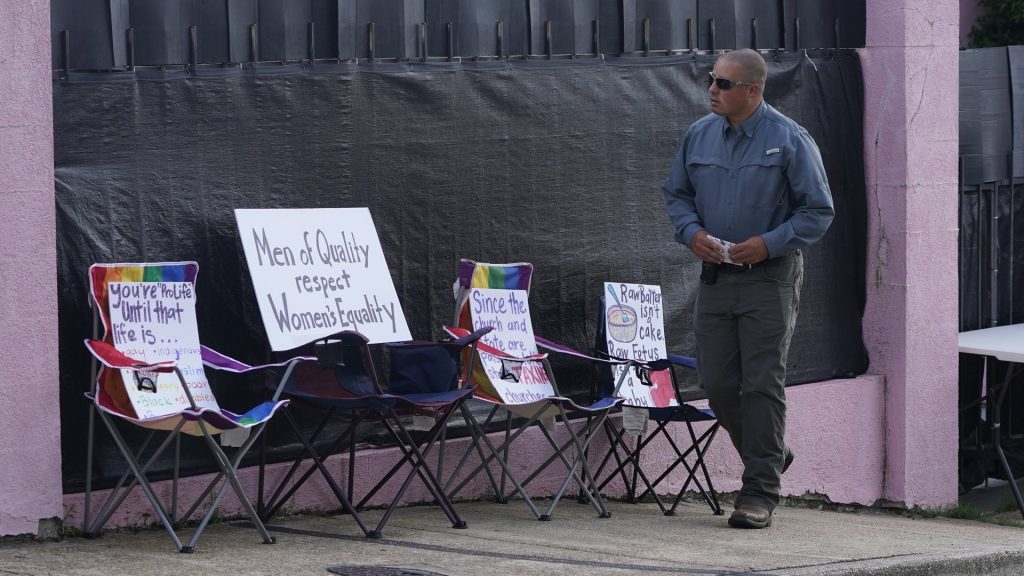
The Supreme Court has ruled in favor of a street preacher who was arrested for evangelizing in a Mississippi town’s no-protest zone where he loudly assailed “drunkards” and “Jezebels” passing by.
The court’s unanimous decision allows Gabriel Olivier to proceed with a civil rights lawsuit against the city of Brandon, Mississippi, arguing that restricting his preaching to the no-protest zone outside a city-owned venue was a violation of the First Amendment.
As Straight Arrow News previously reported, the city had argued — and a federal appeals court had ruled — that Olivier could not file a civil suit over his arrest because he had pleaded guilty to the criminal charge.
He was fined and placed on one year of non-supervised probation before suing the city.
The court’s ruling broke with a 1994 precedent that blocked civil cases challenging a law if a person had already been convicted of violating the law.
However, writing for a unanimous court, Justice Elena Kagan said Olivier’s conviction for violating the local protest law had no bearing on his efforts to prevent future enforcement of the ordinance.
“Given that Olivier asked for only a forward-looking remedy — an injunction stopping officials from enforcing the city ordinance in the future — his suit can proceed, notwithstanding his prior conviction,” Kagan wrote.
The court rejected arguments from the city of Brandon, which said Olivier should have challenged the law’s validity in state court, not through a federal lawsuit.
“Petitioner had the opportunity and presumably still has the opportunity to challenge the ordinance under the Mississippi Constitution, which offers greater First Amendment protection than the federal Constitution,” attorney Todd Butler argued for the city last December. “Although Petitioner claims in this case that the courthouse doors are closed, that argument ignores the countless doors Petitioner chose not to enter. What this case is about is Petitioner’s preferred door, one that offers his favored venue and an opportunity for attorneys’ fees.”
Ella Rae Greene, Editor In Chief