Rubio explains why Congress wasn’t told about Maduro capture operation
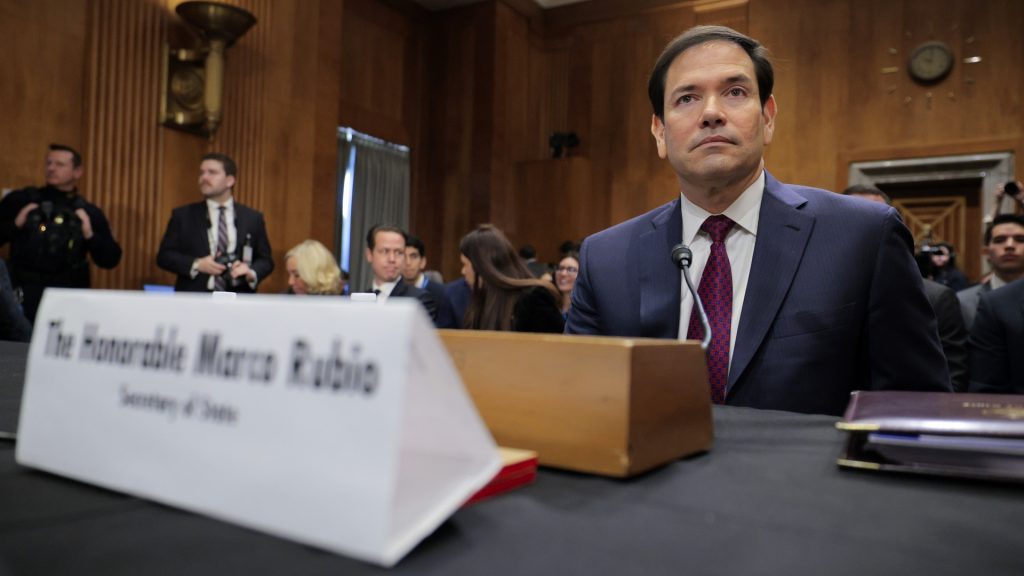
Secretary of State Marco Rubio testified before the Senate Foreign Relations Committee on Wednesday, discussing U.S. policy towards Venezuela for the first time since the U.S. captured President Nicolás Maduro.
During his remarks, Rubio focused on what will come next for the U.S. and Venezuela, saying the goal is to transition the country into a “free, fair and prosperous Venezuela.”
“I am not here to claim to you that this is going to be easy or simple,” Rubio said. But he noted due to efforts in the last four weeks, “we are much further along than what we expected.”
Rubio said the primary focus now is stabilization and recovery. He said one of the next steps is to soon have a diplomatic presence on the ground in Venezuela.

Military action in Venezuela
Rubio said current projections don’t anticipate military action in Venezuela, saying, “The only military you’ll see in Venezuela are the marine guards at an embassy.”
However, he added if an imminent threat appears, for example drones pointed toward the U.S., Trump has authority to call for military action.
He again iterated that current projections don’t anticipate a threat.
Maduro’s removal
One of the primary topics during the hearing was Maduro’s capture. Since he returned to the U.S., lawmakers have expressed concern that Congress was not consulted before the military maneuver.
Sen. Chris Coons, D-Del., said Maduro’s removal went as well as it possibly could, and noted Maduro is “a bad guy.” However, he said that the military maneuver to remove Maduro had been rehearsed for months and that, during that period, the Senate committee had been told there would be no military action to remove him.
He noted that, if there was time to rehearse, there was time to consult with the committee and Congress.
“It is critical that you consult with Congress,” Coons said. “Let’s work to restore that.”
Rubio countered that the rehearsals were to determine whether the maneuver was even possible, and at the time, it was unclear whether the military would ever be able to execute it. He called it a contingency, rather than a rehearsal for planned efforts.
Rubio added that when the opportunity arose to remove Maduro, the military had a narrow window to act.
What led to this
Since the Trump administration began military efforts off the coast of Venezuela, lawmakers on both sides of the aisle have expressed concerns over U.S. involvement.
President Donald Trump ordered dozens of strikes on alleged drug-smuggling boats, sparking some to question Trump’s authority to continue to do so. Several Republicans also helped advance a war powers resolution in the Senate to rein in Trump’s authority.
Some backed down following previous comments from Rubio, who vowed that the U.S. would not put troops on the ground in Venezuela.
The post Rubio explains why Congress wasn’t told about Maduro capture operation appeared first on Straight Arrow News.
Ella Rae Greene, Editor In Chief