RFK Jr. backs Trump’s weed-killer order, and his MAHA movement isn’t happy
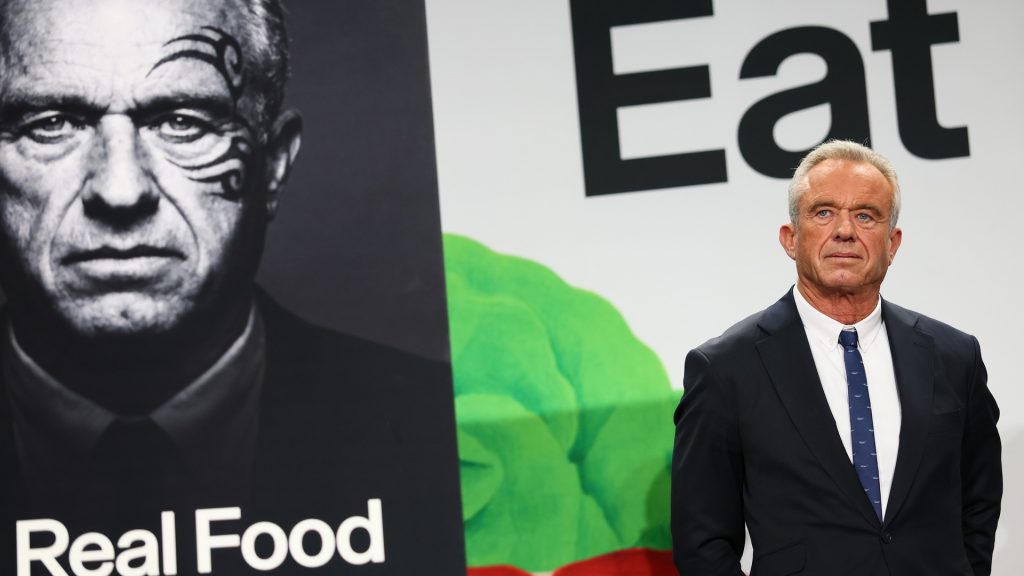
Health and Human Services Secretary Robert F. Kennedy Jr., the standard-bearer of the Make America Healthy Again (MAHA) movement, says President Donald Trump’s order on the weed killer glyphosate will protect the U.S. food chain while also allowing the country to wean itself from the broadleaf herbicide.
“I will always tell the American people the truth,” Kennedy wrote to begin a nearly 600-word X post.
After describing pesticides and herbicides as “toxic by design,” and noting that chemical companies have paid millions of dollars to settle lawsuits claiming the chemicals cause cancer, Kennedy said American agriculture is dependent on them.
“The U.S. represents 4% of the world’s population, yet we use roughly 25% of its pesticides,” he said. “If these inputs disappeared overnight, crop yields would fall, food prices would surge, and America would experience a massive loss of farms even beyond what we are witnessing today. The consequences would be disastrous.”
Kennedy said relying on chemical manufacturers outside of the U.S. represents a national security risk.
MAHA not having it
Kennedy’s social media post was met with broad criticism from many in his own movement. The overarching theme of responses was understanding for protecting American farmers, but criticism of Trump’s granting immunity to the chemical manufacturers.
“It’s been a year,” replied Zen Honeycutt, founder of MAHA group Moms Across America. “Not a single thing has been done by the EPA to reduce our children’s and families exposure to pesticides. In fact regulations have only gotten worse, loosened and more harmful pesticides have been approved. There is no excuse for this. We love you Bobby but this administration needs to keep their word.”
Honeycutt and others said more farmers are moving to organic practices with help from organizations like the Rodale Institute, reducing the country’s dependence on chemicals like glyphosate.
“Whether glyphosate comes from China or the USA it’s still sterilizing and killing us and our soil,” she said.
Glyphosate, best known under Monsanto’s brand-name of RoundUp, has been in use since it was introduced in the 1970s. In the 1990s, the herbicide went global with the commercial use of genetically modified crops that were glyphosate-resistant. This allowed farmers to spray the weedkiller on mature fields and not worry about killing the crops.
Organic farming
Production of organic produce has increased in recent years, and so has the number of acres certified by the federal government as organic farms. As of 2021, total U.S. certified organic farmland reached 4.9 million acres. The figure was just 1.8 million acres in 2000.
But while organic sales in 2021 accounted for about 3% of the country’s farm receipts, organic acreage was still less than 1% of U.S. farmland.
U.S. farms don’t just feed the country, they feed the world. And, shifting to organic farming with current technology means less food. Most importantly, a switch to organic farming wouldn’t mean less corn and beans on the table, it would mean less beef, pork and poultry.
According to 2025 U.S. Department of Agriculture data, around 40% of domestic corn goes to feed livestock. With only 10-20% of what’s grown exported, the U.S. is the world’s top exporter of corn.
Should American farmers make the switch to organic farming en masse, the nation’s total corn production would drop by a third, according to the Purdue University Center for Commercial Agriculture. The school produced similar estimates for soybeans and wheat.
Kennedy finished his social media post defending Trump’s order, saying that the president didn’t create the country’s agricultural dependency on foreign chemicals, but that HHS would work to wean the country off of it without toppling the food supply.
The post RFK Jr. backs Trump’s weed-killer order, and his MAHA movement isn’t happy appeared first on Straight Arrow News.
Ella Rae Greene, Editor In Chief