People want tariff refunds after Supreme Court ruling. Will they happen?
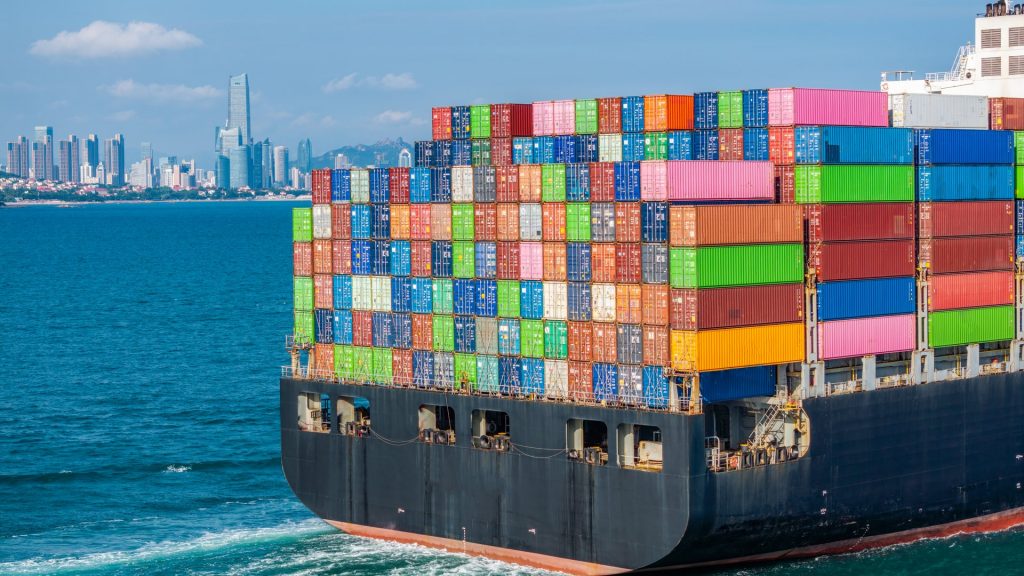
In the wake of the Supreme Court striking down tariffs President Donald Trump imposed under the International Emergency Economic Powers Act, business and political leaders are calling for the administration to issue refund checks.
This includes the National Retail Federation, which said in a statement that it urges the lower court “to ensure a seamless process to refund the tariffs to U.S. importers.”
“The refunds will serve as an economic boost and allow companies to reinvest in their operations, their employees and their customers,” the National Retail Federation said.
Neil Bradley, the executive vice president and chief policy officer at the U.S. Chamber of Commerce, in a statement celebrating the Supreme Court’s decision said “swift refunds of the impermissible tariffs will be meaningful” for hundreds of thousands of small business importers. Small and midsize businesses around the country saw significant cost increases, as well as supply chain disruptions, because of tariffs, Bradley said.
Illinois Gov. JB Pritzker and California Gov. Gavin Newsom both said similar, with the latter saying that “every dollar unlawfully taken must be refunded immediately — with interest.”
“Cough up!” Newsom said.
Pritzker wrote a letter to the Trump administration demanding $1,700 for every family in Illinois. With 5,105,448 households in the state, Pritzker calculated that the total damages owed sits at $8,679,261,600.
“This letter and the attached invoice stand as an official notice that compensation is owed to the people of Illinois, and if you do not comply we will pursue further action,” Pritzker said.
Nevada State Treasurer Zach Conine also invoiced the federal government for a $2.1 billion refund, the Reno Gazette Journal reported.
Two lawmakers, Rep. Steven Horsford, D- Nev., and Rep. Janelle Bynum, R-Ore., introduced legislation that would require tariff refunds within 90 days of the bill’s enactment and eliminate the need for individual applications or formal protests for this money.
“When the government takes money without proper authority, it doesn’t get to keep it,” Horsford said. “These blanket tariffs drove up prices, squeezed small businesses, and made everyday life more expensive for working people. The Supreme Court has now made clear the law used to impose them did not authorize that action. It’s time to return the money and begin repairing the damage by this reckless trade policy.”
Sen. Elizabeth Warren, D-Mass., criticized there being “no legal mechanism for consumers and many small businesses to recoup the money they have already paid.”
“Instead, giant corporations with their armies of lawyers and lobbyists can sue for tariff refunds, then just pocket the money for themselves,” she said, arguing these should go into American citizens’ and small businesses instead. “It’s one more example of how the game is rigged.”
The road to tariff refunds
The University of Pennsylvania‘s Penn Wharton Budget Model estimates the IEEPA tariffs generated as much as $175 billion total which can be refunded.
Refunds are available only for the tariffs that were justified using the IEEPA, since they were the ones deemed illegal by the nation’s highest court. Tariffs under Section 232, Section 301, Section 201, anti-dumping and countervailing duties (AD/CVDs), or most-favored nation (MFN) tariffs will not be refunded, according to the U.S. Chamber of Commerce.
Importers can request refunds through Customs and Border Protection within 180 days after liquidation, or, in some cases, the date the Supreme Court made its ruling, the Congressional Research Service wrote in January. CBP can then either deny or allow a protest “in whole or in part.” Those who get denied can seek judicial relief, including by suing the United States in the U.S. Court of International Trade.
As they wait for justices to decide, more than 1,500 companies filed tariff lawsuits in the trade court, a Bloomberg analysis found. Government lawyers, according to the outlet, said in written submissions that the Trump administration won’t fight the court’s authority to order officials to recalculate tariffs. They did, though, indicate it might try to limit which importers are eligible for refunds.
Supreme Court Justice Brett Kavanaugh said in a dissenting opinion that sorting out these potential repayments could be complicated as justices did not outline how the government should handle the reimbursement.
“The Supreme Court did not talk explicitly about the $175 billion in tariffs that could potentially be refunded,” PWBM director Kent Smetters told Reuters. “On the other hand, their ruling today clearly does open that door for those refunds to be demanded.”
Most companies will likely seek refunds, Smetters predicted, “and it’s basically just going to come out from the U.S. Treasury.”
In an interview with Reuters from January, U.S. Treasury Secretary Scott Bessent said the U.S. has more than adequate funds to pay off the refunds. Repayments would be spread out over weeks or even a year, however, Bessent said.
Asked about refunds at a news conference on Friday, Trump lashed out at Supreme Court justices, saying “they take months and months to write an opinion and they don’t even discuss that point.”
“I guess it has to get litigated for the next two years,” he said.
Trade lawyers who spoke to The Associated Press that the journey to get tariff refunds could get rocky.
Still, “just because the process is difficult to administer doesn’t mean the government has the right to hold on to fees that were collected unlawfully,″ trade lawyer Alexis Early, partner at the law firm Bryan Cave Leighton Paisner, said to the AP.
The post People want tariff refunds after Supreme Court ruling. Will they happen? appeared first on Straight Arrow News.
Ella Rae Greene, Editor In Chief