Pentagon sinks ROTOR Act, the air safety bill responding to DC midair crash
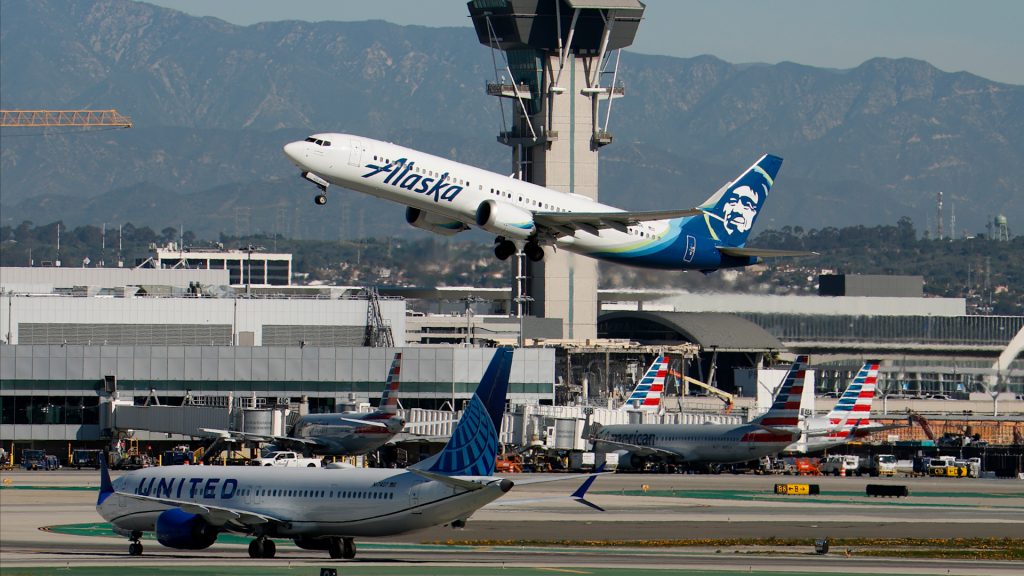
A bipartisan aviation safety bill drafted after a fatal midair collision near Washington, D.C., has been rejected in the House, stalling its path forward. The bill failed, 264–133, one day after the Pentagon withdrew its support.
It’s a reversal that The New York Times reported fueled opposition in the House. The ROTOR Act fell short of the two-thirds majority necessary to pass under fast-track rules on Tuesday. More than 130 Republicans voted against the measure.
Unbiased. Straight Facts.TM
ADS-B Out (Automatic Dependent Surveillance-Broadcast) transmits an aircraft’s position, altitude and speed once per second to other pilots and controllers.

The tragedy and the tech
Lawmakers drafted the bill after the midair collision on Jan. 29, 2025, when a U.S. Army Black Hawk helicopter struck an American Airlines passenger jet over the Potomac River, killing 67 people. At the core of the ROTOR Act is a mandate to expand the use of Automatic Dependent Surveillance-Broadcast (ADS-B) technology.
National Transportation Safety Board (NTSB) investigators said the ADS-B technology could have provided almost a minute of warning. Federal investigators found the pilots realized they were on a collision course little more than a second before impact.
Before the vote, NTSB Chair Jennifer Homendy wrote on social media that the ROTOR Act “would’ve saved lives” and asked, “How many more people need to die before we act?”
Families of the victims said they were devastated after the vote and urged House leaders to bring the bill back under a procedure that would allow it to pass with a simple majority.
The Pentagon’s reversal and OSINT risks
The bipartisan measure, spearheaded by Senators Ted Cruz, R-Texas, and Maria Cantwell, D-Wash., passed the Senate unanimously late last year after the authors included specific provisions requested by the Defense Department. According to The Times, the bill would have required the Federal Aviation Administration (FAA) to review flight routes at large and midsize airports, limit when military aircraft can turn off location broadcasting technology in congested airspace and set a deadline for nearly all aircraft to install advanced tracking technology by the end of 2031.
The Pentagon abruptly reversed course Monday. Defense Department spokesperson Sean Parnell told Politico that the Senate’s final version lacked mutually agreed-upon updates. Parnell said the bill would create “unresolved budgetary burdens and operational security risks affecting national defense activities.”
The Pentagon failed its eighth consecutive audit in December.
Separately, open-source intelligence analysts and military officials have argued that publicly available aircraft-tracking data can raise operational security concerns when aggregated, a debate Straight Arrow News has previously reported. ADS-B Out broadcasts an aircraft’s position data about once per second, enabling real-time tracking from publicly receivable feeds. OSINT experts describe the risk as the “mosaic effect,” where separate public details can become more sensitive when assembled into a larger picture.
Pointing to these dangers, House Armed Services Chair Mike Rogers, R-Ala., argued the mandate compromises national security by forcing classified assets to broadcast their positions. House Transportation Chair Sam Graves, R-Mo., also opposed the bill, calling it an “unworkable government mandate” and saying it would be burdensome for some pilots.
A competing vision: The ALERT Act
The defeat of the ROTOR Act has shifted momentum toward a competing Republican-led alternative, the ALERT Act, introduced by Graves and Rogers.
The Times reported this alternative offers looser restrictions on military aircraft in commercial airspace and provides exemptions for certain private flights. While it requires aircraft to be capable of receiving safety alerts, it leaves the specific technological requirements and deadlines open-ended. Homendy has strongly criticized the ALERT Act, rejecting claims from lawmakers that it satisfies the safety board’s post-crash recommendations.
Despite the setback, the sponsors of the ROTOR Act vow to keep fighting. Cruz called the outcome a “temporary delay,” and said he would keep pressing for the ROTOR Act to become law. The Times reported that the House could bring the ROTOR Act back under a procedure requiring only a simple majority, but revival may be unlikely because top GOP leaders — including Speaker Mike Johnson and the committee chairs who must hear the bill — voted against it.
Meanwhile, Rogers predicted the ALERT Act could be voted on as soon as next week, a step that could set up a clash with the Senate, which had passed the ROTOR Act unanimously.
Ella Rae Greene, Editor In Chief