Michigan sued for COVID-era nursing home files after shirking FOIA law
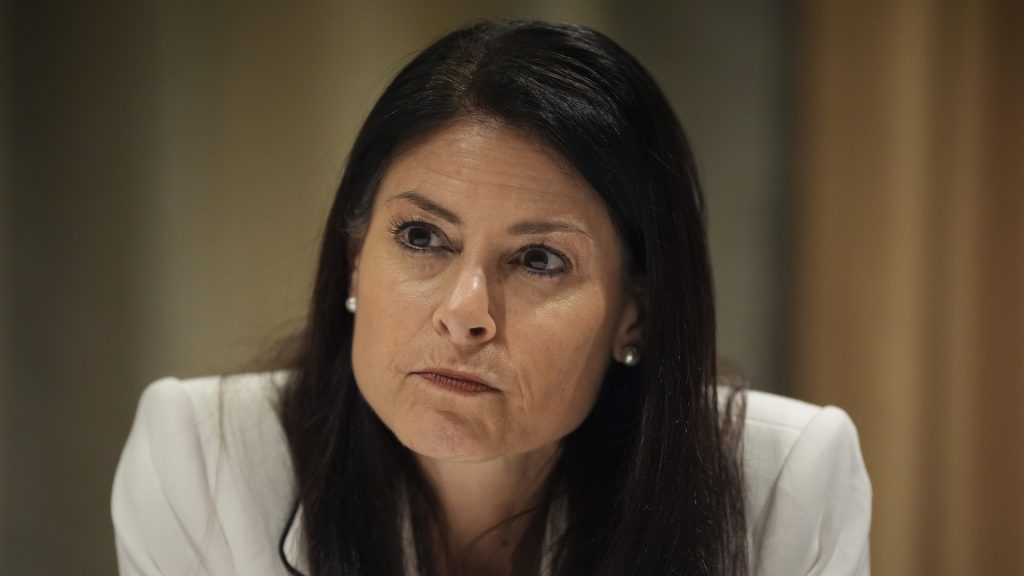
An investigative journalist sued the Michigan attorney general, accusing her and her office of failing to produce Freedom of Information Act, or FOIA, records. Charlie LeDuff said Dana Nessel and her office granted FOIA requests regarding responses to federal questions about nursing homes during the COVID-19 pandemic but didn’t produce them for months or longer.
“The end goal is one — I want the information,” LeDuff told Straight Arrow News. “Two — once and for all, I want the three-week window to be imposed, and I want reasonable costs.”
“This isn’t a whimsical exercise. It’s the public’s interest,” he added.
The Michigan Attorney General’s Office did not respond to a request for comment.
Michigan lawsuit
LeDuff filed his claim against Nessel’s office in December of last year in the Michigan Court of Claims.
“This case is about restoring FOIA to what the Legislature intended — a disclosure statute, not a waiting game,” Philip L. Ellison, principal attorney at Outside Legal Counsel PLC who’s representing LeDuff, told Michigan Capitol Confidential. “When an agency says, ‘we grant your request’ but then produces nothing for half a year or more, that’s not transparency. It’s loop evasion.”
The suit seeks declaratory and injunctive relief to stop the use of what’s called “grant-and-delay” responses. That’s when agencies approve a request but withhold records indefinitely without identifying exemptions or meeting meaningful timelines.
The latter is especially important to journalists who are often working on a deadline.
“A lot of information that particularly journalists are seeking has a timely component to it, and so it can be truly problematic when these kinds of responses drag out for lengthy periods of time,” Margaret Kwoka, law professor at Ohio State University, told Straight Arrow News.
In Michigan, agencies have five days to respond to FOIA requests but can extend that 15 days.
“At the federal level, there’s 20 business days to respond to most requests,” Kwoka said.
LeDuff also accused the department of what’s known as a King Response, stemming from the King vs. Michigan State Police Department case in 2015. That case made it illegal for departments to say a request is granted as to non-exempt records without identifying what records are withheld or why.
Agencies are required to explain those exemptions.
This all stemmed from an April 2025 FOIA request where LeDuff sought records about Michigan’s response to federal inquiries into COVID-19 and public nursing homes.
“There was never any accounting for what went on or what did not go on in those nursing homes,” LeDuff said. “I have not forgotten, and if we have to go all the way to the Supreme Court, we will.”
According to the lawsuit, the department used the extension before granting the request for any non-exempt records. LeDuff said the state did not identify what would be given and what would be withheld.
“This illegal response methodology is an ongoing practice within state level public bodies, including Defendant Michigan Department of Attorney General,” the lawsuit reads.
LeDuff said he finally received a flash drive from the department just a few days ago.
“Reviewing what’s in there, I don’t see what’s supposed to be in there,” he said. “So, we’re gonna keep going.”
Nessel’s office also demanded thousands of dollars in fees from LeDuff.
“Most of the cost in cases like that tends to be an hourly charge for the personnel’s time that goes into searching for records,” Kwoka said.
LeDuff ended up cutting them a check for $3,140.90, and he wants to know why.
“What were the costs about? Explain the cause,” he said.
What is FOIA?
“FOIA gives any person the right to ask for government records and requires the government to respond providing those records, unless the records or parts of them fall within an enumerated exemption under the law,” Kwoka said.
The idea for FOIA originated in the 1950s after several proposals during the Cold War led to more government secrecy. However, it wasn’t until 1966 when it became law after President Lyndon B. Johnson signed the legislation without a public signing event, uncommon for him at the time.
“The idea behind FOIA is that this gives the public the right to access information about what government is doing, how government’s operating, the effect of government decisions, what information government has that it’s considering while making those decisions, and in understanding how government operates, the public will then be able to exercise its power of oversight,” Kwoka said.
Johnson’s 1966 bill also lacked any kind of teeth to force the government to have to comply. That changed after the Watergate Scandal in 1974 when Congress amended the Act to what it is today.
Journalists often use FOIA requests for reporting, with the Associated Press filing the most out of any media organization.
However, most FOIA requests come from businesses, law firms and individuals.
“The government is, of course, in a democracy, it is the people’s government,” Kwoka said. “These are the people’s records.”
What happens next?
There is no trial date set at this point in the case. LeDuff said the next step is to send privilege logs to his lawyer.
“Every time the government redacts something on a public record that’s been asked for, in the freedom of information, they have to provide a reason,” he said. “There are here, maybe 30 pages of notations of why things were redacted.”
Kwoka believes LeDuff is likely standing on solid ground in this lawsuit.
“In general, a failure to respond within the statutory deadline is treated as an information denial,” Kwoka said. “And so, if that response is not adequate, or not adequately prompt, typically, requesters do have the right to go to court and challenge that action.”
Nessel’s office might be able to push back if they can show it’s a voluminous request for a lot of files.
“A court might approve a production schedule or otherwise encourage the parties to come to some sort of agreement about how that production will proceed,” Kwoka said.
If LeDuff can prove his case and win in court, he’ll likely get a few things.
“The government might be required to pay the cost of the attorney’s time in litigating that case, or any other costs associated with the litigation that was required in order to vindicate that request,” Kwoka said. “That’s typically the biggest consequence beyond simply ordering production of the disputed records.”
In rare cases, government entities can face sanctions.
“That is extremely uncommon in the United States,” Kwoka said.
The post Michigan sued for COVID-era nursing home files after shirking FOIA law appeared first on Straight Arrow News.
Ella Rae Greene, Editor In Chief