Measles fades in South Carolina as Utah battles its own spike
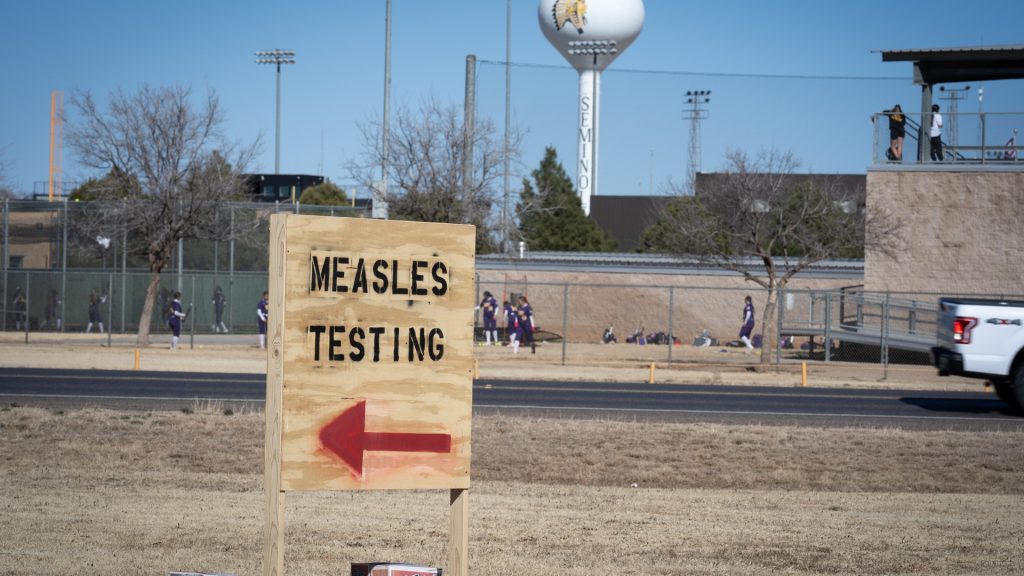
South Carolina public health officials reported no new measles cases in their latest weekly update, signaling that the state’s largest outbreak in at least two decades may be nearing its end. Meanwhile, Snohomish County Health Department, in Washington State, declared earlier this week that the outbreak that began in January is over.
Utah now has the most active outbreak in the country. Health officials reported 24 new cases in the past five days, bringing the total case count since June to 583.
The Centers for Disease Control and Prevention have recorded nearly 1,700 total measles cases nationwide this year.
South Carolina’s outbreak began in October. Officials there have recorded nearly 1,000 cases, mostly concentrated in Spartanburg County, in the northwestern part of the state. About 95% of cases affected people who were unvaccinated or partially vaccinated. More than 60% of cases were among children ages 5 through 17.
State officials have not documented a new case since March 17. To formally declare the outbreak over, the state must go 42 consecutive days without a new case. If no new cases are reported, the outbreak will end April 26.
In Washington, Snohomish County reported 14 cases before declaring its outbreak over. Statewide, officials have recorded 33 cases in 2026.
Utah health officials have recorded 386 cases this year, including 121 in the past three weeks. The majority of cases have been recorded in the Southwest Health Area, a five-county district near the Arizona border with about 300,000 residents. There have been 93 cases in Utah County and 62 in Salt Lake County. A total of 47 people have been hospitalized.
The CDC has recorded 17 outbreaks — defined as three or more cases linked to a specific location — so far in 2026. Last year, the agency tracked 48 outbreaks and more than 2,000 confirmed cases across 45 states. In both years, most cases affected people who were unvaccinated or whose vaccination status was unknown.
Hospitalizations have declined this year: About 5% of patients have been hospitalized compared with 11% last year. No measles deaths have been confirmed in 2026. Three were reported in 2025.
America’s measles elimination status under review
The Pan American Health Organization (PAHO) recently delayed its April 13 review of the United States’ measles elimination status, a largely symbolic badge that indicates whether measles can still be considered eliminated from the U.S. or if it has once again become endemic.
The U.S. eliminated measles in 2000 but the recent surge of cases threatened its status. Late last year, PAHO revoked Canada’s elimination status.
PAHO and U.S. officials will convene in November to review measles data.
PAHO considers measles to be endemic when the same strain of the virus spreads within a country, without interruption for at least 12 months. CDC scientists are analyzing genetic sequencing data from cases nationwide to determine whether recent infections are part of a single sustained transmission chain or reflect multiple, separate introductions.
Department of Health and Human Services Press Secretary Emily Hilliard told Straight Arrow News earlier this year that the analysis could take months, and the threshold for endemic transmission has not yet been met.
Some public health experts said the potential loss of measles-elimination status in the U.S. reflects a reversal of long-standing public health gains. But Ralph Abraham, who served as the CDC’s principal deputy director from December to February, said in January that it is “just the cost of doing business” as new federal guidelines have given Americans more choice regarding vaccination.
“We have these communities that choose to be unvaccinated,” Abraham said. “That’s their personal freedom.”
In the U.S., measles vaccination coverage among kindergartners decreased from 95.2% during the 2019–2020 school year to 92.7% in the 2023–2024 school year.
Health Secretary Robert F. Kennedy Jr. has voiced support for vaccines, stating they are the most effective way to prevent the spread of measles, though he has opposed government mandates.
Ella Rae Greene, Editor In Chief