Louisville PD’s pulled consent decree is latest in DOJ push to undo Biden reforms
A federal judge approved the Justice Department’s request to end a consent decree with the Louisville Police Department, which started under former President Joe Biden’s leadership as a way to ensure reform at the department. The Trump administration has pushed to terminate any lasting agreements they said amounted to “micromanagement” of local police.
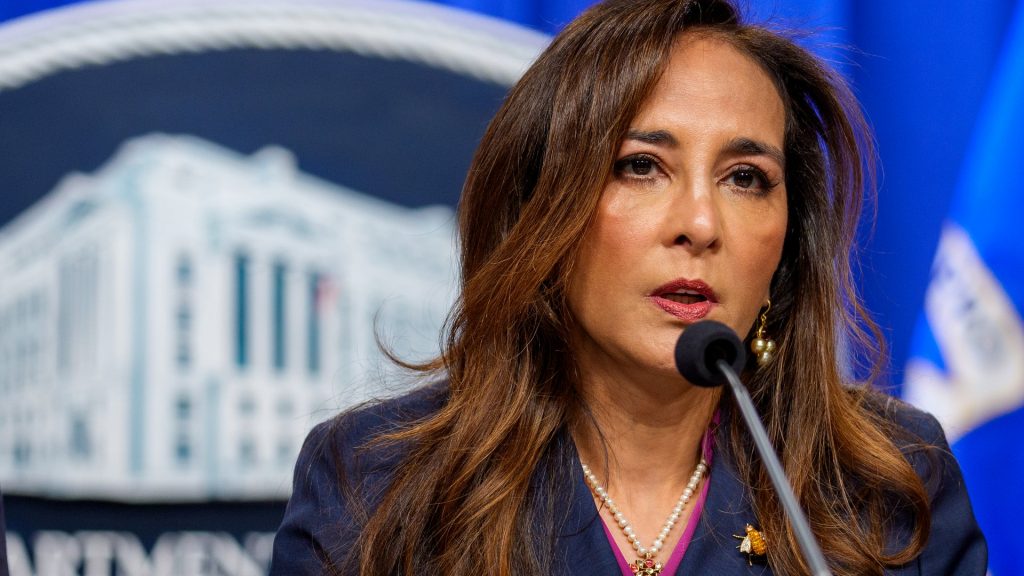
The Louisville Metro Police Department is no longer under a reform agreement with the Justice Department after only a year, Civil Rights Division Assistant Attorney Harmeet Dhillon announced on X last week. The contract would have lasted until 2030 and forced the department to make a number of changes to address claims the department continuously violated people’s civil rights.
Federal prosecutors and the Louisville/Jefferson County Metro government entered the decree in December 2024 as protesters pushed both entities for police reform in the wake of Breonna Taylor’s and George Floyd’s 2020 killings.
U.S. District Court Judge Benjamin Beaton scrutinized the decree’s scope and purpose in his Dec. 31 order. A point he pondered about was how it was determined that the police department and city of Louisville achieved substantial compliance with the conditions, and the court’s oversight in a process with loosely defined terms.
“The extraordinary judicial intrusion that comes from a consent decree should remain a last resort—when other options to enforce the law will not work,” Beaton wrote.
The termination follows a pattern established by President Donald Trump’s Justice Department to terminate any lasting agreements struck under the Biden administration. So far, that’s been done for at least three other police departments.
Judges grant termination with Louisville
Beaton added that the court had asked the Justice Department and Louisville/Jefferson County government about terms established in the consent decree and how they are quantifying the police department’s success.
He said that both parties struggled to answer that and a number of “basic factual questions.” The DOJ refused to answer while the city said there were “some” erroneous shootings and disagreed that a pattern existed.
When Attorney General Pam Bondi took control of the department, prosecutors continued their refusal to provide legal support and answers to the court’s inquiries. Louisville officials created their own police reform that would make the department responsible to elected officials rather than the court.
Beaton questioned the legality of several terms that stretched far into Louisville Police’s operating procedures on investigating sexual assaults. It also failed to establish clear-cut claims on how the allegations were being carried out, such as the 911 program allegedly discriminating against people with behavioral health disabilities.
“So here again,” he wrote, “the Court could not identify any connection between legal violation and remedy against which to measure the extensive and intrusive proposed reforms.”
Louisville Police accused of depriving people of civil rights
The decree stems from the November 2024 conviction of a former Louisville Police officer in the 2020 killing of Breonna Taylor, who was shot and killed when officers carried out a search warrant of her apartment. The former officer, Brett Hankison, did not shoot Taylor and was sentenced to 33 months in jail for excessive force. He’s currently appealing his conviction.
Civil rights advocacy organization the Leadership Conference on Civil and Human Rights disagreed with the Justice Department’s decision back in May when Dhillon filed the motion. They called the termination of agreements with Louisville and Minneapolis police “appalling.”
“The Civil Rights Division is charged with enforcing the nation’s federal civil rights laws but is instead decimating its staff, twisting itself into a weapon against civil rights, and withdrawing from important litigation to protect them,” the organization said.
According to court documents, the Justice Department filed the December 2024 lawsuit after reviewing reports that the police allegedly violated people’s First and Fourth Amendment rights, the Americans with Disabilities Act and the Safe Streets Act of 1968.
“Given the scope of those proposed reforms,” Beaton wrote in 2024, “that ‘oversight’ extends to operational supervision of substantially all of a roughly thousand-officer police force charged with the safety and security of a million-person metro area. If everything goes to plan, the parties believe the decree could be lifted and the case closed in approximately five years.”
The decree would have appointed a court employee to monitor terms of the agreement to ensure the U.S. and Louisville police are adhering to them. They argued the third-party monitor insulated the agreement from politics, allowing changes to proceed regardless of staffing or leadership changes.
Justice Department ending other agreements, investigations
The Justice Department said in May that it sought to end consent decrees and investigations with police departments in Arizona, Louisiana, New Jersey, New York, Oklahoma and Tennessee. Many of the agreements were put in place during Biden’s term, which was marked by the COVID-19 pandemic and increasing demands from activists for police reform following the murder of George Floyd.
Former Attorney General Merrick Garland issued a memo in April 2021 that gave heads of the DOJ’s divisions the ability to enter into consent decrees with governments or companies. His memo reversed a 2018 policy enacted by former Attorney General Jeff Sessions that required approval from senior departmental leadership and limited the extent of decrees.
In a May 2025 release, Dhillon said she would end agreements and police investigations conducted under Biden’s leadership. She accused the former Justice Department of conducting a “failed experiment of handcuffing local leaders and police departments with factually unjustified consent decrees.”
One of the most notable investigations included the Minneapolis Police Department, which rose to national infamy after video spread of the killing of Floyd after police knelt on his neck for nine and a half minutes. Former police officer Derek Chauvin is serving a 21-year sentence for violating Floyd’s rights when he knelt on the man’s neck. About three other former officers were convicted in federal court for failing to stop Chauvin and depriving Floyd of medical care.
Minneapolis Mayor Jacob Frey said following Dhillon’s announcement that the city would move forward and continue compliance with the consent decree.
One decree did end due to compliance. The Justice Department and New Orleans Police Department mutually agreed to end the department’s 2013 agreement on use of force, mental health crises and other areas on Nov. 19. It said in the release that a 2012 investigation found New Orleans police had a pattern and practice of violating people’s Fourth and 14th Amendment rights and discriminated against them.
“In January 2025,” the Justice Department said in November, “the district court granted the parties’ joint motion for approval of a sustainment plan to ensure the durability of NOPD’s reforms, recognizing that today’s NOPD ‘is a far different agency from the one that spawned DOJ’s investigation in 2011 and the imposition of the Consent Decree in 2013.’“
The post Louisville PD’s pulled consent decree is latest in DOJ push to undo Biden reforms appeared first on Straight Arrow News.
Ella Rae Greene, Editor In Chief