‘List of Jews’ demand ignites uproar at University of Pennsylvania
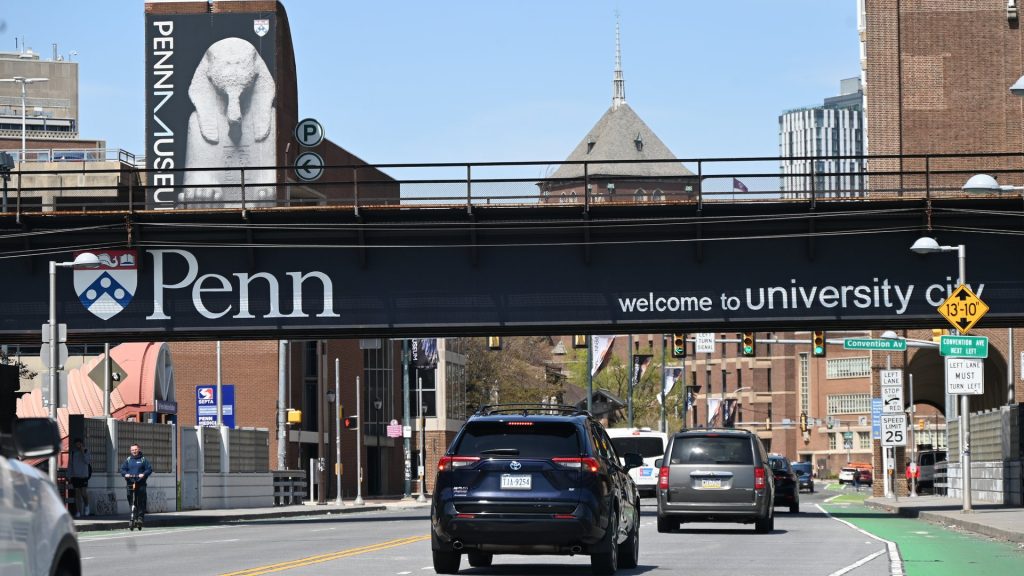
A request for a ‘list of Jews’ continues to face pushback within the Jewish community at the University of Pennsylvania. It all started with a request from the Equal Employment Opportunity Commission, or EEOC.
EEOC request
A subpoena from the EEOC sought a list of members from Penn’s Jewish community. The commission called it a necessary step to fight antisemitism on campus.
It began after protests on campus over Israel’s response in Gaza following the Hamas attack on Oct. 7, 2023.
The original subpoena asked for a “list of all clubs, groups, organizations and recreation groups…related to the Jewish religion, faith, ancestry/National Origin” as well as employees in the Jewish studies program.
Following pushback from the university, a judge ruled Penn must comply with that subpoena. Even in his ruling, the judge acknowledged that the language used didn’t sound great.
“Though ineptly worded, the request had an understandable purpose – to obtain in a narrowly tailored way, as opposed to seeking information on all university employees, information on individuals in Penn’s Jewish community who could have experienced or witnessed antisemitism in the workplace,” Judge Jerry Pappert wrote.
When asked for comment by Straight Arrow News, the EEOC declined to comment and instead referred SAN to the judge’s ruling.
Penn pushback
Following that ruling, a Penn spokesperson issued a statement to SAN.
“While we acknowledge the important role of the EEOC to investigate discrimination, we also have an obligation to protect the rights of our employees,” the spokesperson said. “We continue to believe that requiring Penn to create lists of Jewish faculty and staff, and to provide personal contact information, raises serious privacy and First Amendment concerns.”
That ruling from Pappert disheartened people at the university who fought back against the subpoena.
“They say they’re fighting antisemitism, but literally nothing has unified the Jewish community at Penn as much as opposition to this subpoena, and I literally know no one at the university who thinks it’s a good idea,” Amanda Shanor, associate professor at the Wharton School at the University of Pennsylvania, told SAN. “So far as they are concerned about antisemitism, they are definitely not listening at all to the Jewish community at Penn.”
Shanor is one of the lawyers representing university faculty, staff and students. She said if the university is forced to comply, information like names and mailing addresses would be turned over to the government.
Members of the university are not done fighting back. A spokesperson told SAN they plan to appeal the judge’s decision.
“I don’t want to jinx it, but I’m, at least, very cautiously optimistic that we will prevail on appeal,” Shanor said.
‘List of Jews’
The University of Pennsylvania does not keep a “list of Jews.” The spokesperson for the school confirmed the university also does “not maintain employee lists by religion.”
So how could that list even get compiled?
“They’re asking the university to put together a list of Jews by way of their affiliations with Jewish groups and their participation in Jewish or Judaism related events, or discussions, or scholarly work, and that is scary for First Amendment purposes,” Shanor said. “Because if they have the power to do that, they would have the power to do that for any manner of groups, not just Jewish groups.”
Members of the university and others in academia raised concerns about even the phrase, a ‘list of Jews,’ comparing it to Nazi Germany. They were not alone in those concerns.
“I find the whole thing somewhat disturbing,” Deborah Lipstadt, professor of modern Jewish history and Holocaust studies at Emory University, told SAN.
Lipstadt agreed with the judge’s criticism of the “inappropriate”comparisons to Nazi Germany.
“I think that’s way overboard,” she said.
This week marks the start of the holy Jewish holiday of Passover, where Jews around the world celebrate their ancestor’s exodus from slavery in Egypt.
Since Moses led the Israelites out of Egypt, antisemitism has persisted across the globe, and those involved in this court battle said that, despite any good intentions, this was not handled correctly.
“This is a very tone-deaf action, regardless of what their intentions are,” Shanor said. “This is not a good way to go about investigating antisemitism.”
First Amendment concerns
Questionable wording aside, the legal heart of this case is First Amendment concerns.
“I, quite frankly, was shocked at how dismissively the court treated what I thought were very serious civil liberties and constitutional law objections to the subpoena that were filed not only by the university itself, but also by faculty, Jewish students, faculty and staff members, raising serious First Amendment and privacy concerns,” Nadine Strossen, senior fellow with the Foundation for Individual Rights and Expression, told SAN.
The university initially shared its concerns about First Amendment violations when it pushed back against the subpoena.
Any court battle over the matter will likely include an examination of NAACP v. Alabama. That 1958 Supreme Court decision ruled that the state of Alabama could not force the NAACP to disclose its membership list because doing so would violate the constitutional right of freedom of expression and association.
However, this subpoena is worded a little differently.
“The judge put a lot of weight on the fact that people would not be required to disclose organizations to which they belong,” Strossen said. “I think that makes the order less bad than it could have been, but it’s still bad in the sense that you’re revealing what, in some ways, is the most important association at issue here. And that is the extent to which you identify with a particular religion or ethnic background.”
That’s what has troubled Shanor and others at the university.
“The constitutional issues at stake go far beyond this issue or this university or Jewish people, right?” she said. “Because if they can get these types of lists, and they have the power to do that, and there isn’t a constitutional right anymore, which is a many decades established constitutional right, that is really frightening for everybody.”
Ella Rae Greene, Editor In Chief