‘Liberation Day,’ one year later: Higher prices, uncertain future
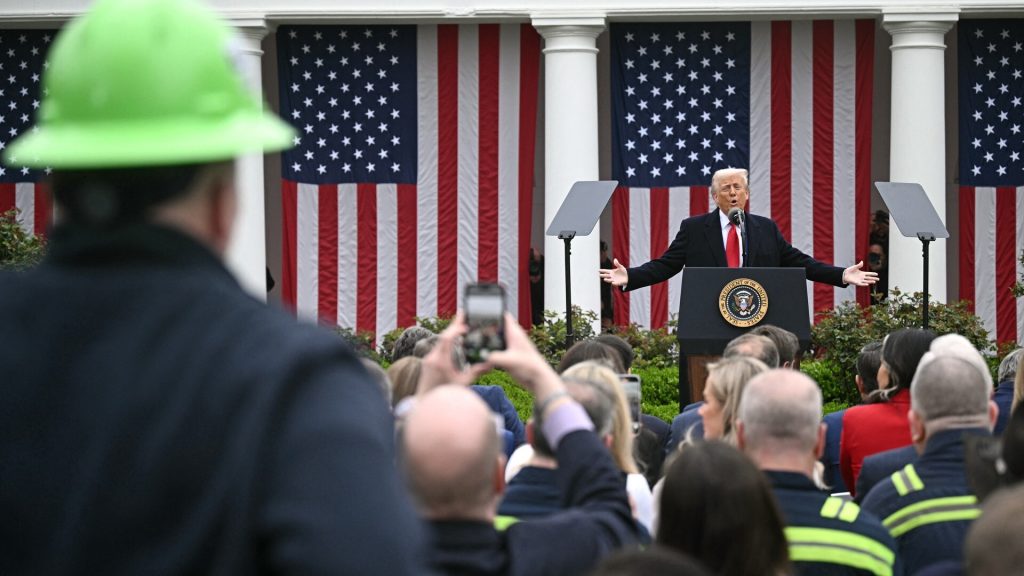
One year ago, President Donald Trump declared April 2 “Liberation Day” as he imposed a sweeping tariff package on imports from virtually every country. He predicted the date would be remembered as “the day we began to make America wealthy again.”
One year later, U.S. consumer prices have steadily climbed — but not by as much as some had feared. U.S. manufacturing employment, which Trump promised would surge, is actually down, as is foreign business investment.
And the tariffs are not what Trump announced as he held a giant poster outside the White House.
Where do tariffs now stand?
On April 2, 2025, Trump declared a national emergency over trade and announced a 10% baseline tariff on most imported goods. He also proposed tariffs of as much as 50% on goods from selected countries, along with levies as high as 145% on certain Chinese imports.
Since then, the administration has scaled back parts of the policy, carved out numerous exemptions and had its legal authority substantially curtailed by the Supreme Court.
Today, the U.S. average effective tariff rate stands at 11%. Except for 2025, it’s the highest since 1943, according to the widely followed Budget Lab at Yale.
How much have tariffs driven up prices?
The prices of everyday household items began climbing months into Trump’s tariff regime. Americans paid about 5.4% more for imported goods and 3% more for domestic products, according to a report by the National Bureau of Economic Research.
A year in, The Budget Lab at Yale estimates a 0.5% to 1% rise in overall consumer prices attributable to tariffs. That is far below the 2.3% overall increase it projected last year.
The effect of tariffs has been uneven. Prices for motor vehicles and parts, clothing and furniture have risen the most, according to the Budget Lab.
“Tariffs do not appear as a one-time price spike, but rather as a pattern of gradual and slow adjustments to retail prices that U.S. consumers see on store shelves,” economists at the U.S. Federal Reserve noted in a recent release.
One of the biggest effects of Trump’s tariffs and agreements he has struck with multiple countries has been uncertainty in the global economy, according to an article by The Council on Foreign Relations.
“It is no surprise that trading partners have been confused,” wrote Inu Manak, a senior fellow for international trade at the council. “Furthermore, the lack of a cohesive vision and the sidelining of Congress in the negotiation process makes these deals not U.S. trade agreements, but rather Trump’s trade deals. With all the uncertainty that surrounds them, they may last just as long as his presidency.”
Ella Rae Greene, Editor In Chief