LA let hundreds of millions in cannabis tax revenue go up in smoke
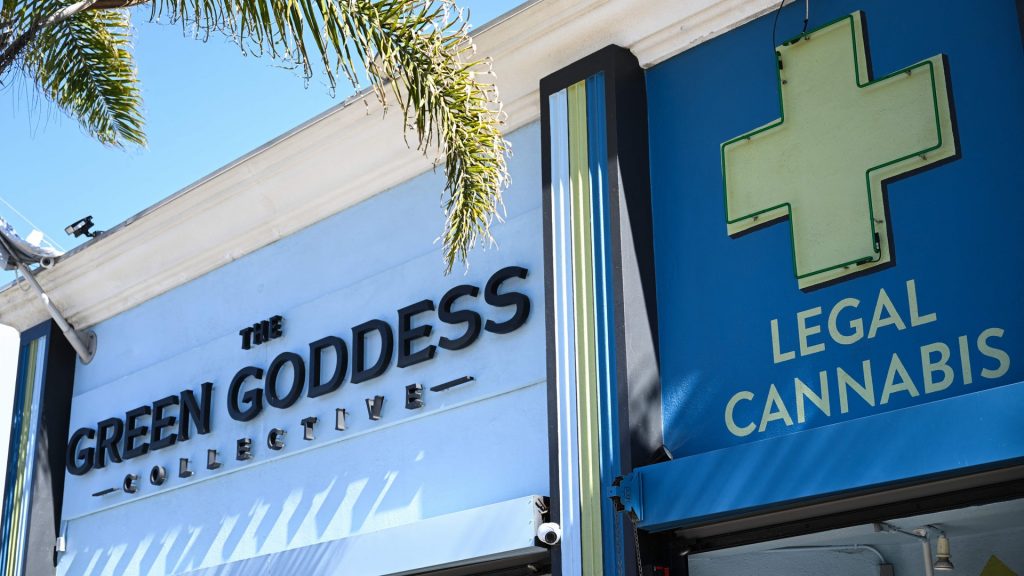
Los Angeles cannabis shops have charged customers hundreds of millions of dollars in taxes, but the city doesn’t think they’ll see half of it.
LA is missing $400 million in taxes and fees from cannabis businesses and says it may be lucky to get half of that. It comes at the same time the city is facing serious budget shortfalls.
Puff, puff pass on payments
More than 500 of the 738 licensed cannabis businesses owe the hundreds of millions in back taxes, penalties and interest, according to an October report from the LA Office of Finance. The next report is expected later this month, but that number has risen to $417 million, according to a report from the LA Times.

The city is already guaranteed to lose more than a quarter of a billion dollars because roughly $267 million of that money is no longer collectable. That’s because it’s either past the three-year statute of limitations to where the city could act, or the taxes are tied to a business that’s gone under.
The Office of Finance acknowledged that this is not a new issue and has been going on for years.
“It seems reasonable to assume that the city is missing out on at least $40-$50 million in tax revenue annually,” Matthew Crawford, assistant director of finance in the LA Office of Finance, told Straight Arrow News. “If we include all of the sales from unpermitted businesses, this gap could be well over $100 million.”
Bringing in some green
As part of that report, the Office of Finance suggested to the LA City Council a tax amnesty program for the cannabis businesses.
“Under this program, all accrued penalties will be waived upon payment of the total tax due, including interest,” the report reads in part.
Essentially, that means the businesses would no longer need to pay back taxes or fees and would be eligible for a payment plan to pay their outstanding principal tax debt.
“Tax amnesty programs are a tool the city has offered in the past to help businesses get back in compliance,” Crawford said.
Earlier this week, the City Council unanimously voted to have the Office of Finance draft the plan for the amnesty program.

There are some benefits to this program for both sides.
“A lot of these owners of companies could just close, choose to go bankrupt if you ask for too much in taxes,” Benjamin Hansen, W.E. Miner Chair of Economics and department head of economics at the University of Oregon, told Straight Arrow News. “So, given how far they have let things go now, I would say, from an economics perspective, sunk costs are irrelevant. I would get what money we can now.”
The report laid out another potential benefit that may ease concerns about forgiving $20 million in back taxes and fees. The report projects the city will actually gain an extra $30 million in revenue from interest on the payment plans.
“This program may be able to help some of these businesses resolve their liability and generate some additional tax revenue for the city,” Crawford said.
How does this happen?
“Boy, LA is incompetent, isn’t it?” Dan Sumner, professor of agricultural economics at the University of California Davis and coauthor of the book “Can Legal Weed Win? The Blunt Realities of Cannabis Economics,” told SAN about the cannabis tax issue.
Sumner said there’s another issue at play here as well.
“It’s symptomatic of cannabis,” he said.
Crawford echoed that sentiment.
“Cannabis tax collection is a challenge because the industry is very competitive and has lots of turnover,” he said.
There are reasons why the city has had trouble doing that, most of which are because of how this system was set up.
“There’s incredible regulations,” Sumner said.

Those regulations are laid out in a 37-page document that makes cannabis businesses comply with complex state and city rules that include separate tax reporting, which can create overlapping paperwork and audits.
The city also imposes an extra 10% tax on cannabis retailers.
“LA is obviously an expensive place to do business, and so for a lot of folks getting into the business, it was really hard to survive,” Robin Goldstein, director of the Cannabis Economics Group at UC Davis and coauthor of the book with Sumner, told SAN.
That extra 10% comes along with significant other tax burdens.
“That’s on top of the ordinary sales and use tax that they pay as an ordinary California retail business, and it’s on top of the excise tax that the state imposes on all cannabis sales in California,” Goldstein said. “And it’s on top of the very high regulatory and compliance costs that cannabis businesses face in California as well as in the city of LA, so it’s really tough for cannabis businesses.”
Between that and underreporting or errors, taxes go uncollected.
“Most of the cannabis businesses in LA not paying their taxes — it wasn’t because they wanted to be criminals, it was because they didn’t have the money and they were barely surviving or not surviving,” Goldstein said.
Not surviving and constant turnover are also part of why the city is missing out on millions of tax dollars.
“I would suggest perhaps you could have a little bit of sympathy for the marijuana owners that do face high federal taxes and high-income taxes,” Hansen said.
What can be done
Experts SAN spoke with believe the amnesty plan currently being worked on will help cannabis businesses in the short term, despite coming with some complications.
“It’s politically complicated when you offer amnesty to some businesses who haven’t paid their taxes, because it seems unfair to the businesses that have paid their taxes,” Goldstein said. “So, I understand that there’s probably some bitterness there and some perception of unfairness.”
But Goldstein said it doesn’t address the problem that led up to this in the first place.
“The root of the problem is that they impose too high a tax rate on local businesses who are already facing extremely high taxes and regulatory costs on a state level to begin with,” he added.
Prop 64 passed in California in 2016 and set up the regulations for legal cannabis in the state.
“Prop 64 sort of opened the window for local jurisdictions to impose as much additional taxes as they wanted on a local level, on cannabis businesses,” Goldstein said. “I think a lot of local jurisdictions got greedy, and they imposed additional taxes saying, ‘Oh, this is a gold mine, the green rush.’”

When asked what the city of LA could do about this issue, Sumner said, “grab the money fast.”
“They talk about things being years and years in the collection process, and this is a business that’s changing really fast, and it’s really a statewide problem,” Sumner added.
Typically, cities have numerous ways to force tax collections when businesses fall behind.
“You pay your taxes, or they’re going to put a lien on you,” Hansen said. “They’re going to shut you down.”
But Goldstein said there’s likely a good reason why that hasn’t happened as much in this situation.
“I’m sure there was some element of just empathy, or saying, ‘Oh, it’s really hard for these cannabis businesses to make ends meet, so they’re not going to be the ones we go after,’” he said.
And while the city considers an amnesty program, there’s been no talk of any regulation changes in the cannabis industry.
“Eliminate the cannabis taxes,” Goldstein said. “They don’t impose a strawberry tax on strawberry producers. Why do they impose a special cannabis tax on cannabis producers? They’re already paying more taxes at the state level than any other agricultural industry. Why are they subject to additional taxes on a local level?”
In the meantime, cannabis businesses and the city will be subject to the status quo.
“I think you just need to establish a precedent that things are consistently enforced, because otherwise, if the entire industry knows they aren’t going to enforce their tax laws, why would you pay them, right?” Hansen said.
LA money issues
All of this comes as the city faces a billion-dollar budget shortfall. Last year, Mayor Karen Bass proposed laying off more than 1,500 city employees as part of budget cuts.

City officials eventually passed a roughly $14 billion budget to reduce layoffs and bridge the gap in other ways.
A financial report released last month helped explain the budget issues, blaming increased liability costs, overspending by city departments and revenue shortfalls as some of the main causes.
“It’s one of the most prosperous cities in the world,” Goldstein said. “It’s hard to understand why they’d have such a budget crunch to begin with.”
While correctly collecting cannabis taxes would not bridge the gap, the extra money would clearly help the city, even if it’s not the biggest issue.
“I don’t think that that was the straw that broke the camel’s back,” Goldstein said. “I think that there’s a whole bevy of reasons probably why the city is not balancing their budget.”
Moving forward, collecting necessary taxes will continue to be a critical part of balancing the city budget.
“You’re supposed to collect them as you go,” Hansen said. “So, this just reeks, pun intended, that they were not enforcing earlier noncompliance with collecting their taxes — that it accumulated so much.”
Ella Rae Greene, Editor In Chief