Kennedy appoints new members to oversee $2 billion autism budget
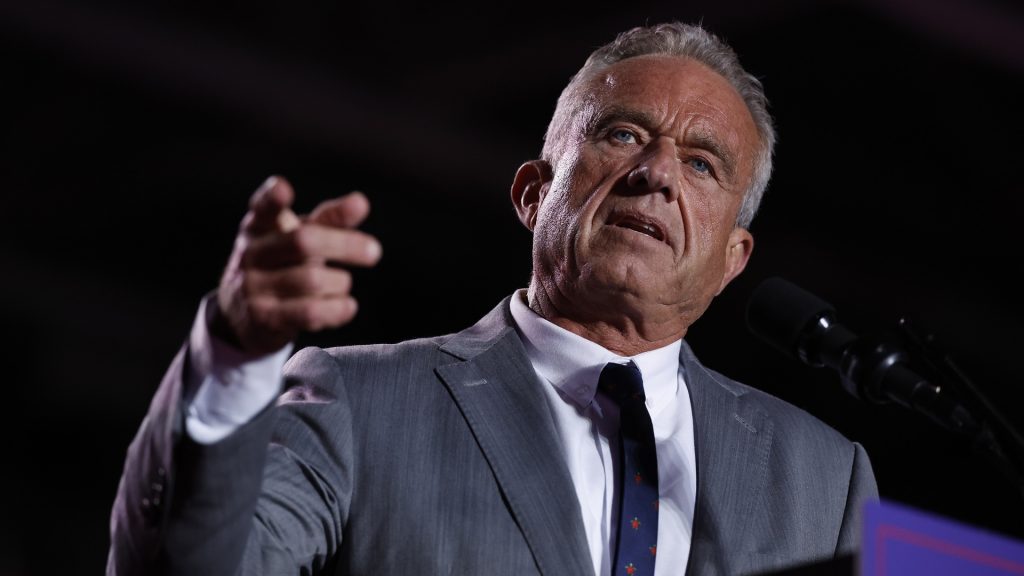
U.S. Health Secretary Robert F. Kennedy Jr. has appointed a new slate of 21 members to a panel that helps the federal government set priorities for autism research, policy and social services. The move, announced Wednesday, was widely criticized by former panel members and national autism advocacy groups.
The Interagency Autism Coordinating Committee (IACC) will help the government allocate some $2 billion in Congressionally approved funds for autism-related work.
Recommendations from the panel, which was first established in 2000, are advisory and nonbinding.
“President Trump directed us to bring autism research into the 21st century,” Kennedy said on Wednesday in a press release.
“We are doing that by appointing the most qualified experts — leaders with decades of experience studying, researching and treating autism. These public servants will pursue rigorous science and deliver the answers Americans deserve.”
An official from the Department of Health and Human Services said prior members’ terms had ended and were not renewed, and that the new appointments followed established procedures.
Widespread backlash
National autism advocacy organizations and former IACC members criticized the committee’s overhaul, pointing out that several newly appointed members have publicly expressed views that deviate from scientific and medical consensus.
“The newly constituted IACC represents a complete and unprecedented overhaul, with no continuity from prior committees and a striking absence of scientific expertise,” said Alison Singer, president of the Autism Science Foundation, who served three terms as an IACC public member.
Helen Tager-Flusberg, director of Boston University’s Center for Autism Research Excellence and a former IACC member, said previous panels typically included nationally recognized autism researchers. She said many of the new members are affiliated with organizations that promote non-mainstream approaches to autism treatment, raising concerns about how research priorities could shift, Tager-Flusberg said.
Joshua Gordon, former director of the National Institute of Mental Health, who also served as the IACC chair between 2016 and 2023, said the new panel lacked scientific expertise.
“Not a single scientist that I am familiar with as being an expert in autism research is on that list,” Gordon told The New York Times.
“The current committee has been hijacked by a narrow ideological agenda that does not reflect either the autism community or the state of autism science,” the Autism Science Foundation wrote in a statement. “By sidelining rigorous, evidence-based inquiry, this shift will stall scientific progress, distort research priorities, and ultimately harm people with autism and all who love and support them.”
The new committee
New IACC members include Sylvia Fogel, a psychiatrist at Massachusetts General Hospital and a parent of a child with severe autism. In an interview with The New York Times, Fogel emphasized that large population studies have not demonstrated a causal link between vaccines and autism.
She said her focus would not be on vaccine policy, which is outside the committee’s mandate; however, she said more research is needed to understand whether a subset of children is vulnerable to vaccines and other environmental exposures.
At least three new members — Daniel Keely, Caden Larson and Elizabeth Bonker — have been diagnosed with autism. Larson and Bonker are nonverbal; Keely is a high school senior.
Other appointees include Daniel Rossignol, a physician, researcher and father of two children with autism and John Gilmore, founder of the Autism Action Network who has long pushed to eliminate thimerosal, a mercury-based preservative, from vaccines given to pregnant women and children. (The Department of Health and Human Services recently banned thimerosal in flu shots.)
The post Kennedy appoints new members to oversee $2 billion autism budget appeared first on Straight Arrow News.
Ella Rae Greene, Editor In Chief