Jakarta bests Tokyo as world’s largest city, but the title might be slipping away
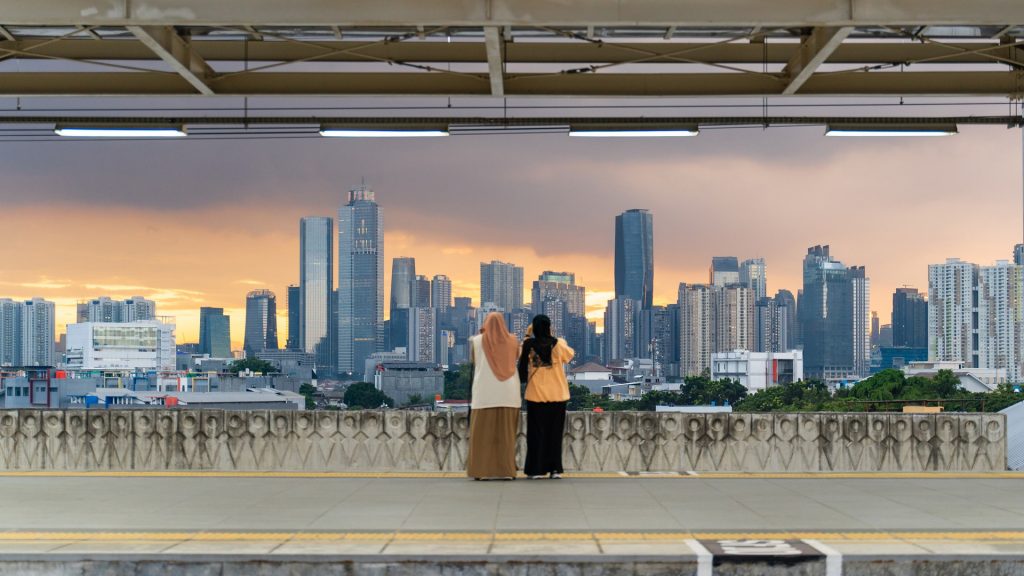
For more than half a century, Tokyo stood as the world’s largest city, hosting some 13.7 million residents in 1955, a number that ballooned to 37.4 million by 2018. However, the fabled home of Godzilla and Shibuya Crossing has been dethroned in 2025, dropping to No. 3 on a list of the largest cities.
So, what is the scrappy contender that knocked the capital of the Land of the Rising Sun from its perch atop the world?
That distinction now belongs to the Indonesian capital of Jakarta, a megalopolis that 42 million inhabitants of Earth call home, according to the United Nations’ newest World Urbanization Prospects report. In the No. 2 spot is Dhaka, Bangladesh, with its nearly 37 million residents.
Jakarta and Dhaka vie for population supremacy
While dethroning a nearly century-old title-holder is impressive in and of itself, what makes Jakarta’s trajectory so extraordinary is that seven years ago, when the U.N. released its last World Urbanization Prospects report, the Southeast Asian city sat at a lowly No. 33.
Tokyo, meanwhile, is expected to continue its backward population slide. The U.N. analysis predicts that the once mighty metropolis will fall to seventh place by 2050. Similarly, Jakarta might not hold onto its title for very long –– or at least not as long as its first-place predecessor did.
The current runner-up, Dhaka, is expected to clinch the number one spot by the middle of the century, while outliers such as Karachi in Pakistan could break into the top five during the same period.
Looking to the future
Across the board, megacities, defined as urban spaces with more than 10 million inhabitants, are on the rise. According to the report, between 1975 and 2025, the number of megacities that sprouted across the globe increased fourfold, from eight to 33. Nineteen of those are in Asia.
The year 2050 should see the addition of four more, as the populations of Addis Ababa in Ethiopia, Dar es Salaam in the United Republic of Tanzania, India’s Hajipur and the Malaysian capital of Kuala Lumpur are expected to surpass the 10 million mark.
Simply put, over the next 25 years, the world’s city dwellers are projected to increase by 986 million people, and seven countries –– India, Nigeria, Pakistan, Democratic Republic of the Congo, Egypt, Bangladesh and Ethiopia –– will account for more than half of that boom.
It’s a reality that will put unprecedented stress on their urban centers, while also offering an opportunity to chart a new path forward.
“The success or failure of urbanization in these key countries will shape global development outcomes,” the U.N. notes in its report. “Their ability to manage city growth sustainably will have profound implications not only for their populations but also for global progress toward the Sustainable Development Goals and climate objectives.”
The post Jakarta bests Tokyo as world’s largest city, but the title might be slipping away appeared first on Straight Arrow News.
Ella Rae Greene, Editor In Chief