Israel reaches security agreement for Easter services in Jerusalem, easing tensions
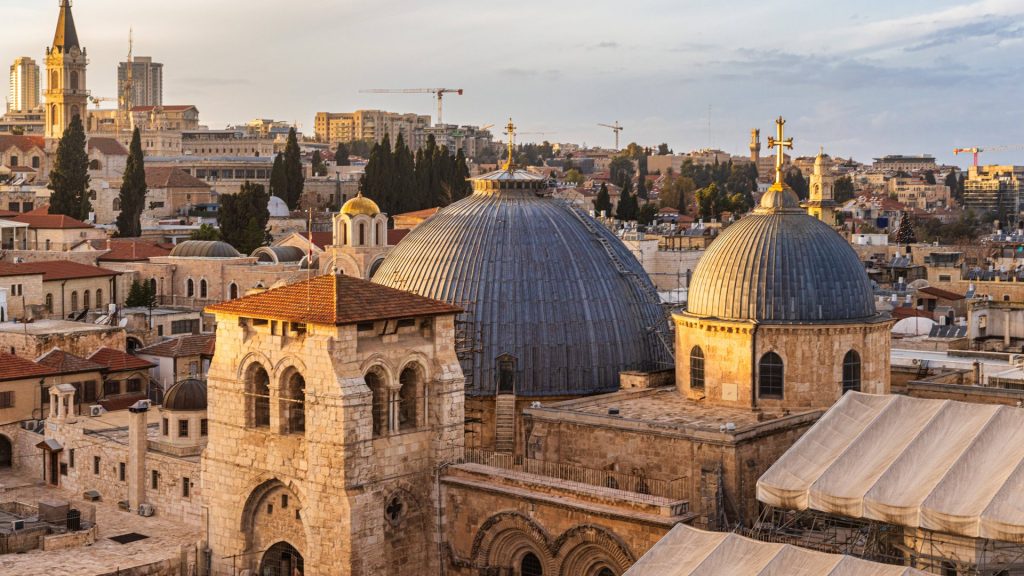
Israeli police and Catholic Church leaders sought to ease tensions ahead of Easter after a Palm Sunday incident in which senior church officials were briefly blocked from entering the Church of the Holy Sepulcher. The church is known for holding the tomb of Jesus.
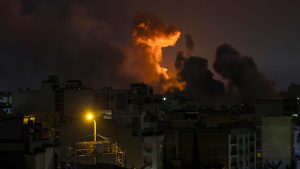
Israeli police said the restrictions were imposed during the war with Iran because of what they described as a “real and present danger” from missile fire and falling debris in Jerusalem’s Old City, where ancient buildings lack bomb shelters. In a statement, police said that under Home Front Command directives, “life‑saving restrictions apply to all holy sites in the Old City — for Jews, Christians, and Muslims alike.”
The controversy erupted Sunday when Cardinal Pierbattista Pizzaballa, the Latin Patriarch of Jerusalem, was prevented from entering the Old City to celebrate Palm Sunday Mass. He was accompanied by Father Francesco Ielpo, a senior Franciscan official. According to the Vatican, the two were stopped despite prior understandings that senior clergy would be allowed to enter holy sites to conduct private Holy Week services.
By Sunday evening, Prime Minister Benjamin Netanyahu intervened, ordering authorities to grant access. “Even though I understand this concern, as soon as I learned about the incident with Cardinal Pizzaballa, I instructed the authorities to enable the Patriarch to hold services as he wishes,” Netanyahu said.
Israeli police said they were seeking to balance religious freedom with public safety, noting that “the Old City has been targeted by murderous missiles multiple times this month, alongside constant fire on residential areas.” The threats, police said, “do not discriminate between religions, and neither does our duty to protect you.”
Church leaders said the incident marked the first time in centuries that Palm Sunday Mass was effectively halted at the site under the patriarch’s leadership. In a statement, they said the churches had acted “with full responsibility” since the war began, canceling public gatherings and arranging broadcasts of Holy Week services “to hundreds of millions of faithful worldwide.”
The incident drew swift international criticism. Mike Huckabee, the U.S. ambassador to Israel, said the patriarch’s exclusion was “difficult to understand or justify” and described it as “an unfortunate overreach already having major repercussions around the world.” Italian Prime Minister Giorgia Meloni called the police action “an offense to the faithful.”
Dan Joslyn‑Siemiatkoski, director of the Center for Christian‑Jewish Learning at Boston College, told Straight Arrow News the episode appeared to stem from a breakdown in communication rather than a deliberate attempt to bar Christian worship.
“There has been a ban in Israel on gatherings of people of 50 or more,” he said, noting that public events have largely ceased because of frequent missile alerts and the danger posed by falling debris from intercepted rockets.
Joslyn‑Siemiatkoski said the Old City poses particular risks. “The buildings are old and have not been renovated, and there are not generally shelters, whether personal or communal,” he said, adding that projectile fragments have already damaged rooftops and structures.
Still, he said the incident struck a nerve among Palestinian Christians. “If it happens to the cardinal, it can happen to anyone,” he said.
Joslyn-Siemiatkoski does not believe the Old City will be a specific target this week.
“I think Iran is seeking to hit strategic military and industrial sites in Israel,” he said. “I think the concern is the problem of intercepts over Jerusalem and the fall under projectiles. Now can missiles go astray, yes, but I don’t think these sites are going to be intentionally targeted.”
The Church of the Holy Sepulcher, traditionally believed to be the site of Jesus’ crucifixion, burial and resurrection, is governed by a 19th‑century “Status Quo” agreement regulating worship among multiple Christian denominations. Palm Sunday marks the start of Holy Week and typically includes large processions through the Old City.
Israeli police said coordination with church leaders is continuing to allow Easter observances to proceed in a limited, symbolic format while maintaining security amid ongoing regional conflict.
Ella Rae Greene, Editor In Chief