‘Iran will be decimated,’ Trump says as deadline for Strait’s reopening nears
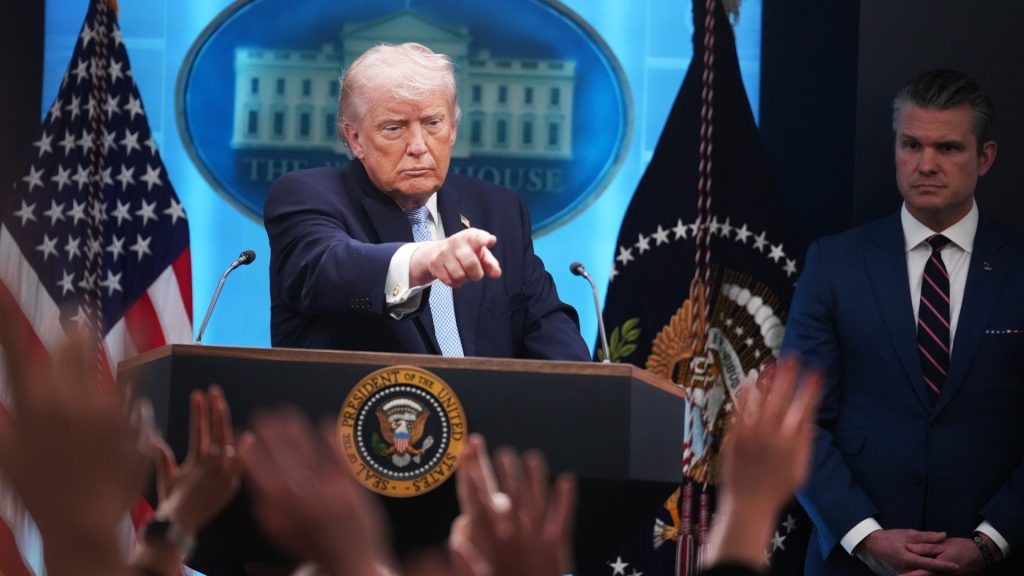
The deadline for Iran to end its blockade of the Strait of Hormuz or be bombed “back to the Stone Ages” remains in effect, President Donald Trump said Monday as he reiterated threats to the Middle Eastern country’s civilian infrastructure.
“We have a plan, because of the power of our military, where every bridge in Iran will be decimated by 12 o’clock tomorrow night,” Trump said at a news conference, “where every power plan in Iran will be out of business, burning, exploding and never to be used again.”
“It will take them 100 years to rebuild,” he added.
Defense Secretary Pete Hegseth, who appeared alongside Trump at the White House, said U.S. attacks would intensify ahead of the president’s deadline.
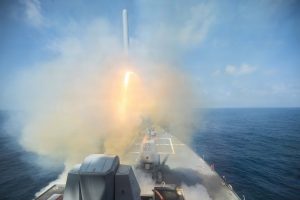
“Per the president’s direction, today will be the largest volume of strikes since Day One of this operation,” Hegseth said. “Tomorrow, even more than today. And then Iran has a choice.”
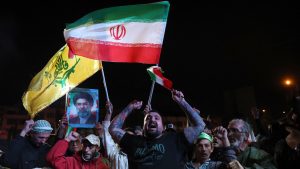
Hours earlier, Iranian leaders announced they had rejected the Trump administration’s ceasefire deal, saying they would support an agreement only if it guaranteed neither the U.S. or Israel would attack Iran again.
“We are calling for an end to the war and for preventing its recurrence,” Esmail Baghaei, foreign ministry spokesperson, said, according to CNN.
The negotiations, which officials involved say are still underway, are meant to reopen the flow of oil through the Strait of Hormuz. Iran has effectively closed the strait since the U.S. and Israeli attacks began on Feb. 28. The strait is a major chokepoint for the world’s oil supply, handling about a quarter of total daily global oil consumption. The disruption has led to a global supply upset and caused crude oil prices to jump to more than $112 a barrel.
Trump vows to prosecute ‘leaker,’ journalist
Trump spoke at a news conference called to discuss the rescue of two U.S. airmen after Iran shot down their plane on Friday. He threatened to prosecute a “leaker” who told reporters Friday that the plane’s pilot had been rescued while a search was continuing for the other crew member, who was rescued Sunday.
“We’ll be able to find it out because we’re going to go to the media company that released it, and we’re going to say, ‘National security, give it up or go to jail,’” Trump said.
“The person that did the story will go to jail if he doesn’t say,” Trump added.
Trump said Iranian forces downed the F-15E jet with a shoulder-fired missile and that 155 U.S. aircraft took part in the rescue mission. “Subterfuge,” he said, diverted the Iranians’ attention from the downed service member’s location.
Hegseth compared the service member’s plight to the biblical story of Jesus’ death and resurrection.
“Shot down on a Friday: Good Friday,” Hegseth said. “Hidden in a cave, a crevice, all of Saturday. And rescue on Sunday. Flown out of Iran as the sun was rising on Easter Sunday, a pilot reborn. All home and accounted for, a nation rejoicing. God is good.”
Trump characterized Iran’s military as “very talented,” “very good” and “very powerful.” These comments contradict Trump’s previous statements about Iran’s military and even comments he made Monday.
“We’ve knocked out their navy. We’ve knocked out their air force, completely,” he said. “They have no navy, they have no air force, they have no anti-aircraft weaponry.”
Why did Iran reject the ceasefire?
The deal that Iran rejected was a 45-day ceasefire that would reopen the Strait of Hormuz. Iranian officials said they no longer trust the U.S. because the initial Epic Fury operation began in the middle of negotiations that negotiators said were going well.
Despite Trump demanding that Iran accept the deal, he has yet to approve it, CNBC reported. One White House official told the publication that this was “one of many ideas, and [Trump] has not signed off on it.”
Trump’s own conditions have been separate from those proposed by mediators. Previously, Trump had said that they would only consider a ceasefire after Iran reopened the strait. At other times, he has said it doesn’t matter to the U.S. whether the strait is opened and that other countries that import oil from the region should “take” the waterway and hold it.
Mediators had hoped the deal could lead to a permanent end to the conflict, which has ravaged the stock market and sent crude oil prices skyrocketing.
Trump had given Iran until Tuesday night to agree to the deal or the U.S. would begin attacking civilian infrastructure, like bridges and power plants — a possible war crime under international law.
The two paths forward
Although Trump’s deadline for Iran looms, he has extended previous deadlines set during the six-week war.
If the U.S. does go forward with its expanded strikes, analysts believe it would be a bitter fight. While U.S. officials have said the Iranian government has fallen, experts dispute that assessment. Experts also doubt claims that Iran is almost out of weapons. Israeli intelligence says the Iranian regime holds at least 1,000 more missiles.
Iranian officials have also said they may begin targeting other important shipping chokepoints, such as the Bab al-Mandeb Strait, according to NPR. The strait is located between Djibouti and Yemen, which is home to the Iran-backed Houthis, who recently entered the war.
The Bab al-Mandeb Strait connects the Red Sea to the Suez Canal. Experts estimate that 10% of global trade moves through the Red Sea.
If Trump does extend the deadline, or if Iran agrees to his demands by Tuesday evening, market analysts don’t believe consumers will see immediate relief from the issues the conflict has brought. According to CNBC, the markets aren’t confident in the supply chain anymore.
“Even in a scenario where the Strait of Hormuz remains open, the damage to confidence and supply chains is already done — things don’t just snap back to normal,” Mohit Mirpuri, an equity fund manager at SGMC Capital, told CNBC. “Markets will likely remain headline-sensitive, with sharp swings both ways as narratives shift.”
Ella Rae Greene, Editor In Chief