Iran war fuels higher gas prices, leaving Americans with ‘no choice’
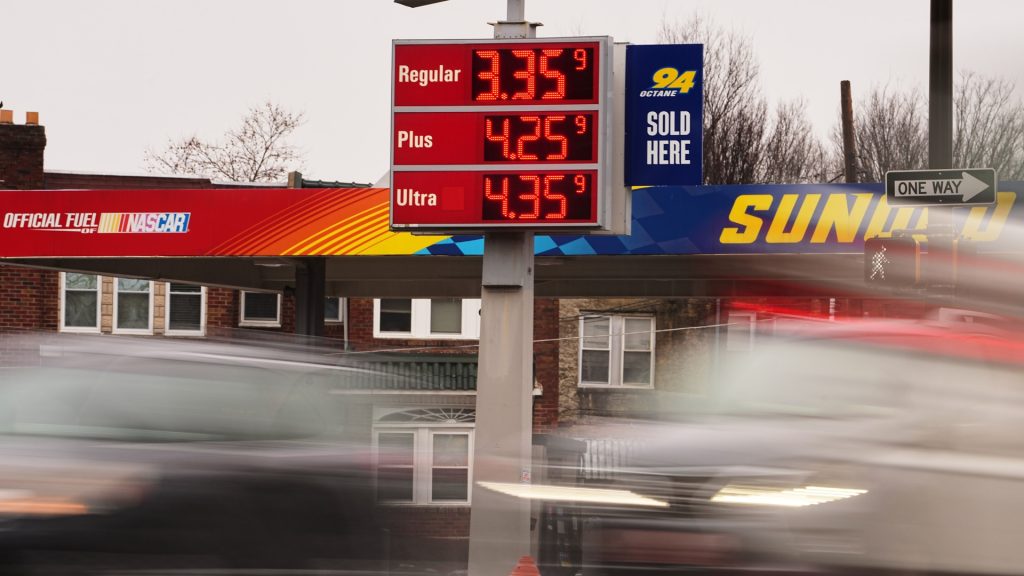
The impact of war in the Middle East has already made its way home to the U.S. in the form of increased gasoline prices. American consumers have noticed the difference.
The average price of gasoline is up more than 20 cents per gallon over the past week and 35 cents from a month ago, according to data from AAA. This comes as Iran has attacked energy infrastructure in neighboring Gulf states and deterred oil tankers from sailing through the Strait of Hormuz, a vital chokepoint for about 20% of the world’s oil supply.
While seasonal factors like refinery maintenance, summer fuel blend switches and increased travel typically drive up gas prices each spring, the war with Iran is heightening the trend. Oil prices spiked by 15% in a week, directly affecting gasoline. Far away from the fighting, Americans are keenly aware of price changes at the pump, which shape consumer sentiment on the broader economy and can become a sensitive political issue.
“For somebody who has to go to work every day, you can’t buy less,” Tina Hernandez told Straight Arrow News as she filled her tank in Omaha, Nebraska. “But you definitely feel the effects.”
Are consumers feeling the impact?
SAN conducted reader polls on Instagram and Facebook this week, asking users if they’ve noticed an increase in gas prices. Among 367 responses, 60% said gas prices are noticeably higher, 26% noted they’re higher but not by a lot, and 14% said prices have stayed the same or gone down.
Those results were reflected in Omaha, where SAN spoke with drivers at the pump.
“If this war continues, how can you not be concerned about the rise of prices?” Hernandez asked.
Other drivers agree that prices have risen, but say it’s not cause for concern.
“We’ve seen prices fluctuate all the time with Middle East crises, so it’s not new,” said Michael, an Omaha resident who declined to give his last name, as he bought gas early Wednesday afternoon. “It’s gonna go up, it’s gonna go down, it’s gonna go up and it’s gonna go down.”
Economists have also expressed caution that the increasing gas prices are not a cause for concern — at least not yet.
“When adjusting gasoline prices for cumulative inflation, current prices are actually quite low,” Lutz Kilian, director of the Center for Energy and the Economy at the Federal Reserve Bank of Dallas, told SAN in an email.
However, for households already squeezed by the cost of living, gas prices are now a source of additional stress.
Madison, Wisconsin resident Sarah Tormey lives with her two teenage children along with her sister and her sister’s two kids. It’s an arrangement of necessity due to the high cost of living as single working parents.
Last week, Tormey spent $22 to fill her small, fuel-efficient Hyundai Accent. On Thursday afternoon, she spent $5 more, as gas had increased by more than 40 cents per gallon.
“That adds up,” Tormey said.
Her 17-year-old daughter drives a larger Nissan Rogue to school and work. Tormey already gave her daughter $30 for gas earlier in the week.
“We can’t do the fun things we used to do,” like visiting water parks at Wisconsin Dells or going on a spring break trip, Tormey told SAN. “There’s no choice. We have to buy food. We have to buy gas.”
How do drivers respond to rapidly rising prices?
SAN conducted a second social media poll, asking users how the rise in prices has affected their refueling habits. It gave users the option to indicate whether they changed their behavior and the reasoning behind that decision.
The results showed 49% of respondents haven’t changed their behavior because they still have places to go; another 9% said they don’t care how much they spend on gas.
Only 21% of respondents said they are trying to drive less to save money.
The digital poll results echo real-world consumer sentiment. Hernandez, in Omaha, said she has not changed her approach, as she still has places to go. Michael reiterated that sentiment: Gas is a necessity, he said, and he can’t go without it.
Americans responded similarly after Hurricane Katrina in 2005. The Federal Trade Commission released a report detailing how gasoline price changes affected supply and demand, and found “consumer demand for gasoline is largely unresponsive to changes in price, or ‘inelastic.’”
Even if the price increases sharply, the report found Americans generally do not buy less gas.
“Consumers don’t have a lot of flexibility to adjust their consumption,” said Erich Muehlegger, an economics professor at the University of California, Davis. For Americans that must continue commuting to work but have tight monthly budgets, Muehlegger told SAN, they “cut back essentially one-for-one” on other spending.
“You have to be spending less money elsewhere,” Muehlegger said.
Cuts to discretionary spending and groceries often balance out increased spending on gas. Consumers may also choose to combine errands into a single car trip, reduce non-essential trips or begin using public transportation more, according to the FTC.
Most Americans can’t stop driving entirely. But Kilian at the Dallas Fed said efforts to drive less do show up in data.
“Recent estimates suggest that a 1% increase in the price of gasoline causes a 0.2% reduction in gasoline consumption,” Kilian said.
“As consumer spending falls, the economy slows down,” Kilian told SAN. And even as Americans spend more on gas out of necessity, that income goes toward oil companies. Those companies could still spend the money, but Kilian said it doesn’t have the same impact on the broader economy as it would if it were spread around by consumers.
Do drivers believe it will get better or worse?
Many Americans have taken to social media to express concerns that prices will continue to rise, and are even promoting refilling your gas tank now so it doesn’t become more expensive.
In SAN’s audience poll, 21% of respondents said they filled their gas tanks before prices worsened.
One user posted to TikTok over the weekend, saying, “one last fill up before the Iran war hits the gas pump Monday.”
Another user posted this week saying, “If you live in the United States of America, go get your gas now.”
For Tormey, the increase in gas prices might not be unbearable on its own, but it comes on top of other costs. And she doesn’t see any signs that the situation will improve.
“Nobody can afford life right now, everything is affecting everybody,” Tormey said. “It’s only going to get worse as this progresses.”
Ella Rae Greene, Editor In Chief