Iran targets Tel Aviv after killings of top officials as US, Israel widen attacks
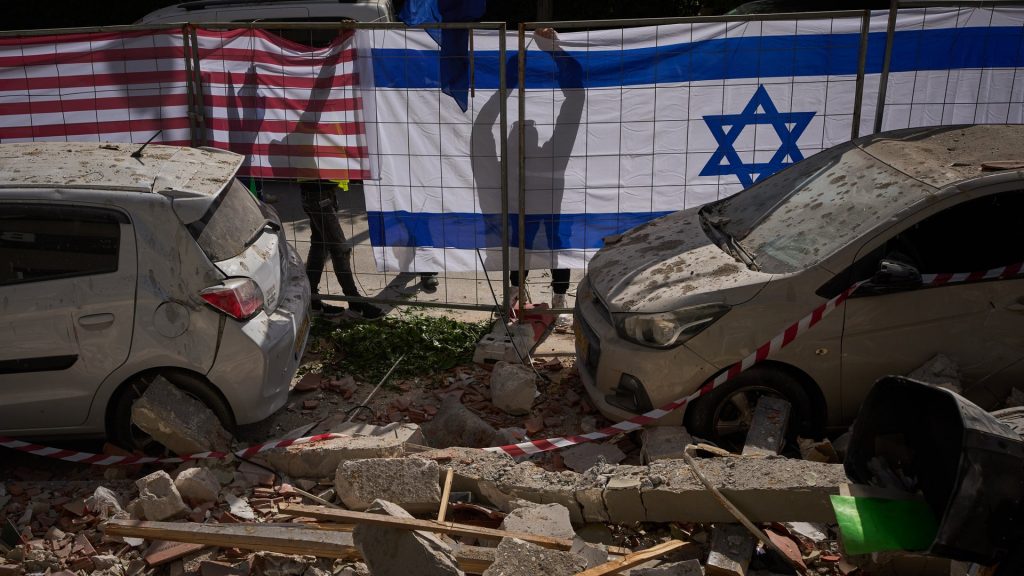
Iran has launched missile attacks on Israel after confirming the killing of senior security official Ali Larijani in an Israeli strike, with Israel also saying it has now killed Iran’s intelligence minister in a separate attack. Israel is now hitting targets across Iran and Lebanon, with U.S. forces striking Iranian military sites near the Strait of Hormuz.
Iranian commanders said Wednesday the response would be “decisive,” then followed through with overnight strikes on central Israel. Missiles and falling debris hit areas around Tel Aviv, including Ramat Gan, killing at least two people and injuring others, according to Israeli emergency services.
Israel said it intercepted incoming missiles but confirmed multiple impact sites. Video showed damaged streets, burning vehicles, and debris scattered across residential neighborhoods.
Just hours after Iran’s threat of retaliation, Israel’s defense minister announced another Iranian leader was killed, saying intelligence minister Esmail Khatib was “eliminated” Monday night.
Khatib was “responsible for the regime’s internal repression and assassination apparatus, as well as for advancing external threats,” according to NBC News.

Iran confirms Larijani death, signals more attacks
Iranian state media previously confirmed Larijani was killed in an Israeli airstrike along with Gholamreza Soleimani, who led a militia aligned with the Revolutionary Guard. Larijani was a central figure in Iran’s national security leadership and a close ally of the country’s top leadership.
Senior commanders said additional attacks are coming. One warned the next phase would go beyond the initial strikes and continue until their objectives are met.

Iran also pointed to disruption in the Strait of Hormuz. Oil prices remain near $100 a barrel, and Iranian officials warned the economic fallout is not over.
Israel expands strikes into Lebanon
Israeli forces continued strikes inside Iran Wednesday, including targets near Tehran. Footage showed damage at a checkpoint following one of the attacks.
Israel also widened its campaign in Lebanon. Airstrikes hit central Beirut, including a multi-story residential building Israel said was tied to Hezbollah operations. Lebanon’s health ministry said at least six people were killed and more than 20 injured.
Evacuation warnings were issued ahead of additional strikes.

Meantime, U.S. forces struck Iranian missile positions along the Strait of Hormuz, using bunker-buster munitions designed to penetrate fortified sites. U.S. Central Command said the goal is to limit Iran’s ability to threaten shipping lanes and regional targets.
The strikes add to U.S. military action alongside Israel.

This story is featured in today’s Unbiased Updates. Watch the full episode here.
Trump defends war after intelligence chief resigns
The escalation follows a high-level resignation inside the U.S. intelligence community. Joe Kent, director of the National Counterterrorism Center, stepped down, saying he could not support the war and arguing Iran did not pose an imminent threat.
President Donald Trump rejected that view, calling Kent’s exit “a good thing” and saying Iran posed a clear threat that required action
“When I read his statement, I realized that it’s a good thing that he’s out, because he said that Iran was not a threat,” Trump said. “Iran was a threat, every country realized what a threat Iran was.”

Trump also said the U.S. is not ready to leave the conflict, but suggested a withdrawal could happen in the near future. He also criticized NATO allies for offering little support.
“If we left right now, it would take 10 years for them to rebuild. But we’re not ready to leave yet,” Trump said. “We’ve had great support from countries in the Middle East, great support, but we’ve had no support from — essentially no support — from NATO.”
Ella Rae Greene, Editor In Chief