IDF escalates hostilities in Lebanon; targets Hezbollah chief in Beirut airstrike
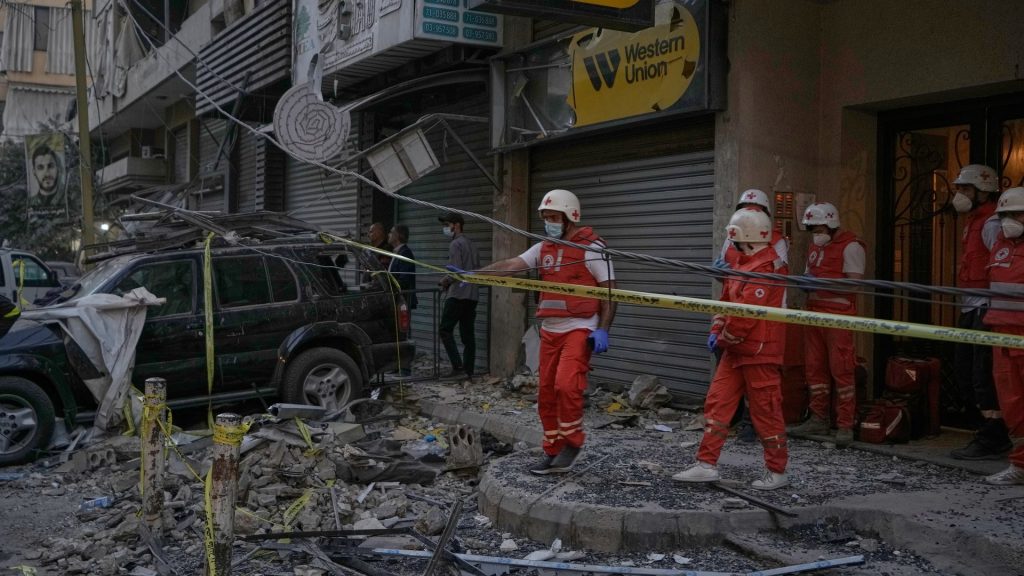
Israel launched its first airstrike targeting the Lebanese capital of Beirut in five months on Sunday, with the goal of killing Hezbollah’s chief of staff. At least five people were killed and another 28 were injured; however, Hezbollah has not yet confirmed the death of one of its most senior officials.
Hezbollah declines to confirm official’s death
On Sunday, Israeli Prime Minister Benjamin Netanyahu ordered an airstrike on a residential building in the Lebanese capital of Beirut. The strike, which targeted Hezbollah Chief of Staff Haytham Ali Tabatabai, was carried out at the behest of Defense Minister Israel Katz and the chief of staff for the Israeli Defense Forces (IDF).
“A short while ago, the IDF struck, in the heart of Beirut, the Hezbollah chief of staff who led the organization’s military buildup and armament efforts,” Netanyahu’s office said in a statement Sunday. “Israel is determined to act to achieve its goals, in any place and at any time.”
Hezbollah has not yet confirmed the death of Tabatabai. But a member of the group who sits in Lebanon’s parliament, Ali Ammar, described the attack as a “treacherous aggression” that targeted a residential community, adding, “We will continue our steadfastness, and we are strong in our resolve, in our just cause, in our martyrs, and in the strength of our people and supporters.”
At least five people were killed in the attack and another 28 were wounded, according to Lebanon’s health ministry, which described the numbers as a “final tally.”
Airstrike targets residential building
Although the Israeli military claims that Tabatabai was in the building that was struck, Ammar maintains that it is “a civilian area and void of any military presence.”
Meanwhile, deputy chair of Hezbollah’s political council, Mahmoud Qamati, told journalists Sunday that a senior official might have been killed, but declined to comment further, saying, “Hezbollah’s leadership is studying the matter of response and will take the appropriate decision.”
The airstrike, which involved two or three missiles depending on reports, hit the third and fourth floors of a nine-story apartment building in Beirut’s Haret Hreik neighborhood, according to a correspondent with AFP who was on the scene.
Israel did not issue evacuation orders prior to the strike. A senior Hezbollah official told a reporter with Al Jazeera that meant the IDF was “after a high profile figure.”
“There’s still no confirmation, but the very fact that this Israeli strike happened without an evacuation order, without a prior warning if you will, really suggests that they were after a high profile figure or a high-value target,” the official told Al Jazeera.
Tabatabai is recognized as Hezbollah’s number-two in command. He was labeled as a “Specially Designated Global Terrorist” by the U.S. State Department in 2016.
Hostilities despite ceasefire
Sunday’s strike marks the first time Israel has hit the Lebanese capital since June 5, when the IDF targeted a drone manufacturing facility operated by Hezbollah. Israel and Lebanon have also been engaged in a ceasefire since November 2024.
Hostilities initially escalated after Hezbollah, which has a stronghold in Lebanon, began striking Israel in solidarity with Hamas and the Palestinian people, following the IDF’s military offensive in Gaza in October 2023.
The November agreement required Israeli forces to withdraw from southern Lebanon and for Lebanon’s army to deploy to the region. Hezbollah also had to end its military presence north of the Litani River. At the time, Lebanon said it was ready to have at least 5,000 troops deployed to the southern part of the country.
On Sunday, Lebanese President Joseph Aoun said that the airstrike was “further proof that [Israel] does not care about the repeated calls to stop its attacks on Lebanon and refuses to implement international resolutions and all the efforts and initiatives to end the escalation and restore stability, not only to Lebanon but to the entire region.”
Aoun went on to say, “Lebanon, which has adhered to the cessation of hostilities for almost a year now, and has presented initiative after initiative, renews its call to the international community to assume its responsibility and intervene strongly and seriously to stop the attacks on Lebanon and its people.”
Israel has ramped up its airstrikes across Lebanon in recent weeks, despite the ceasefire. The IDF says it is targeting Hezbollah and Hamas infrastructure and training grounds, though both groups deny the claims. On Tuesday, an Israeli airstrike killed at least 13 people living in a Palestinian refugee camp in southern Lebanon.
US was unaware of strike beforehand
Lebanon, which was celebrating its independence anniversary at the time of the attack on Sunday, has faced significant pressure from Israel and the U.S. to disarm Hezbollah. The Lebanese government has approved a plan to do just that; however, Israel has accused the Iranian-backed militant group of attempting to rebuild. Lebanon has denied the claims.
Speaking to Axios, a U.S. official said the White House was not informed of the strike beforehand but learned of it “immediately after” it was carried out. A second official told the outlet that the administration knew a strike was imminent, but did not know the timing, location or target.
The post IDF escalates hostilities in Lebanon; targets Hezbollah chief in Beirut airstrike appeared first on Straight Arrow News.
Ella Rae Greene, Editor In Chief