How two Supreme Court cases could affect trans rights
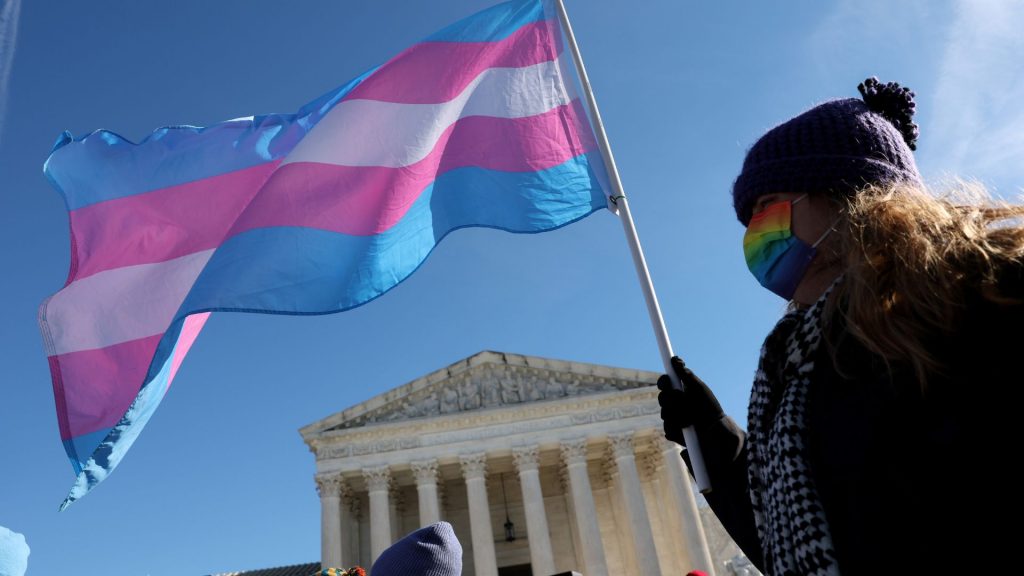
Supreme Court justices are back from their winter break and, for the first time, have jumped into two cases related to transgender athletes. The decisions could shape how courts interpret equal protection and Title IX in transgender rights.
The justices will hear arguments Tuesday in two cases, one from West Virginia and another from Idaho. The cases stem from laws prohibiting trans girls from competing on teams aligned with their gender identity.
The outcome will determine the fate of laws restricting participation by trans athletes in dozens of other states. There are an estimated 122,000 transgender minors who play in high school sports nationwide, according to the Williams Institute at the University of California, Los Angeles.
What are the cases?
The first case is Little v. Hecox, the Idaho case. The case challenges the state’s Fairness in Women’s Sports Act, which Idaho lawmakers passed in 2020.
The law was the first in the country to ban trans girls from playing on female sports teams, impacting sports from elementary to college. The case began after Lindsay Hecox, now 24, sued when she sought to try out for the women’s track and cross country at Boise State University.
The second case is West Virginia v. B.P.J. The case challenged the state’s Save Women’s Sports Act, passed in 2021. Similar to Idaho’s law, it bans transgender girls and women from girls’ and womens’ sports in public secondary schools and colleges.
The case came after the law barred B.P.J., a 15-year-old transgender girl who has identified as a female since third grade, from playing on girls’ sports teams.
What is the history of the case?
Unbiased. Straight Facts.TM
In 2024, fewer than 10 of the 510,000 athletes in college athletics identified as transgender, according to testimony from NCAA President Charlie Baker.

In the Idaho case, a federal district court temporarily barred the state from enforcing the law in August 2020, according to SCOTUS Blog. The court concluded that it likely violated the 14th Amendment’s guarantee of equal protection.
The 9th U.S. Circuit Court of Appeals upheld the ruling, finding that the law violates the 14th Amendment because it discriminates based on transgender status.
“Its text, structure, findings, and effect all demonstrate that the purpose of the Act was to categorically ban transgender women and girls from public school sports teams that correspond with their gender identity,” the court wrote in its decision.
Judges also found that the law discriminates based on sex because it only focused on students on girls’ and womens’ sports teams but not those in male athletics.
In West Virginia v. B.P.J., U.S. District Judge Joseph Goodwin issued an order in 2021 temporarily stopping the state from barring B.P.J. from participating in girls’ sports. She competed on the middle school girls’ track and cross-country team while the case went through the courts.
However, in 2023, the judge ruled in the state’s favor. B.P.J. appealed the case to the 4th U.S. Circuit Court of Appeals, which reversed the district court’s decision. Then, in 2024, the court of appeals agreed that the law violated Title IX by discriminating against B.P.J. based on sex.
Idaho and West Virginia filed petitions to the Supreme Court for review of the rulings in July 2024. The court waited until after its decision in United States v. Skrmetti, which challenged Tennessee’s ban on certain forms of medical treatment for transgender minors, before granting those petitions.
In the Skrmetti case, the Supreme Court ruled Tennessee’s law banning puberty blockers and hormone therapy for minors did not violate the Equal Protection Clause of the 14th Amendment.
What could the decisions change?
Since these cases are the first time the Supreme Court has heard arguments about transgender athletes, these decisions could have significant ramifications.
The biggest issue the cases deal with is who or what groups Title IX protects. If the justices decide to overturn either circuit court decision, that would allow states to enforce or enact laws that ban transgender students from playing on teams aligned with their preferred gender.
Nearly 30 states have enacted laws or regulations banning or limiting transgender students from participating in sports consistent with their gender identity, according to the Movement Advancement Project.
The cases up for arguments this week could also determine the legal standard for trans discrimination claims. If the court decides trans people are not a protected class, that could make it easier for states to defend other kinds of anti-trans laws, not only those targeting school sports.
A ruling is not expected before late June or early July, when the Supreme Court typically issues most of its major decisions.
The post How two Supreme Court cases could affect trans rights appeared first on Straight Arrow News.
Ella Rae Greene, Editor In Chief