How Trump’s new fuel rules could impact you, your wallet and your health
President Donald Trump has begun the process of rolling back fuel requirements for new vehicles. The new plan would considerably reduce the requirements set by the Biden administration.
Moving back to gas
Former President Joe Biden put an emissions reduction plan in place with the hopes of curbing tailpipe emissions and reducing greenhouse gas emissions.
“It’s the CAFE standards, which is corporate average fuel economy,” Stephanie Valdez Streaty, director of industry insights at Cox Automotive, told Straight Arrow News. “So basically, it kind of dictates how manufacturers build their portfolio. So, if they have more big truck SUVs, they need to balance that out with pure batteries that have better efficiencies. It’s getting that average of fuel efficiency to meet those guidelines set by the government.”
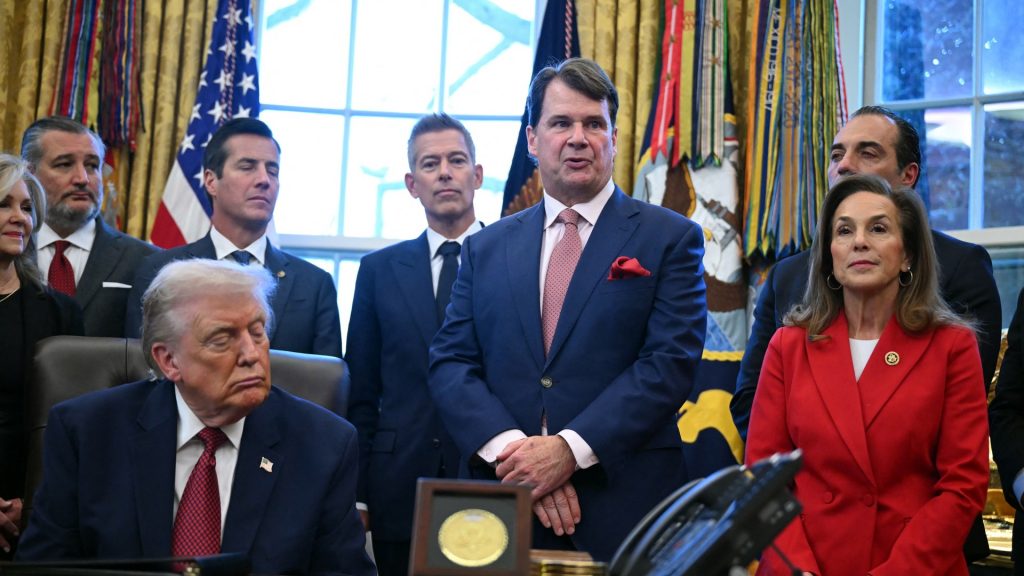
The Trump administration now plans to ease those CAFE standards. Surrounded by auto industry executives, Trump announced his Transportation Department will weaken those fuel requirements for tens of millions of new cars and light trucks.
“They are required by law to increase them a little bit, and so they are having them go up a little bit, but kind of at the bare minimum, whereas before they were going to be going up much more stringently,” Kenneth Gillingham, professor at Yale University’s School of the Environment, told SAN.
Trump said this move will reduce costs for consumers and automakers.
“Today my administration is taking historic action to lower costs for American consumers, protect American auto jobs, and make buying a car much more affordable for countless American families and also safer,” Trump said during the announcement on Dec. 3. “We’re officially terminating Joe Biden’s ridiculously burdensome, horrible actually, CAFE standards that imposed expensive restrictions and all sorts of problems, gave all sorts of problems to automakers.”
Earlier this year, Trump also made changes to help automakers, including effectively rescinding the Environmental Protection Agency’s (EPA) greenhouse gas emission standards.
“What they did was they said the new standards are going to be the standards today,” Gillingham said. “So basically, saying no new, no increase in standards or tighter standards. Then, they effectively did the same thing for CAFE standards.”
Part of that came in the president’s budget bill earlier this year, which didn’t alter CAFE standards but made changes to the enforcement.
“With these new standards, regardless of if the manufacturers meet any of them, there’s no fee right now,” Valdez Streaty said. “So, that’s kind of the interesting part about all this. There are standards, but no fee for noncompliance.”
That legislation also removed the EV tax credit.
Effects on you
Despite previously claiming affordability is a “con job by the Democrats,” the president mentioned consumer affordability repeatedly during the announcement. Trump said he expects this move to save the typical consumer $1,000 off the average price of a new car.
While this could impact pricing, there’s also a range of other factors that influence car prices, including supply chain challenges, tariffs and more.
“The sticker price of a car could go down, but when they’re putting more gas cars on the market, the price of gas is going to go up,” Dan Sperling, director emeritus of the Institute of Transportation Studies at the University of California, Davis, told SAN. “Maintenance costs are going to go up. So, is this really helping affordability?”
Gillingham said Biden’s standards would likely raise the initial price of a vehicle, but the overall price would likely go down.
“It’s pretty uncontroversial that standards will likely raise the price of new cars by some amount,” Gillingham said. “That’s fairly uncontroversial. Now, of course, that increase in price also comes along with improved efficiency. So, you save money on gasoline if you have a gasoline car, or you save money by getting an electric car, and you pay a lot less. So, on net, you’re paying less. The total cost of ownership is lower in most cases, but you’re going to be paying a little bit more upfront.”
Sperling shared a similar sentiment.
“If you have more aggressive standards, it likely has an increase in the cost of manufacturing the vehicle, but what it does is makes them more fuel efficient,” Sperling said. “So, the upfront capital cost goes up a little, but the gasoline costs go down because of the improved fuel economy and I believe it’s the administration’s own study that says that if you calculate it out, after about two or three years, you break even, and after that, it’s all pure cost savings.”
Consumer Reports did an analysis of vehicles for model years 2003-2021. They found average fuel economy improved by 30% and did not find any significant increase in inflation-adjusted vehicle prices from those requirements.
Even if the sticker price does come down on certain vehicles, it will be a few years before Americans see that.
“It takes a few years to modify the vehicle, the vehicles that are being produced, so it’s not going to affect the prices immediately,” Sperling said.
So, if you’re in the market for a new car, what should you do?
“Just do your research,” Valdez Streaty said. “I think that’s a key message for consumers, and know what options are available to you.”
Effects on the auto industry
“Trump’s positioning is that the guidelines were too stringent, and so manufacturers aren’t able to meet that,” Valdez Streaty said. “They’re spending billions of dollars in fines, and so this gives them some wiggle room to have longer time to build out their electrification portfolio.”
Representatives from Ford, General Motors and Stellantis surrounded Trump as he made the announcement. Trump said these new regulations were “killing them.”
“The automakers, basically, are concerned that they can’t meet these standards under the Biden administration in a cost-effective way because their cost structure is such for electric vehicles that they don’t make money on electric vehicles,” Gillingham said.
He added the one exception to that is Tesla, who was not present during the announcement.
“Every electric vehicle [Tesla] sold they made money on,” Gillingham said. “But that’s because of innovation and the time that they’ve been building electric vehicles. And the big three and other American automakers and many others just haven’t scaled up in the same way.”
In essence, U.S. automakers are more profitable making efficient gas-powers as opposed to electric vehicles. Those concerns have caused those automakers to pull back on EV production after originally going all-in.
“Even though they’re supporting this announcement, they’re still, I think if you look at their commitments, they’re still moving towards electrification, and they have a lot of investment,” Valdez Streaty said. “It’s just shifting the timeline. So, I think they’re going to still invest and try to compete globally as well, but I think it just gives them the opportunity to sell more big SUVs and trucks, right? They’re more profitable.”
Other experts SAN spoke with agreed, citing the need for U.S. automakers to remain competitive overseas.
“If the U.S. industry continues to make very large vehicles that run on gasoline, then they’re going to continue losing their international markets,” Sperling said.
Gillingham said there could be one other reason the automakers were supportive.
“I think they might be fearful of Trump,” Gillingham said.
Either way, the back-and-forth between administrations can be tough on automakers.
“This ping ponging back and forth is very difficult on the automakers,” Gillingham said. “Kind of the automaker’s nightmare. They put in huge amounts of investment into electric vehicle factories, into electric vehicle manufacturing during the Biden administration, and now they’re faced with a whole set of different concerns.”
Effect on the environment
Biden’s CAFE regulations were in big part designed to curb greenhouse emissions to combat climate change and bring more jobs to the U.S.
“When I think of the climate crisis: Beyond the devastation to the lives and livelihoods and the health of our very planet, when I hear “climate,” I think “jobs” — good-paying union jobs,” Biden said on Aug. 5, 2021, during a ceremony to sign an executive order on clean cars and trucks where he was also surrounded by leaders from Ford, GM and Stellantis.
It’s abundantly clear that electric vehicles are better for the environment than gas cars. The EPA currently has that as their number one EV fact on their EV myths webpage.
“Unequivocally, it increases greenhouse gas emissions and increases local air pollution by definition,” Sperling said.
That will make it harder for America to reduce its climate change footprint.
“The Trump administration claims that climate change is not real,” Gillingham said. “The science says it is real. Regardless of what you think about climate change, it’s very, very clear that you’re going to have more greenhouse gasses in the atmosphere because of this rollback.”
More greenhouse gas emissions can lead to bigger bills for consumers that have nothing to do with their car.
“More respiratory issues, more circulation issues,” Gillingham said. “Standard hospital admissions will go up because we’re going to have more polluting cars on the road.”
The post How Trump’s new fuel rules could impact you, your wallet and your health appeared first on Straight Arrow News.
Ella Rae Greene, Editor In Chief