How the war in Iran could soon cost you more at the grocery store
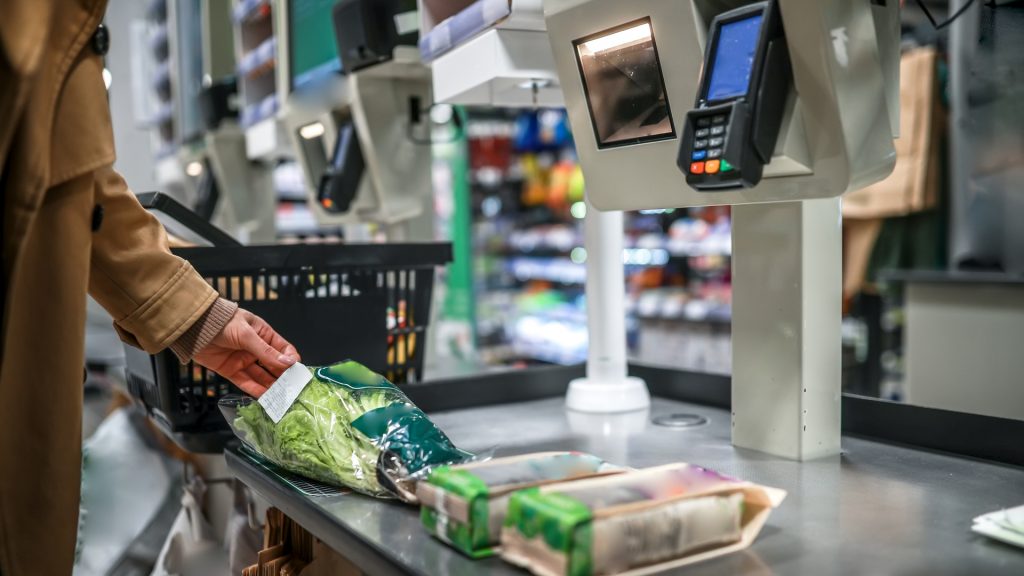
The war in Iran may be thousands of miles away, but its economic impact could soon show up much closer to home – at the grocery store. While rising oil prices are already pushing gas prices higher, experts warn food prices could be next.
President Donald Trump has said he expects the war to wrap up by the end of the month, but economists say if the conflict drags on longer, grocery prices could start to climb.
“If we’re talking just a few weeks, very likely you’re not going to see this show up in your grocery receipts,” Dr. David Ortega, an agricultural economist and professor at Michigan State University, told Fortune. “But if we’re talking a month or more, a few months, then it’s a different story.”
That warning comes as food prices in the U.S. have already risen 29.4% between March 2020 and December 2025, outpacing increases for the broader market, according to Forbes.
What drives food prices up
Not only is the Strait of Hormuz a key passage for 20% of the world’s oil, it’s also a critical passage for other parts of the global supply chain.
More than one-third of the global seaborne fertilizer travels through the Strait of Hormuz, according to the United Nations Conference on Trade & Development.
Unbiased. Straight Facts.TM
Prior to the war in Iran, the USDA’s Economic Research Service predicted food prices would rise about 3.1% in 2026.

Fortune reports that the price of urea – the nitrogen-rich compound present in most fertilizers – has jumped 35% since the war began just over two weeks ago.
The timing is particularly sensitive because farmers are beginning to plant their seasonal crops, when fertilizer demand is typically highest. Higher input costs at this stage of the growing season can eventually translate into higher prices for consumers.
The Middle East also plays a major role in fertilizer production because its natural gas reserves are used to produce ammonia, a key ingredient in nitrogen-based fertilizers.
Countries near Iran that are being impacted by the war – including Egypt, Qatar, Saudi Arabia and the United Arab Emirates – account for roughly 49% of global urea exports and about 30% of ammonia exports, according to the American Farm Bureau Federation.
What oil prices tell us about the future of grocery prices
A recent analysis from the Federal Reserve Bank of St. Louis found a correlation between crude oil prices and the global price of food index.
While researchers caution that correlation doesn’t necessarily equal causation, there is evidence that spikes in oil prices have impacted food prices in the past.
“Taken together, these two graphs suggest that large and sustained oil price movements have historically coincided with changes in both food prices and broader consumer inflation,” the report said.

Right now in the U.S., gas prices are the highest they’ve been since October 2023, sitting at an average of just under $3.72 a gallon, according to AAA.
Since the start of the war on Feb. 28, gas prices have risen 74 cents a gallon. The 26.9% spike in prices over the past month is the largest monthly increase since Hurricane Katrina.
Brent crude, the global benchmark, rose slightly on Monday to more than $103 a barrel, while the U.S. benchmark slipped about 1% to around $98 a barrel.
Ella Rae Greene, Editor In Chief