How the search for vaccine safety led parents away from the experts
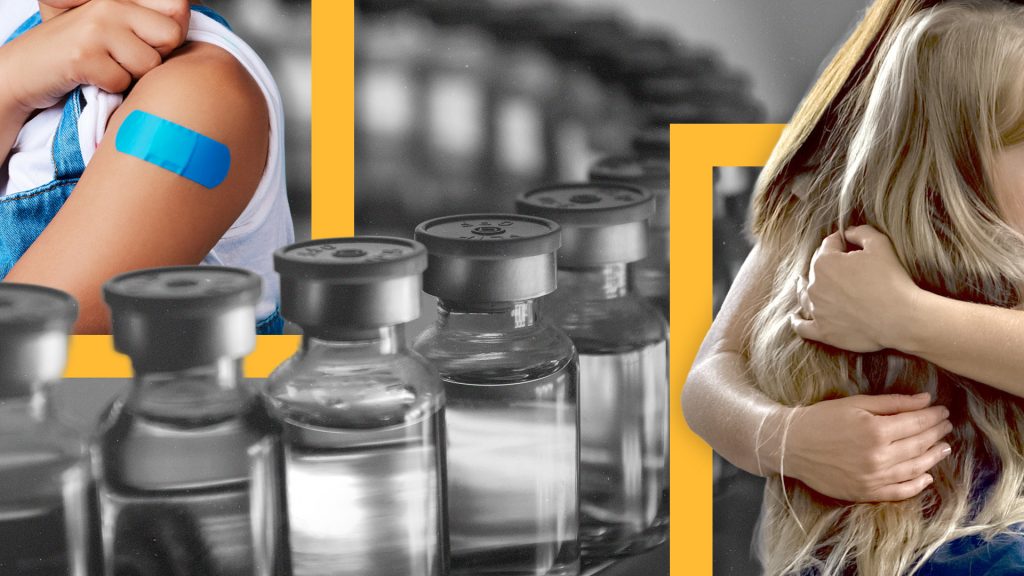
In the first few months of her son’s life in late 2020, Dani Masters did what millions of mothers across the country have done for decades: She followed the guidance of doctors and vaccinated her firstborn.
Her son received the hepatitis B vaccine the day he was born. At 2 months old, he received his first doses against diphtheria, tetanus, pertussis, polio, Haemophilus influenzae, rotavirus and pneumococcal disease.
To her recollection, Masters received all the recommended shots as a child.
“Everyone gets vaccines,” in Portland, Oregon, where Masters grew up, she told Straight Arrow News. And for the most part, Masters, who is now 39 and lives in New Hampshire, never gave vaccines much thought.
But she had one small hesitation: Her husband, from whom she was in the midst of separating at the time, pleaded with her not to immunize their child.
“Do me a favor,” he told her. “Don’t vaccinate him.”
Masters asked around. Several of her friends had not immunized their children. But one friend, a nurse, told her only crazy people didn’t vaccinate. So Masters went ahead with the vaccines.
Then, after a second round of boosters at 6 months, Masters’ son had a bad reaction.
“He developed these red patchy circles on his cheeks. They were really scaly and these perfect red circles,” Masters said. She thought, at first, it was a food allergy but after cutting out those foods, concluded it was from the vaccines.
“So I just stopped altogether. This was kind of during COVID, where I sort of woke up to a lot of the medical industry and the corruption,” she said.
After her experience with her firstborn, Masters decided not to vaccinate her two younger children, who are now 2 years old and 3 months old.
Masters was far from alone in her vaccine awakening.
Vaccination, once broadly bipartisan and readily accepted as a routine public health measure, has become a flashpoint in American discourse. Parents, podcasters and politicians hotly debate the safety and necessity of vaccines while the Trump administration has placed vaccine policy at the center of its public health agenda.
Amid fiery social media exchanges and partisan politics, parents across the political spectrum describe themselves as simply trying to make the best decisions for their children.
To capture this pivotal moment, SAN interviewed physicians and more than a dozen parents about their decisions to vaccinate — or not vaccinate — their children. SAN also reviewed data archives, scientific studies, national polls, news articles and government reports. What emerged was a portrait of a country negotiating science: weighing expertise against personal experience and collective obligation against personal conviction.

The COVID-19 pandemic marked a major turning point for public health. Trust in science and health institutions plummeted. Tens of thousands of parents like Masters, started skipping vaccines, according to data from the Centers for Disease Control and Prevention (CDC). National immunization rates have fallen to their lowest levels in more than a decade. During the 2018-2019 school year, 94.9% of kindergartners were immunized for diphtheria, tetanus and pertussis. Last year, that number dropped to 92.1%. Polio vaccine coverage similarly declined, from 94.7% to 92.5%.
In a marked shift from his first term, when President Donald Trump poured billions into Operation Warp Speed to fast-track COVID-19 vaccine development, the current administration has recalibrated federal vaccine policy. It has revised elements of federal recommendations, signaled a more stringent regulatory posture and scaled back some reporting and oversight requirements. Health and Human Services (HHS) Secretary Robert F. Kennedy Jr., has repeatedly suggested a link between vaccines and autism, though during his Senate confirmation hearings last year, he told lawmakers he is “not anti-vaccine,” just “pro-safety.”
Body of evidence
In 1998, British physician and researcher Andrew Wakefield and 12 colleagues published a small study suggesting the measles, mumps and rubella vaccine predisposed children to developmental disorders such as autism. That study was later retracted due to undisclosed financial conflicts of interest and misrepresented data. Wakefield later lost his U.K. medical license. The paper ignited the modern vaccine-autism controversy; it also set a precedent in which scientists who raised legitimate vaccine safety questions were quickly branded as “anti-vax” and pushed to the margins of mainstream debate, said Christopher Shaw, a physician-researcher at the University of British Columbia.
Since then, large-scale studies and independent scientific reviews have found no link between vaccines and autism. Hundreds of trials affirmed that routine childhood immunizations prevent disease and are generally safe despite occasional, usually mild side effects such as soreness and fever.
Some vaccines are associated with an increased risk of certain conditions. For example, a review of 87 studies that included more than 13 million children found that the measles, mumps and rubella vaccine was linked with an increased risk of a rare blood-clotting disorder. However, people who’d been infected with measles, mumps or rubella viruses were twice as likely to develop the disorder as those who’d been vaccinated.
Joanna Nathan leaned into her background in bioengineering to research vaccines ahead of making important health decisions for her now 18-month-old daughter. She read scientific papers, including Wakefield’s. She read consensus statements from medical organizations.
In short, she did her own research. Her conclusion: The vaccine-autism claim represented an outlier in an otherwise substantial body of evidence supporting vaccine safety.
For her, the stakes could not have been higher: In 2021, her son suddenly passed away at 4 years old. To this day, his death remains unexplained.
“There’s part of me that panicked and was like, oh my gosh, did he get vaccinated? And could that have been the reason why?” Nathan, 34, recalled.
Her son had never received the COVID-19 vaccine; it wasn’t approved for children by the time he passed.

Late last year, the FDA circulated an internal memo that claimed 10 children died after receiving COVID-19 vaccines, though the agency released no additional details about the cases nor its investigation. (HHS has not responded to repeated requests for additional information about these claims.) SAN reviewed a federal FDA-CDC database and found 83 reports of children who died within two weeks of receiving vaccines between 2021 and 2025, including 34 following COVID-19 vaccination. However, the system does not verify whether vaccines caused the deaths; each case requires further clinical investigation.
“It really hurts when our government, which is supposed to be protecting our children perpetuates some of these stories to drive fear into parents, when they’re going directly against the consensus of the scientific community,” said Nathan, who runs a health startup in Houston.
Scientists and public health officials have broadly concluded that COVID-19 vaccines are generally safe and effective. A study of 434 children presented at this month’s Society for Maternal-Fetal Medicine meeting found no links between mRNA COVID-19 vaccines and autism.
Still, COVID vaccines are not risk-free.
Studies have found that several of the vaccines increased the risk of myocarditis and pericarditis, inflammation of parts of the heart, particularly among young males. There were about eight cases per 1 million mRNA COVID-19 vaccine doses among people 6 months to 64 years and 27 cases per million doses given to males between 12 and 24 years old.
Despite these risks, extensive research has found that, for most people, the protection against severe illness, hospitalization and death outweighs risks from vaccines. For example, one study estimated that the chance of heart inflammation was about seven times higher after COVID-19 infection than vaccination.
Aluminum, mercury and big pharma’s greed
Despite the many studies that conclude vaccines are relatively safe, many parents, including five of the mothers SAN interviewed, decided not to fully immunize their children because of the ingredients in vaccines.
“I’m not so much against vaccines,” said Elisa, a 33-year-old nurse and mother of two who asked to have her last name withheld.
“I feel like the idea is a good idea. It makes sense,” she told SAN. “I don’t know why they have to put all of those ingredients in it. I feel like they need to make them safer.”
Parents questioned the safety of ingredients such as aluminum, mercury and foreign DNA.
Brianna, a 35-year-old mother expecting her eighth child in August, told SAN she decided against immunizing all her children for this exact reason.
Brianna and her husband fully vaccinated their first two kids, who were born in 2009 and 2011. At the time, Brianna said she assumed she had no choice but to vaccinate. But when she became pregnant with her third child, she started to question the process: Why do kids need so many vaccines? Why do they receive so many at once? Why did her kids have such bad reactions afterwards?
Brianna still sought out the vaccines for her third child as recommended. But after the final round of shots, her daughter developed tics. Her doctor reassured her that vaccines did not cause them.
But Brianna did her own research. Her conclusion: The heavy metals, particularly the aluminum, in the vaccines were to blame.
About 0.5 milligrams of aluminum is added to some vaccines to boost the body’s immune response to them, according to the American Academy of Pediatrics (AAP). This is far lower than the estimated 7 to 9 milligrams of the metal that most people ingest from food, air or water daily. Most, though not all, of the aluminum in vaccines is processed by the kidneys and eliminated in urine in the same way the metal in food and water is handled.
Some researchers, like Shaw, disagree, pointing to studies in rats and monkeys that demonstrated how the aluminum in vaccines can cause inflammation and changes in brain biochemistry. Some research has found that immune cells can carry aluminum particles to the brain, causing long-term accumulation. There is no scientific consensus on how to translate these findings to humans.
Last year, Danish researchers published a large study that followed more than 1 million children born between 1997 and 2018. The analyses revealed no association between aluminum exposure and 50 diseases, including asthma, autism and ADHD.
Several parents told SAN they are concerned about the mercury in vaccines.
Since the 1930s, pharmaceutical companies have added thimerosal to some vaccines — today just the flu shot, adult tetanus boosters and meningococcal vaccines — to prevent microbial growth. Thimerosol contains ethylmercury, not the silver liquid metal once found in thermometers but a chemical compound that contains mercury. Scientists have injected high levels of thimerosal into rodents and documented behavioral changes, brain inflammation and altered neurochemistry.
Kennedy banned thimerosal from flu vaccines last year.
Erosion of trust
Since the pandemic, trust in the nation’s health institutions has declined. In January 2019 — eleven months before the first COVID-19 infection was detected in China — 73% of U.S. adults said science had a mostly positive impact on society, according to a Pew Research Center poll. By October 2023, that figure had dropped to 57%. The share of respondents who said they had a great deal of trust in medical scientists fell from 35% to 25%.
Other researchers found that in February 2020, more than 80% of respondents reported high confidence in the CDC; that number fell to 56% in mid-2022 and rebounded slightly to 60% in late 2024. Confidence in HHS, state health departments and medical organizations also fell sharply during the pandemic.
When it comes to vaccines specifically, trust is lower still. One poll found sharp partisan divides: Fewer than half of Republicans said vaccines were safe and highly effective at preventing illness, compared with more than 70% of Democrats.
For Elisa, it isn’t about politics.
She drew on her years of experience working in the health care field and did her own research. Her conclusion: Vaccine safety research relies too heavily on studies funded by pharmaceutical companies, creating what she sees as a built-in financial incentive to produce favorable findings.
“Pharmaceutical companies that are developing these don’t have your best interest in mind,” she said. “In the end, it’s about money. More vaccines, the more money that the pharmaceutical companies make. And then pharmaceutical companies are lobbies, and they’re giving the politicians and lawmakers money.”
She also pointed out that vaccine manufacturers are not liable for injuries or deaths linked to vaccination so long as the shots were properly prepared and carried proper warnings.
The 1986 National Childhood Vaccine Injury Act granted broad immunity to pharmaceutical companies and established a federal compensation system. A separate law was passed during the pandemic that granted companies additional liability protection and limited compensation rates for people injured by COVID-19 vaccines.
“That seems like a red flag there,” Elisa said. “If everything was safe, then there shouldn’t be a reason why you’re immune to not getting sued.”
Jorden Kaufmann, a 28-year old sales representative from Denver, Colorado, told SAN she has full trust in her physicians.
“Doctors have spent their almost entire lives dedicated to protecting us, dedicated to educating themselves on ways in which to keep us safe,” said Kaufmann, who is expecting her first child in June. “I don’t think that they have any malicious intentions.
“Obviously there’s room for human error in anything. But I don’t think that vaccinations have any human error that we’ve found, and so I think that vaccines are incredibly safe for a majority of the population.”
Kaufmann intends to vaccinate her daughter according to the vaccine schedule that predated the Trump administration, one that recommends shots against 18 diseases.
“I intend to vaccinate her based off of all of our doctor’s recommendations. At whatever age our doctor recommends that she gets vaccinated, she’ll be vaccinated.”
Brianna, and several other mothers SAN interviewed, remained wary of the medical field, pointing to a long history of doctors reversing guidance after flawed takes. For years, parents were told to delay introducing peanuts to infants, only for later research to show early exposure reduced allergy risk. In the 1950’s, a drug called thalidomide was advertised as a pregnancy-safe treatment for morning sickness; the drug caused thousands of infants to be born with limb deformities. And in the mid-20th century, some physicians endorsed cigarettes, long before the health dangers became undeniable.
Rana Alissa, a pediatrician and head of the AAP’s Florida chapter, said she has witnessed a profound shift in parents’ attitudes about vaccines. In the past, she typically saw about 30 patients a day, with a parent declining vaccines about twice a week. Now, refusals happen four to five times a day, and those parents are becoming more hostile, she said.
“We’re seeing more and more, a change of tone of our parents, especially the disrespect and the distrust,” she said. The patient-physician relationship has eroded, she said. Parents declining vaccines are also refusing other medications and, in some cases, avoiding care altogether to sidestep vaccine discussions, Alissa told SAN.
”It’s extremely concerning, because I feel this is just the beginning.”
Weighing the risks
Against a backdrop of declining trust in public health institutions and heightened rhetoric from senior HHS leaders, parents are left to weigh vaccine’s risks and benefits.
Masters, Brianna and Elisa don’t think the risks from infectious diseases merit accepting any risk from a vaccine.
“The risks of them getting a disease, I’m not as worried about that as I am a reaction to all of the vaccines on the schedule,” Masters said. “I think that being alive, you know, you run a risk of getting sick, or you run a risk of some crazy illness.”
Elisa, who is originally from Central America, questioned why children need vaccines for fairly harmless diseases. She and Brianna remember the chickenpox parties of their childhoods, when parents intentionally exposed their kids to a child with the telltale fever and rash.
Since American pediatricians started routinely vaccinating children against chickenpox in 1995, there have been fewer than 150,000 infections and 30 deaths. Prior to mass chickenpox immunization, the CDC recorded 4 million cases and 100 to 150 deaths each year.
The nation’s current measles resurgence is likely due to waning vaccine coverage. Last year, the CDC recorded more than 2,200 cases — the highest number since 1991. As of mid-February, the agency has documented 910 cases and zero deaths in 2025. More than 90% of these cases are among unvaccinated children. Pertussis — or whooping cough — is also on the rise. The CDC recorded more than 35,000 cases in 2024, five times the rate in 2023.
While measles and whooping cough cases are rising, some parents pointed out that only a fraction of patients are hospitalized or dying from those diseases. Last year, three people died from measles. Ten died from whooping cough though 33% of babies younger than 6 months were hospitalized.
Rachel Larry, a 34-year-old paramedic from New Hampshire was nine months pregnant toward the end of the pandemic. She was working full-time at a hospital when she received her first COVID-19 vaccine, then a booster, then an antibody infusion. Larry asked doctors and nurses she worked with about their views of vaccination. Ultimately, when her son was born, Larry decided to largely follow the advice of her pediatrician.
“I’m pro vaccination when it comes to the vaccines for things that were eradicated,” Larry explained. “I am a little bit still slower on everyone should get the flu or the COVID or some newer vaccines that aren’t necessarily for well-known diseases.”
While Larry vaccinated her son, now 4, with all the standard vaccines, she skipped the COVID-19 shot; her son might have a high level of protection from her prenatal vaccination, she reasoned. She wanted to wait and see how severe the infection was for kids and if infection or vaccination had any long-term effects. Two years ago her son and her second child both got COVID-19 during the Christmas holiday.
The illness was mild, and both kids recovered quickly.
Parents are also weighing individual risk to their children against collective risk to society.
Prior to becoming pregnant, Kaufmann, in Denver, thought it was acceptable for parents to vaccinate when they felt comfortable. But the world has changed, she said. As vaccine rates fall, herd immunity has been compromised.
“My stance is more strongly that if your child is capable of being vaccinated, then your child should be vaccinated.”
Masters, from New Hampshire, disagreed. “I don’t think that my kids pose a risk to their kids. If their vaccines work, then they shouldn’t be worried about our children being unvaccinated around your kids,” she said.
For Larry, it is a complicated issue.
“It’s that whole risk versus benefit and protecting many kids compared to one. It is a debatable topic,” she said. “ I like to think that people have their kids’ interests in mind, and what’s best for them.”
The post How the search for vaccine safety led parents away from the experts appeared first on Straight Arrow News.
Ella Rae Greene, Editor In Chief