House rejects limiting Trump’s war powers, following Senate’s lead
The U.S. House of Representatives rejected a proposal to limit President Donald Trump’s war powers on Thursday. The vote followed a similar failed vote in the Senate on Wednesday.
The proposal failed by a 212 to 219 vote, with two Republicans voting with Democrats and four Democrats voting with Republicans.
Republicans largely supported Trump’s decision to begin a conflict with Iran, but some have spoken out against it. Rep. Thomas Massie, R-Ky., who sponsored the resolution with Rep. Ro Khanna, D-Calif., has been a frequent critic of Trump and previously criticized the strikes.
“The administration admits [Israel] dragged us into the [Iran] war that’s already cost too many American lives and billions of dollars,” Massie wrote on X. “Before it’s over, the price of gas, groceries, and virtually everything else is going to go up. The only winners in [the United States] are defense company shareholders.”
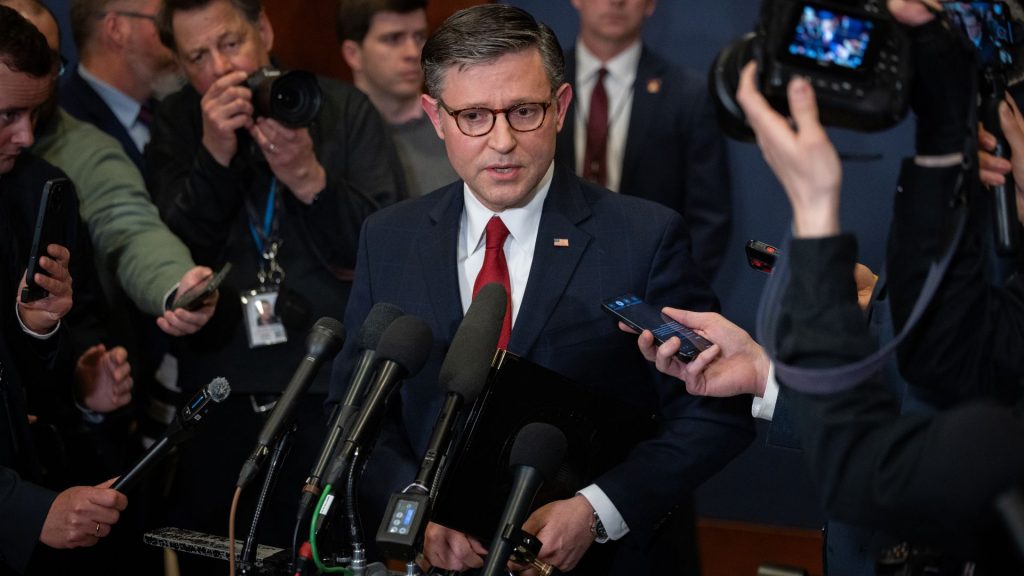
House Speaker Mike Johnson, R-La., previously said that he believed he had the votes to stop the proposal but was still uncertain going into the vote.
“I believe we have the votes to put this down,” he said. And I certainly pray that’s true because … we would put the country in serious harm and it would certainly jeopardize the lives of our troops and all those who were involved in making these great sacrifices to defend us.”
What happens now?
Lawmakers have started discussing other ways they might rein in Trump’s ability to continue the conflict in Iran.
Some reports state the Trump administration is preparing to ask Congress for $50 billion in funding to continue the war. Americans overwhelmingly disagree with going to war with Iran, according to recent polling by Reuters and Ipsos. This makes approving taxpayer dollars to go to a foreign war, which could kill more Americans, an unpopular mark on a politician’s voting record months before an election.
While unpopular, the poll showed 55% of Republicans supported Trump’s decision. Only 7% of Democrats supported it. However, 3% of Republicans thought the strikes didn’t go far enough, suggesting that additional operations or a continued conflict would be unpopular among Trump’s own party.
The Trump administration hasn’t been consistent with how long it believes the military operations in Iran would take. On Monday, Trump said the conflict could take four to five weeks but added that the U.S. has the “capability to go far longer than that.”
Some lawmakers’ statements appear to suggest that the administration was planning for a prolonged war. After a closed-door congressional meeting on Tuesday, Sen. Josh Hawley, R-Mo., told reporters that he would “personally hope for a very swift conclusion, but I don’t know if that’s going to be the case.”
Hawley did say he would not support sending ground troops and that he didn’t hear “any prediction of ground troops,” according to PBS.
The Trump administration hasn’t ruled out the use of ground troops. Defense Secretary Pete Hegseth said it would be “foolishness” for the U.S. to say what it would and wouldn’t do.
Despite Hawley’s statement, other lawmakers aren’t so sure. On Wednesday, Rep. James Comer, R-Ky., said ground troops may be “unavoidable” at this point.
“If there are boots on the ground, I hope they’re not on the ground any longer than the boots on the ground were in Venezuela,” Comer said, according to Newsweek. “But I think that’s something the president knows, that members of Congress certainly hope doesn’t happen, but sometimes that’s unavoidable in a situation like this.”
Ella Rae Greene, Editor In Chief