Goodbye, Factbook: CIA shuts down world reference publication after six decades
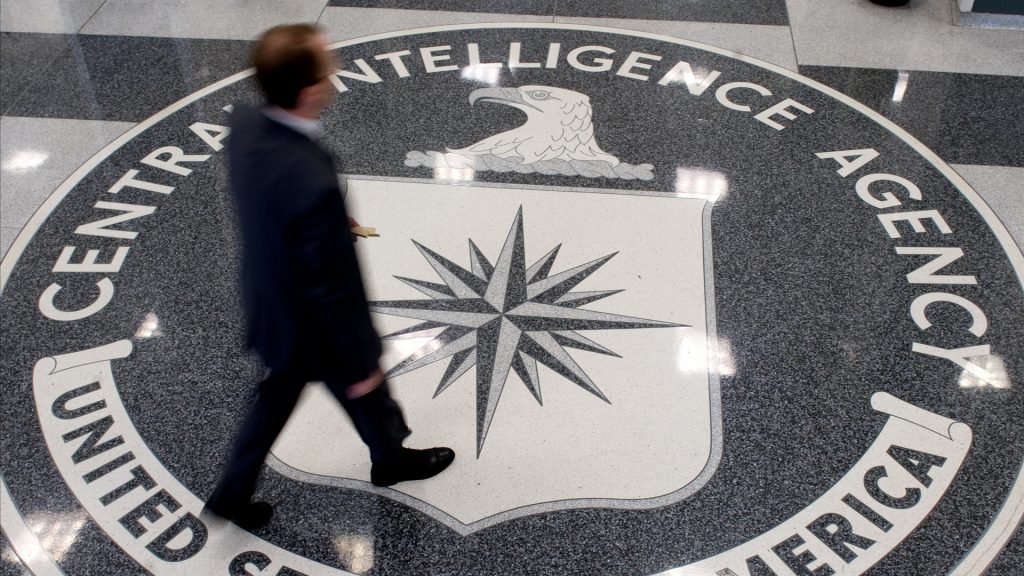
For more than 60 years, people seeking raw, country-by-country economic and demographic data have turned to the CIA’s World Factbook. But this week, the “gold standard” for global statistics went dark.
On Wednesday, without explanation, the agency quietly shuttered the online reference, replacing it with a farewell note that urged readers to “stay curious about the world and find ways to explore it … in person or virtually.”
How the World Factbook became a go-to reference
For years, the Factbook served as a government-produced repository of basic country data, and the CIA described it as a “one-stop” reference about countries and communities around the globe. It began with a classified version, titled The National Basic Intelligence Factbook, in 1962, before an unclassified companion appeared in 1971. A public product, renamed The World Factbook, launched in print in 1981 before going online in 1997.
Educators told CNN the resource became a default classroom tool because it offered raw, comparable statistics without an obvious agenda. Oklahoma City teacher Taylor Hale said he directed students there for assignments on topics such as gross domestic product and found it “way better than a lot of other sources out there.”
Boston Public Library researcher John Devine said the Factbook was “the singular best source” for population statistics, with annual updates that were more consistent than those of other sources. CNN’s editorial research director, Lizzie Jury, said her team had dropped some database subscriptions because “similar information was available through the Factbook,” which she called “the gold standard for country statistics.”
What the CIA and former officials say about ending it
The CIA’s farewell post described The World Factbook as one of the agency’s “oldest and most recognizable intelligence publications” and a “one-stop basic reference about countries and communities around the globe.” The agency said the Factbook evolved from a classified hard-copy product to an electronic version that added new categories and “even new global entities,” and noted that the online version on CIA.gov drew “millions of views each year.”
According to the CIA, officers even donated some of their own travel photos, building a collection of more than 5,000 copyright-free images that anyone could use. The New York Times reported that the site also offered a rotating “fact of the day” on a wide range of topics.
The CIA declined to explain why it ended the Factbook, even as longtime users scrambled. Boston University professor Jay Zagorsky told The Times that his open-Factbook exam suddenly became unworkable when students discovered the site had gone dark, forcing faculty to improvise.
Some former intelligence officials questioned whether the project still fit the agency’s mission. Beth Sanner, a former senior government intelligence official who helped assemble the Factbook in the 1980s, told the Times that the work became bureaucratic labor and said, “the intelligence community shouldn’t be your librarian.”
How the shutdown fits a broader fight over federal information
CNN reported that the CIA’s brief online obituary for the Factbook did not say whether any of the data would remain archived on CIA.gov or why the publication ceased. A programmer, Simon Willison, downloaded available datasets and made them browsable, but CNN said the most recent material he recovered dated to 2020.
The Factbook’s end comes amid other removals of U.S. government information and historical interpretation under directives from President Donald Trump. Federal agencies removed or altered numerous Centers for Disease Control and Prevention resources, including data on HIV and LGBTQ health, replacing them with notices citing compliance with the president’s executive orders. In August 2025, the White House ordered a comprehensive review of Smithsonian Institution exhibits.
According to a White House letter, the review aims to align museum content with Trump’s mandate to “celebrate American exceptionalism” and eliminate narratives deemed “divisive or partisan.” The directive followed an executive order that accused the museums of promoting a “race-centered ideology” and placed Vice President JD Vance in charge of restricting funding for exhibits that, in Trump’s view, “degrade shared American values.”
CNN reported that within 120 days, museums were to begin implementing content corrections, including replacing divisive or ideologically driven language across public-facing materials.
Last month, the National Park Service removed a long-standing slavery exhibit at the President’s House Site in Philadelphia, prompting the city to sue the Interior Department and park officials. Attorneys for the city argued that the removed panels were vital to the site’s educational mission. The complaint alleges the removal was “presumably pursuant” to an executive order signed last March that calls for removing content that “inappropriately disparage Americans past or living.”
Earlier this week, U.S. District Judge Cynthia Rufe inspected the removed President’s House slavery exhibit panels as she considers Philadelphia’s request for a preliminary injunction. Rufe said the court still must determine the extent of any damage and whether the panels can be restored to their original condition.
What happens next
The CIA has not outlined any replacement for The World Factbook or plans for its data, beyond its public note urging people to keep exploring the world.
In the short term, teachers and librarians told CNN they expect more time-consuming research as they gather data piecemeal from other sources and weigh how trustworthy those alternatives are.
The post Goodbye, Factbook: CIA shuts down world reference publication after six decades appeared first on Straight Arrow News.
Ella Rae Greene, Editor In Chief