Global conflicts drive record revenue for world’s largest weapons makers
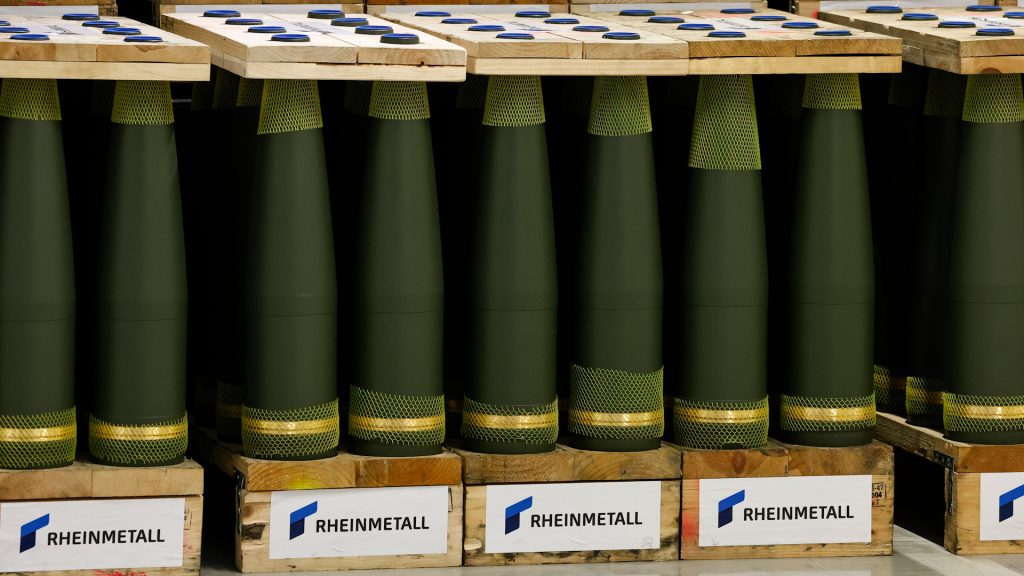
According to a new report from the Stockholm International Peace Research Institute (SIPRI), the world’s 100 largest arms manufacturers saw their revenues hit a record $679 billion in 2024. The Associated Press reports this marks a 5.9% increase from the previous year, driven largely by the conflicts in Gaza and Ukraine. Since 2015, revenues for the top 100 firms have risen 26%, SIPRI data shows.
Researchers said producers “capitalised on high demand,” while warning that production bottlenecks slowed deliveries. U.S. and European defense firms grew, while Asia–Oceania shrank overall, mainly because Chinese arms makers stumbled due to corruption probes and delayed contracts.
Who led the gains in the U.S. and Europe?
Unbiased. Straight Facts.TM
U.S. companies accounted for $334 billion — nearly half — of the Top-100’s $679 billion in global arms revenue, according to SIPRI.
U.S. companies continue to dominate the market, accounting for nearly half of the global total. According to SIPRI data cited by France 24, the 39 American firms in the top 100, including giants like Lockheed Martin and RTX, saw their combined revenue rise 3.8% to $334 billion.
Europe also saw significant growth. Excluding Russian firms, the region’s 26 top manufacturers increased their collective revenue by 13% to $151 billion, driven by the war in Ukraine and fears of Russian aggression. The AP highlighted significant gains for Ukraine’s own state defense industry, which rose 41%, and the Czechoslovak Group, which surged 193% thanks to its role in supplying artillery shells to Kyiv.
What changed in Russia, the Middle East and Asia?
Despite international sanctions, Russian arms makers Rostec and United Shipbuilding Corporation saw revenues jump 23% to $31.2 billion. SIPRI noted that strong domestic demand compensated for a drop in exports, though the sector still faces labor shortages.
In the Middle East, Israeli firms saw a 16% revenue increase. A SIPRI researcher told the AP that international criticism of the war in Gaza appeared to have “little impact” on the demand for Israeli weaponry.
Asia and Oceania declined 1.2% to $130 billion, driven by a drop among Chinese makers after procurement corruption allegations postponed or canceled contracts; however, Japan and South Korea saw gains.
What is constraining output?
Production challenges are still prevalent across the industry. France 24 noted that U.S. programs like the F-35 fighter and Columbia-class submarine are facing delays and budget overruns. Manufacturers are grappling with supply chain shifts, including the need to replace Russian titanium and navigate Chinese export restrictions on critical minerals, which some companies warn will drive up costs.
What other shifts are notable?
For the first time, SpaceX appeared on the top 100 list. Newsweek reports the company’s arms-related revenue more than doubled to $1.8 billion, driven by its increasing work in military satellite launches.
With conflicts in Ukraine and Gaza continuing and East Asian tensions persisting, revenues are expected to remain elevated in 2025, even as supply constraints, sanctions, and investigations shape competition and delivery timelines, Newsweek reported.
The post Global conflicts drive record revenue for world’s largest weapons makers appeared first on Straight Arrow News.
Ella Rae Greene, Editor In Chief