Florida produce feeds the nation, but the winter freeze puts groceries at risk
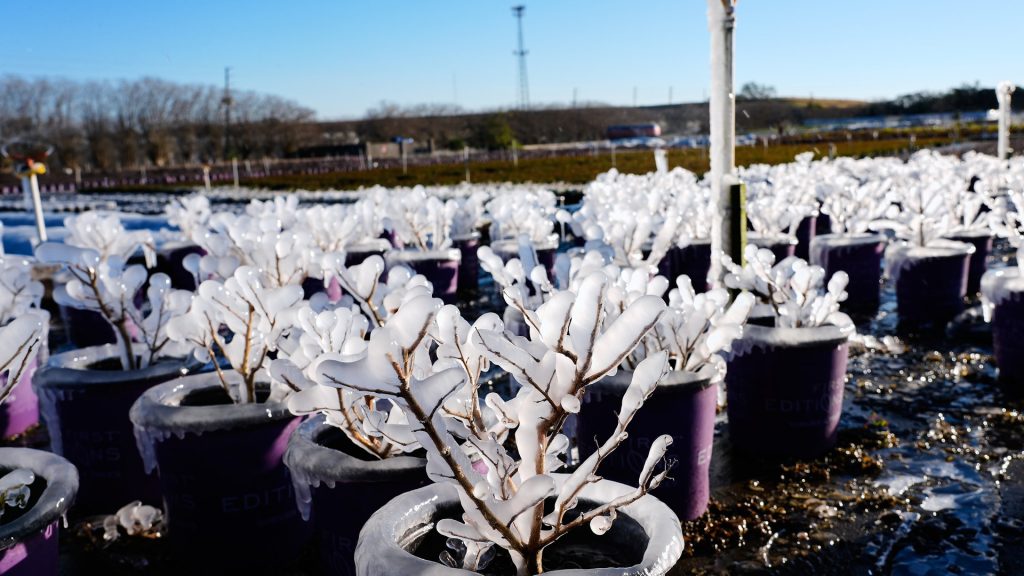
A rare burst of arctic weather put much of Florida in below-freezing conditions as farmers worry about the damages that the frost and wind would bring to the state’s abundant crops. The storm could inflate grocery bills east of the Mississippi River.
Florida, a state known for its tropical climate, is at threat of losing more than $13 billion in damages after air from the arctic flowed further into the South. Normally sunny locales like Orlando and Miami saw temperatures as low as 30 degrees, according to NBC Miami.
Beyond the risks of frozen flip-flops, the cold snap could take a bite out of the nation’s dinner tables. The state’s vegetable and fruit crops are vital to parts of the U.S. that rely on other states’ in-season produce during the winter months.
Unbiased. Straight Facts.TM
In 2022, Florida’s top produce generated $2.47 billion in gross income for farmers, according to the USDA.

The impending losses led Florida Commissioner of Agriculture Wilton Simpson to request a disaster declaration from the U.S. Department of Agriculture Secretary Brooke Rollins on Friday. Along with the frigid forecast, he noted wind gusts are expected to severely damage the state’s crops.
“Florida is a critical supplier of fresh produce to the eastern United States during the winter months,” Simpson wrote. “Timely assistance will be essential to help our farmers recover and continue meeting that demand.”
According to the USDA’s 2022 census of the nation’s agriculture, Florida is the nation’s No. 1 producer in fresh tomatoes, grapefruit, bell peppers, fresh and processing cucumbers, fresh sweet corn, fresh and processing snap beans, watermelons, squash and sugarcane for sugar and seed. Together, it generated $2.47 billion in gross income for farmers.
Farmers told local news stations that the extent of damages won’t be seen immediately. Some crops would need several days to thaw before workers can assess the fields.
Multi-billion dollar weather-related losses
AccuWeather station gave preliminary estimates on what was just the second multibillion-dollar weather disaster in the U.S. within two weeks. The previous storm cost around $105 billion from Jan. 23 to Jan. 25 as several states faced subzero temperatures, ice, freezing rain and snow. The three-day weather event caused major power outages and killed 11 people.
“Some communities have been struggling to clean up and fully rebound from the previous massive winter storm,” AccuWeather Chief Meteorologist Jonathan Porter said in a press release. “Now they’re dealing with more costly disruptions and shutdowns. Dangerous cold that surged deeper into Florida is putting more crops and citrus groves at risk, driving losses even higher.”
The National Weather Service issued a freeze warning for most of the state until 9 a.m. Tuesday. Places like Jacksonville, Tallahassee and Sarasota reported seeing snow over the weekend.
“Frost and freeze conditions could kill crops, other sensitive vegetation and possibly damage unprotected outdoor plumbing,” the NWS said.
Various Florida-grown produce in danger
The frost has potential for damaging crops across Florida, especially those designated to be in-season and sold across the nation. The Florida Department of Agriculture and Consumer Services said that the following produce are grown and harvested in January:
- Avocados.
- Bell peppers.
- Broccoli.
- Cabbage.
- Cauliflower.
- Celery.
- Eggplant.
- Citrus fruits.
- Lettuce.
- Peanut.
- Potato.
- Radish.
- Squash.
- Strawberry.
- Sweet corn.
- Tomato.
Southern Hill Farms in Clermont, Florida, shared a video on Facebook Sunday night of its ice-clad crops as workers assessed the damage. The farm wrote that its irrigation systems were operating Sunday by continuously watering the crops.
“As that water freezes, it releases heat, creating a protective layer of ice that helps keep plants at a survivable temperature,” according to the farm. “It’s a delicate balance that requires constant monitoring, long hours, and a whole lot of experience.”
Cold snap damages produce
According to the University of Florida, the state is a major grower of oranges, grapefruit, strawberries, berries, tree nuts and avocados, having harvested 415,411 acres in 2022 that generated $920 million for the state.
The university also stated that most plant tissue freezes at 28 degrees Fahrenheit, but vegetables like squash, tomato, eggplant and snap bean freeze at 30 degrees.
For citrus, trees can survive temperatures as low as 14 degrees if they are acclimated to the cold. If not, the trees can survive temperatures as low as 24 degrees.
Avocados are a different game, according to Florida-based Everglades Farm, as the trees become dormant around 50 degrees. That means growth slows and the trees require less water and nutrients. Hass varieties can survive temperatures down to 25 degrees, but could become damaged if exposed for too long.
“The most vulnerable parts include young growth, immature avocado fruit, small branches, mature leaves, mature fruit, and larger branches and trunks,” according to Everglades Farm.
The post Florida produce feeds the nation, but the winter freeze puts groceries at risk appeared first on Straight Arrow News.
Ella Rae Greene, Editor In Chief