Find out how much of your electricity bill goes to utility investors: New report
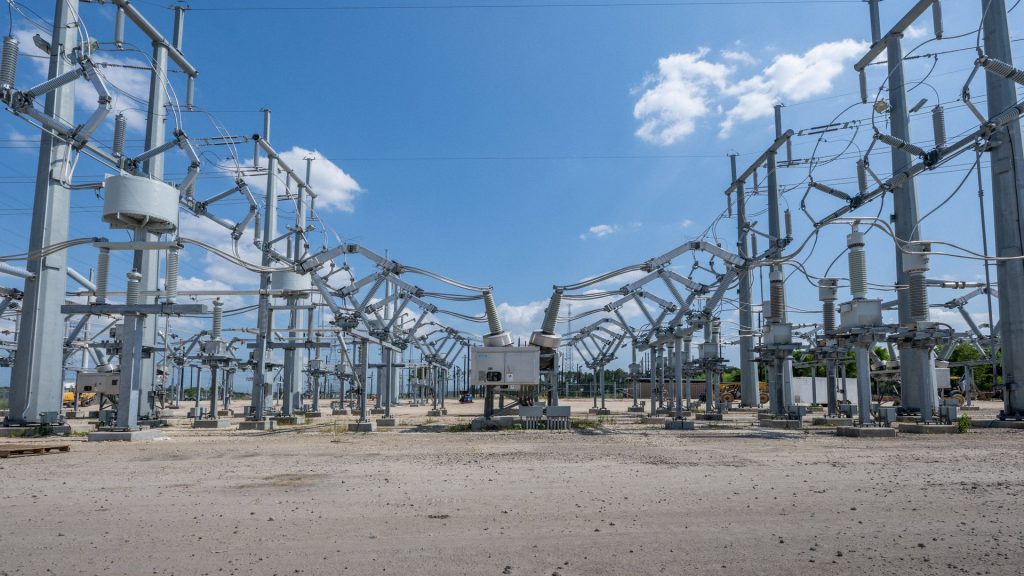
Utility companies are earning an average of 13 cents in profit for every dollar Americans spend on electricity — a higher margin than most businesses. That’s according to a new report released Thursday by the nonprofit watchdog Energy and Policy Institute (EPI), which argues the utility industry needs to be reformed.
In the report “Paying for Their Profits: How Ratepayers Foot the Bill for Soaring Utility Profits,” EPI found that from 2021 to 2024, utility companies made an average of 12.8% profit from all of their revenue. EPI’s report is built on an analysis of public financial data from 110 investor-owned electric utility companies.
The utility industry has disputed EPI’s findings, arguing its methodology is flawed due to ignoring costs that are simply passed through to customers not collected as profits, such as debt payments.
EPI also launched a tool allowing users to enter their monthly bill amount and search for their utility company to see how much of their payment goes to the company’s net profit, according to the analysis.
Early data from 2025 shows profit is on the rise to 15 cents for every dollar paid. That comes as electric bills are also increasing. And utilities across the country are looking to increase their spending to pay for electric grid upgrades as aging infrastructure meets heightened electricity demand.
“Many households are spending a huge part of their income just to pay their bills, keep the lights on,” said Brionté McCorkle, executive director of Georgia Conservation Voters, in a press briefing on Thursday. “That burden continues to get worse.”
How do utilities make a profit?
For most investor-owned utility companies across the country, profits depend on two factors: infrastructure investments and return on equity (ROE).
The ROE is a guaranteed rate of return that the utility receives on its investments into the power grid, such as building new transmission lines or power plants. State regulators must approve companies’ capital expenditure plans and proposed ROE rates. In 2024, the average ROE across the utility industry was 9.7%.
Utility companies can earn a larger share of profit by asking state regulators to approve a higher return on equity. Or, by increasing overall infrastructure investments, utility companies can add to their total profit without seeking an increased ROE.
But even those two factors do not capture how much of each dollar spent on electricity goes to a company’s bottom line, EPI said. That final amount depends on how long it takes utilities to pay off assets, and how many they have on the balance sheet at any given time. Those expenses are passed to ratepayers.
“The profit share that people pay in their bill is typically much higher than the authorized return on equity,” said Daniel Tait, research and communications director at EPI, during a press briefing.
Are utility profit margins excessive?
Net profit margins in other sectors vary widely but average out to 9.7%, according to data compiled by New York University’s Stern School of Business. Banking, financial services, software and high tech manufacturing industries generally have the highest profits — far upwards of 20% in most cases.
Most industries operate on single-digit profit margins, but not utilities. Tait added in an email to Straight Arrow News, “many utilities are securing outsized returns and customers, in most places, do not have a choice about their supplier like they do in other industries.”
The Edison Electric Institute, a trade group representing investor-owned utilities, criticized the EPI report’s methodology.
“There are standard calculations for evaluating regulated utility profits that appropriately recognize that most of a customer’s bill reflects pass-through costs of service, but EPI instead took a simple but analytically weak and insufficient approach to intentionally mislead readers into believing that a high percentage of customer bills goes toward profits,” an Edison Electric Institute spokesperson told SAN.
Ella Rae Greene, Editor In Chief