Federal judge blocks DOJ access to evidence in thrown out Comey case
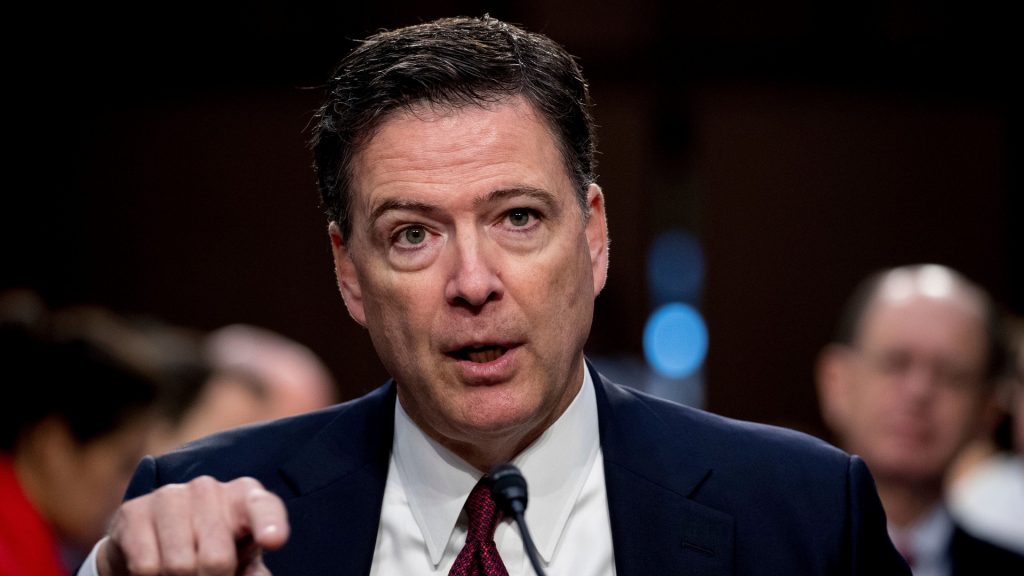
A federal judge dealt a blow to the U.S. Justice Department’s attempt to re-indict former FBI Director James Comey Saturday night. In a temporary restraining order, U.S. District Judge Colleen Kollar-Kotelly prohibited DOJ prosecutors from accessing evidence, including emails and computer files, from Comey’s former lawyer, it seized during probes in 2019 and 2020.
Kollar-Kotelly wrote that Daniel Richman, a law professor at Columbia University, is “likely to succeed on the merits of his claim that the Government has violated his Fourth Amendment right against unreasonable searches and seizures by retaining a complete copy of all files on his personal computer.”
“Petitioner Richman has also shown that, absent an injunction, he will be irreparably harmed by the ongoing violation of his Fourth Amendment right against unreasonable seizures arising from the Government’s continuing retention of the image of his computer and related materials,” Kollar-Kotelly said. “Finally, the Court finds that the balance of the equities and the public interest weigh in Petitioner Richman’s favor and support a limited temporary restraining order that is narrowly tailored to preserving the status quo while this Court considers his Motion for Return of Property on an expedited basis.”
This order is to remain in effect until Friday, Dec. 12. The U.S. government has to certify that it will comply with the order by noon Monday.
Cases thrown out against Comey
Comey was indicted in September on one count of making false statements to Congress and one count of obstruction of justice. These charges were tied to Senate testimony he gave in 2020 about FBI officials leaking information to news outlets.
A federal judge threw out the criminal case against Comey, ruling that Lindsey Halligan was unlawfully appointed by President Donald Trump as interim U.S. attorney for the Eastern District of Virginia. Halligan was tapped to be U.S. attorney after Erik S. Siebert, who had concluded there wasn’t enough evidence to charge Comey or New York Attorney Letitia James in a separate case. Trump forced him out, replacing him with Halligan, his personal lawyer, despite the fact that she did not have prior prosecutorial experience. She secured indictments against Comey and James within days.
U.S. District Judge Cameron McGowan Currie dismissed both indictments in November, saying that the law does not allow the attorney general to stack back-to-back interim U.S. attorneys in that way.
White House Press Secretary Karoline Leavitt, after McGowan Currie made his decision, said at the time the Justice Department is preparing to appeal, saying it has “seen partisan judges take unprecedented steps to try to intervene in accountability before, but we’re not going to give up.”
Comey, meanwhile, responded to the dismissal of his case in a video.
“I’m grateful that the court ended the case against me, which was a prosecution based on malevolence and incompetence and a reflection of what the Department of Justice has become under Donald Trump which is heartbreaking,” he said.
The post Federal judge blocks DOJ access to evidence in thrown out Comey case appeared first on Straight Arrow News.
Ella Rae Greene, Editor In Chief