Experts: ‘Biggest’ doesn’t always mean ‘worst’ in historic Potomac sewage spill
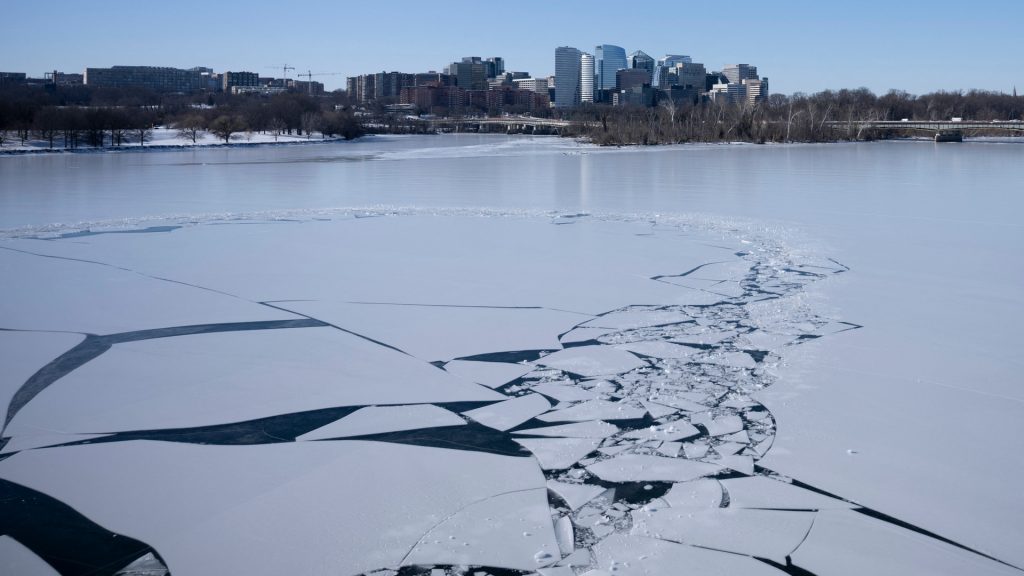
Hundreds of millions of gallons of wastewater have spilled into the Potomac River in the last month. It’s being called one of the biggest sewage spills in U.S. history, but that number can be deceiving.
Sewage spill
The local water utility DC Water estimates 243 million gallons of wastewater have flowed into the river. The Potomac Riverkeeper Network puts that number north of 300 million gallons.
“This narrative that the biggest is the worst is not entirely accurate — just because how much is released over a certain amount of time does not necessarily mean that that is the worst,” Chris Reddy, a scientist at the Woods Hole Oceanographic Institute, told Straight Arrow News.
Reddy said that part of the impact depends on how quickly that sewage was being released.
“If you had 300 released over 30 days as a slow, constant dribble, that’s significantly different than releasing all 300 all of it in one hour,” he said.
DC Water said part of the sewer system called the Potomac Interceptor collapsed, leading to this spill.
“It’s coincident with this extreme cold snap that we’ve been experiencing out here in the mid-Atlantic,” Weston Slaughter, a Ph.D. student at the University of Maryland who’s been testing water samples from the river, told SAN.
University of Maryland researchers said E. coli levels topped Environmental Protection Agency standards by 10,000 times, but a week later, that number dropped to 2,500.
“Their lab is testing the water for E. coli and other pathogens like streptococcus strains, MRSA,” Slaughter said.
The CEO of DC Water posted an open letter about the spill.
“Our immediate priorities have been containment, environmental monitoring, and stabilization — working closely with federal, state and local partners to assess water quality, ecological impacts and necessary remediation,” David Gaddis wrote.
Impact
The spill has had several impacts on the area, with the DC Department of Energy and Environment warning people to avoid contact with the river, including avoiding boating, fishing and more.
“This is happening in the middle of this densely populated area, also in the middle of this ecosystem that lots of people live alongside,” Slaughter said.
Slaughter said a big part of the issue is what’s actually in that wastewater.
“It could have high concentrations of heavy metals or certain types of man-made chemicals or essentially anything that tends to get concentrated in human sewage,” he said.
Parts of the Potomac also serve as an oyster sanctuary.
“It could impact oysters or anything in the system,” Slaughter said.
Some experts are also worried about the long-term impact of such a large spill.
Ivan Sanchez from District Angling told Axios that the shad that spawn in the Potomac, “don’t like dirty water, period.” He’s concerned they may never return.
“There’s no happy endings when we have an unfortunate event,” Reddy said. “But we want to make sure we’re in the mode of now reducing damages, right? How can we mitigate this? How can we avoid any future ones? How do we make sure everybody feels healthy and then do a very good job of communicating how the recovery is going?”
The post Experts: ‘Biggest’ doesn’t always mean ‘worst’ in historic Potomac sewage spill appeared first on Straight Arrow News.
Ella Rae Greene, Editor In Chief