Executive order targets college sports as experts warn of ‘inevitable’ changes
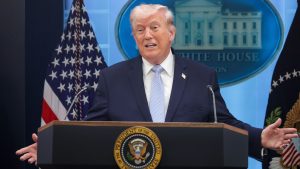
A new executive order from Donald Trump aims to bring stability to the rapidly shifting landscape of college athletics, as legal battles, athlete compensation and transfer rules continue to reshape the multibillion-dollar industry.
The order calls for clearer national standards on athlete compensation, eligibility and transfers, while encouraging revenue-sharing models and stronger protections for more than 500,000 student-athletes nationwide.
Administration officials and college sports leaders described the move as a necessary step to address what many see as growing “chaos” tied to name, image and likeness (NIL) deals and the transfer portal.
“This action establishes critical guardrails to stabilize college athletics and protect opportunities across all sports,” the White House said in a statement.
Leaders across college sports, including Charlie Baker of the National Collegiate Athletic Association, welcomed the order but emphasized that congressional action will be needed to create lasting rules.
“The executive order reinforces many of our mandatory protections,” Baker said, adding that “a permanent, bipartisan federal legislative solution” remains necessary.
The push comes as Congress weighs multiple proposals, including the SCORE Act, that would set nationwide standards for NIL compensation and athlete movement.
A system under strain
The executive action follows years of upheaval in college sports, driven by court rulings, athlete advocacy and the rapid expansion of NIL opportunities allowing athletes to profit from endorsements.
David Ridpath, a professor of sports administration at Ohio University, said the current turmoil reflects long-standing contradictions in the system.
“For over 100 years, college athletics has claimed to be about amateurism and education,” Ridpath told Straight Arrow News. “But in reality, it operates much more like a professional sports enterprise.”
He argued that the system historically limited athlete rights while generating significant revenue, a structure he described as “academic and economic exploitation.”
“That model was always going to collapse,” Ridpath said, pointing to increased athlete awareness and communication, particularly in the social media era.
Debate over the future
The executive order has drawn support from prominent figures, including former football coach Nick Saban, who called it “a critical step toward restoring stability.” Conference commissioners and university leaders echoed that sentiment, urging Congress to act quickly.
Still, significant debate remains over how far reforms should go.
Ridpath said he believes the system is ultimately moving toward treating at least some college athletes as employees, allowing them to collectively bargain over rules governing compensation, transfers and eligibility.
“You can’t call them students while treating them like employees without giving them employee rights,” he said.
Others worry that expanding compensation could widen disparities between major programs and smaller schools, or threaten non-revenue sports. But Ridpath argued those concerns are often overstated.
“Schools have already prioritized football and men’s basketball for decades,” he said. “The issue isn’t lack of money — it’s how it’s managed.”
Concerns over competitive balance
Questions about competitive balance have intensified with the rise of NIL deals and the transfer portal, which allows athletes to move more freely between programs.
Critics, including some coaches, say the changes undermine team stability. But Ridpath said data suggests otherwise, noting strong television ratings and fan engagement.
“The product hasn’t suffered,” he said. “Stadiums are still full, and people are still watching.”
He added that increased player movement may even improve parity by giving athletes more opportunities outside traditional powerhouse programs.
What comes next
While the executive order outlines a framework, its immediate legal impact is limited. Experts say lasting change will likely depend on a combination of congressional legislation, court rulings and potential collective bargaining agreements.
Ridpath expects the process to take years.
“This is going to be the courts, Congress and possibly labor negotiations all working at once,” he said. “There’s no quick fix.”
In the meantime, college sports continue largely unchanged on the surface.
“Whatever happens,” Ridpath said, “the games are still going to be played — and people are still going to watch.”
Ella Rae Greene, Editor In Chief