Dueling lawsuits over abortion ads pit a state’s authority against free speech
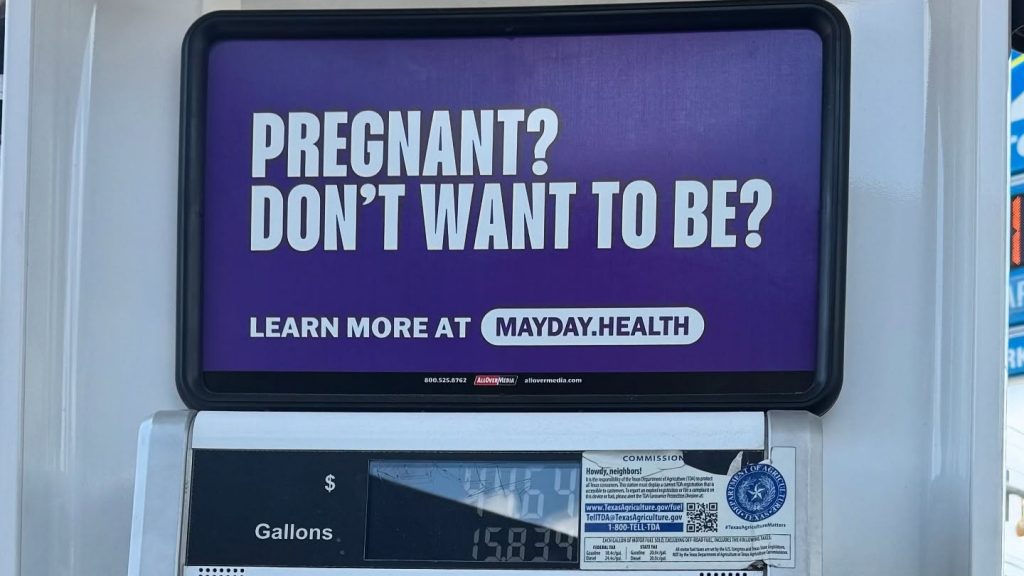
Along the stretches of highway in South Dakota’s Great Plains, unusual signs greeted customers at gas stations. “Pregnant? Don’t want to be?” read placards attached to gas pumps. “Learn more at MayDay.health.”
Mayday Health, a New York-based nonprofit, promotes information regarding health care, such as how to access abortion pills. But South Dakota is one of 13 states with near-total bans on abortion, as well as on telemedicine appointments that allow women to acquire abortion pills by mail. While Mayday itself doesn’t sell abortion pills, it offers information about companies that mail the pills across the 50 states.
Now Mayday Health’s advertising campaign has set off an unusual sequence of legal events that pits a state’s right to regulate a medical procedure against an organization’s First Amendment right to free speech. South Dakota has sued Mayday, and Mayday has sued South Dakota.
But the stakes are higher than whether Mayday can continue to post notices on gas pumps in Middle America. The dispute could determine whether states can block controversial speech within their own borders.
Cease and desist
On Dec. 10, South Dakota Attorney General Marty Jackley sent Mayday a cease-and-desist letter accusing the organization of deceptive trade practices. The letter said Mayday could be fined $5,000 for each violation or could face criminal charges.
“Abortions are prohibited in South Dakota… except for specific, extenuating circumstances,” Jackley wrote. “Your advertisement directs South Dakota consumers to resources that insinuate abortion-inducing pills are legal in South Dakota, while also urging women not to seek medical care after taking abortion pills and to keep their abortion a secret.”
Mayday refused, saying Jackley’s demand violated its First Amendment rights.
So Jackley sued Mayday, alleging that the ads are dangerous and misleading. The lawsuit says Mayday is encouraging medication abortions in a state where they are categorically illegal.
Jackley’s communications director, Tony Mangan, declined to discuss the case with Straight Arrow News.
“The only new thing we can add at this point is the press release we sent out today regarding the hearing that was scheduled Friday in South Dakota,” he said.
A state court judge postponed the hearing at Mayday’s request, despite an objection from the attorney general. But the press release that Mangan referred to said “the deceptive advertisements remain harmful to women and need to be immediately taken down.”
‘Information is not illegal’
Before Roe v. Wade, the landmark Supreme Court decision that legalized abortion nationwide, some states implemented laws restricting ads related to abortion. These laws were eventually struck down as unconstitutional. And while abortion itself has now been outlawed or restricted in many states after the Supreme Court’s 2022 Dobbs decision, Mayday contends the law does not prevent giving women information about the procedure.
“Information is not illegal,” Mayday’s founder and executive director, Liv Raisner, told Straight Arrow News. “The First Amendment protects our right to publish truthful health information, and it protects the public’s right to access it.”
The organization does not provide the pills, but it does list organizations on its website that do.
“We believe everyone deserves access to accurate medical information no matter where they live,” Raisner said. “We will not be silenced by politically motivated threats designed to score points with voters.”
Mayday sued South Dakota in federal court, citing the Supreme Court’s 1975 ruling in Bigelow v. Virginia, which held that speech about abortion services is protected by the First Amendment. The decision overturned the conviction of a man who was prosecuted for publishing an abortion ad.
Mayday’s complaint, filed in the U.S. District of New York on Jan. 6, accuses Jackley of punishing the nonprofit “for publishing truthful information about reproductive healthcare” with his lawsuit.
“The First Amendment prohibits the Attorney General from retaliating against Mayday and restraining its speech because of hostility toward Mayday, the information Mayday publishes, and the beliefs that impel Mayday to publish it,” Mayday’s complaint says.
Mayday’s suit may run afoul of the commercial speech doctrine, which gives states more power to police speech in advertisements. If the statements in Mayday’s ads are deemed misleading, South Dakota might be allowed to ban them.
“South Dakota moms and babies deserve to be protected from deceptive advertising,” Republican Gov. Larry Rhoden said in a statement, supporting the attorney general’s case.
Broad implications
The parallel cases raise questions about how far states can go to police speech, particularly about activities or services barred by law in some places but not others. Bans could relate to abortion, marijuana or other topics that are not universally regulated.
“In some states, authorities hostile to both abortion and free speech cite the overturning of Roe as justification for nouveau censorship schemes,” Elizabeth Nolan Brown wrote for the libertarian magazine Reason. “If abortion is illegal in a certain locale, they argue, then promoting it there — even if the acts in question would take place out of state — should be illegal too.”
Mayday took its fight against Jackley to Instagram, where it has more than 50,000 followers.
“He wants us to shut down our New York-based website and ban us from spreading truthful information to people across South Dakota and across the country, not because we broke any laws, but because he disagrees with what people might do should they have access to this information,” Raisner said in a video. “This is government censorship, that’s what this is, plain and simple, and we are not going to be silenced by politically motivated attacks.”
The post Dueling lawsuits over abortion ads pit a state’s authority against free speech appeared first on Straight Arrow News.
Ella Rae Greene, Editor In Chief