Drought to deluge: California’s reservoirs start 2026 near capacity but risks remain
California rang in the new year with heavy rains that have the state’s reservoirs at historic highs. The downpours were strong enough that the entire state is now officially drought-free for the first time in decades.
Reservoir levels
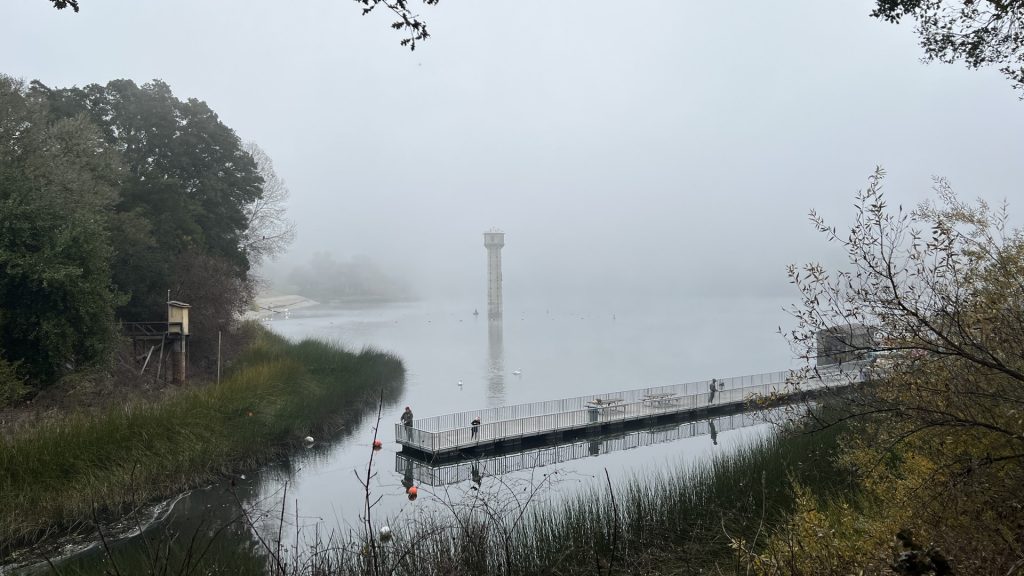
Data from the Interactive California Reservoir Levels dashboard shows nearly every reservoir in the state is above the historical average capacity.
“They’ve done what they’re supposed to do,” John Abatzoglou, professor of climatology at the University of California, Merced, told Straight Arrow News.
Those reservoirs are extremely important to the state, especially to California’s agriculture industry which exports tens of billions of dollars of products every year.
“When you drive around California and you see anything green, any green fields, that’s almost all irrigated water and it comes either from reservoirs or it comes from groundwater, which is just a reservoir underground,” Jay Lund, emeritus professor of civil and environmental engineering at the University of California, Davis, told SAN.
Lund said the reservoirs are functioning well and have done their job collecting water from the recent storms.
“In order for us to have agriculture and have the kind of water uses we like to use as humans in California, we have to store water up in the wet periods and make it available during the dry periods,” Lund said.
California’s water year officially starts each October, which coincides with the start of the wet season.
“California has a Mediterranean climate, which means that most of the precipitation is going to fall between November and April, and in the summer, if it rains, it makes the news because it’s so rare,” Abatzoglou said. “But that’s when, of course, agricultural water use is very high.”
Both experts said part of the reason the reservoir levels are so high now is because they started this water year in good shape.
“It’s helped that the last few years have been about average, and so the reservoirs began this water year higher than they’ve been for a while,” Lund said.
Abatzoglou agreed.
“The last few years, the state has been pretty well-off precipitation wise,” he said. “So, the reservoir, if we went back and looked at them last year at this time, they weren’t too bad. Two years ago, they weren’t too bad.”
Drought-free
These high reservoir levels come as the entire state is drought-free for the first time in 25 years, according to the U.S. Drought Monitor. December 2000 was the last time no part of the state was considered “abnormally dry.”
“I think we should be happy and encouraged, but not complacent,” Lund said. “Because it’s just lucky that we’re not in drought now.”
Lund added that the state is still dealing with the effects of the previous drought.
“We still have all the groundwater overdraft from the last droughts, which we haven’t regained, and it might take a long time to regain,” he said. “And we have depleted native species from those droughts. So, in some ways, the drought is still with us even though the drought is officially over.”
Concerns remain
While those concerns remain from the previous drought, the high reservoir levels can also be too much of a good thing.
“The other purpose of reservoirs and dams is to protect downstream areas from flooding,” Abatzoglou said.
If reservoir levels get too high, there’s nowhere to hold extra water and protect parts of the state from potentially disastrous flooding. Recent flooding killed four people in San Bernardino County.
“It makes it harder if we have a flood,” Lund said. “So there have been some drought years when a flood came along, and we were really glad that we had a drought just before then, because we had more places to put that water.”
Floods can be caused from different things depending on the part of the state.
“Some places, a single big event can cause a flood,” Lund said. “Other places, it’ll be a series of atmospheric rivers that come along.”
That’s why water management experts continue to watch reservoir levels and the forecast to keep communities safe.
“Water managers have to worry about both floods and droughts,” Lund said. “And in a year like this, we’re worrying a little bit less about drought right now, but next year could be very different.”
In the short term, they’ll be keeping an eye on the weather.
“There’s some management going on right now by a few reservoirs in the state, where they’re trying to use the forecast for the next week or two, during heavy precipitation events, to release water ahead of time, rather than rapid releases that could lead to inundating communities downstream,” Abatzoglou said.
Wildfire impact
Living in California comes with great weather and beautiful beaches, but plenty of concerns like wildfires and earthquakes. Water levels don’t have much impact on earthquake safety, but does having more water in storage mean better protection against potential wildfires like we saw a year ago?
“One thing that I think was demonstrated really well by the Los Angeles fires last year is that our reservoir system is not a limit on fire control,” Lund said. “You have lots of water in the reservoir or even a moderate amount of water in the reservoir, and it doesn’t affect fire management at all.”
Firefighters can pull water from the reservoirs, but the logistics of that can be, and often are, complicated.
“The problem for firefighting with reservoirs is getting water from the reservoirs to the very localized place where you have fire,” Lund said. “So, during the Los Angeles fires, I went back and looked at the numbers and found that, for all the water and storage in the reservoirs in Southern California, in that region, you could cover the fire area to a depth of 30 feet. That ought to be enough, that makes sense. But you couldn’t get it from the big regional reservoirs to the fire location.”
However, with the state being drought-free and having just gone through a fresh round of storms, fire season could be delayed a bit as we move forward into 2026.
“If things continue to be wet, and our snowpack actually stays pretty high into, say, April, that’ll actually probably delay the start of the fire season for a while, just because the vegetation is wet and not flammable,” Abatzoglou said.
On the other side of that, wet weather brings more foliage.
“It’s a little bit of a catch-22 when it comes to a wet year, right?” Abatzoglou said. “Because if it stays wet, flammability will be a little bit less at the start of the fire season. But as it stays wet, we have increased grass growth that’s ultimately fuel for either next year’s fire season or the subsequent year’s fire season.”
The post Drought to deluge: California’s reservoirs start 2026 near capacity but risks remain appeared first on Straight Arrow News.
Ella Rae Greene, Editor In Chief