Disaster-induced gang violence looms for US-based Haitians told to return next month
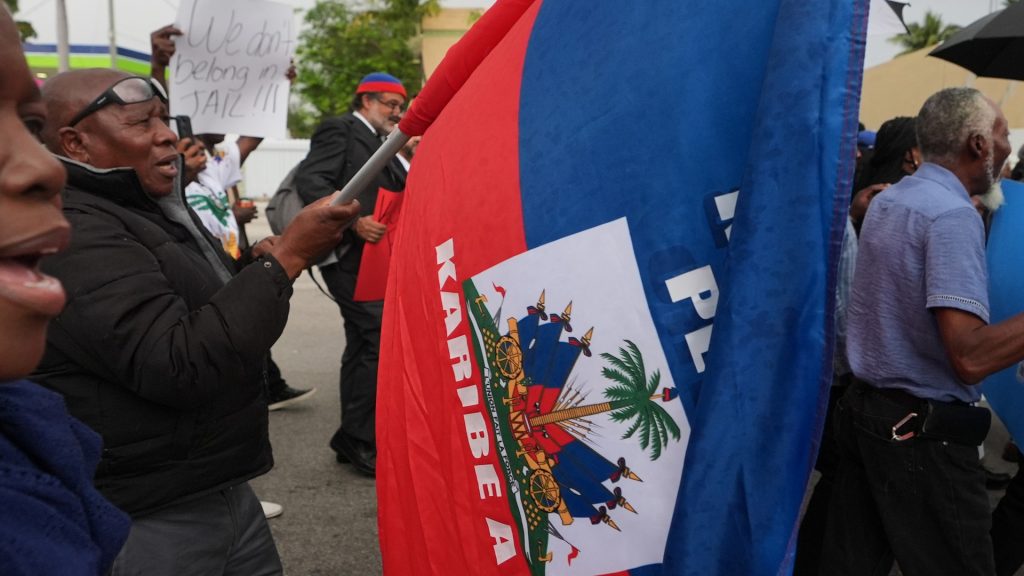
Haiti’s devastating 7.0 magnitude earthquake in 2010 killed 222,570 people, injured 300,000 more and left 1.3 million displaced. The United States offered Haitians special immigration protections, and now sixteen years later, they are set to end.
Secretary of Homeland Security Kristi Noem directed the agency twice in 2025 to end Haiti’s temporary protected status, a designation that arose out of the 1990 Immigration Act. An unnamed DHS spokesperson said in a release that Haiti’s environmental condition has improved, warranting citizens a safe return to the country.
“This decision restores integrity in our immigration system and ensures that Temporary Protective Status is actually temporary,” the spokesperson said.
But for Natasha Atkinson, a U.S.-born Haitian American, she said that’s not true.
“Major airlines won’t even fly into our capital city of Port-au-Prince,” she told Straight Arrow News. “If your capital isn’t secure and safe, there are significant concerns for folks to go back.”
Atkinson has spent her life advocating for Haitians, inspired by a north Miami protest her grandmother took she and her siblings to so they could call out former President George H. W. Bush’s rhetoric that blamed Haitians for the spread of HIV/AIDS. She remembered having rocks thrown at her family during school and parents spreading falsehoods about the spread of HIV.
She saw it proliferate again in the past presidential campaign with Vice President JD Vance’s remarks about Haitians eating cats and dogs. Atkinson now works for Michigan state Rep. Emily Dievendorf, a Democrat, and furthers the advocacy for Haitians her grandmother instilled in her.
They lose protections on Feb. 3, according to U.S. Citizenship and Immigration Services, and must either leave or seek out other ways to stay in the country legally. Atkinson said that meant some people who came to the U.S. as kids in 2010 would be leaving as college-educated adults this year.
“These folks have been here since 2010. They have cemented themselves in our communities,” she said. “We’re not just talking about some person working at QD [Quality Dairy]. Folks from the [Michigan State] university, doctors and lawyers have TPS status.”
Program gives immigrations safe refuge from turmoil
The Secretary of Homeland Security can order designations to last six, 12 or 18 months at a time, according to the American Immigration Council. The secretary must decide at least 60 days before status expiration on extending or terminating the designation based on a review of the country’s conditions. If they don’t act, designation gets automatically extended for six months.
Unbiased. Straight Facts.TM
Temporary Protected Status started in 1990 to provide immigrants special security in the U.S. as their home countries faced extreme, violent or environmental catastrophes.

The law doesn’t explicitly define temporary, which has allowed for countries like Haiti and Somalia to get extensions. Despite it, Noem said the program isn’t meant to be permanent and is terminating the status for Somalians.
“Country conditions in Somalia have improved to the point that it no longer meets the law’s requirement for Temporary Protected Status,” she wrote. “Allowing Somali nationals to remain temporarily in the United States is contrary to our national interests.”
The U.S. Department of State has issued a level four do not travel advisory for Somalia since May 14 due to threats of violence, civil unrest, terrorism and piracy. The United Nations also said in May that the al-Shabaab and Daesh armed groups are still inflicting harm on the country, allegedly killing, trafficking and committing sexual crimes against Somalians.
According to the Library of Congress, there were 17 countries and 1.3 million people covered under TPS as of March 31, 2025. The law mandates a report every March 1.
Despite the Trump administration urging that the designation should only be temporary, seven countries have statuses extended through 2026. Those countries are:
- Yemen, whose status ends on March 3
- Somalia, whose status ends on March 17
- Lebanon, whose status ends on May 27
- El Salvador, whose status ends on Sept. 9
- Ukraine, whose status ends on Oct. 19
- Sudan, whose status ends on Oct. 19
Leaving, Atkinson said, meant immigrants have to rebuild their lives again. Under the status, she said some Haitians arrived to the U.S and joined the medical field, became lawyers, parents or executives. Now, options are limited on where to go, as she said Haitian advocacy groups like Haitian Bridge Alliance are trying to educate federal officials and politicians that it’s not safe to return.
The nonprofit U.S. Committee for Refugees and Immigrants said in a Dec. 12 release that there’s still a severe threat of abduction, sexual violence and killings in Haiti by armed groups. Those in Haiti also face famine, with about 5.7 million Haitians facing food insecurity.
“The situation is so dire that the UN Security Council voted in September 2025 to send a new ‘Gang Suppression Force (GSF)’ into Haiti to ‘neutralize, isolate, and deter gangs that continue to threaten the civilian population, abuse human rights and undermine Haitian institutions,’“ according to the nonprofit.
Temporary in name, not practice
The Trump administration has emphasized that it’s not meant to be a permanent solution, but Atkinson said reality isn’t always like that. Haiti, for instance, has faced back-to-back natural disasters and ensuing political unrest since 2010 that’s afforded reissuance of TPS.
The status was first incorporated for those affected by the 2010 earthquake. A short time later, the country faced the brunt of Hurricane Matthew in 2016, a Category 4 storm. The hurricane killed nearly 500 people.
Political instability and natural disasters started operating as a tango for the country, creating conditions that led to the assassination of President Jovenel Moïse and the fall of the nation’s government, Atkinson said.
“All of that, taken into consideration, and examined under the lens of why the United States even has TPS status, it meets the criteria,” she said.
The larger effect, Atkinson said, isn’t going to be felt on the federal government, but on Haitians who arrived in the U.S. to escape catastrophe at home through the past 16 years and have rebuilt their lives in the states.
“I think the question really is going to be in the next few years, is what the Haitian diaspora in the United States is going to be able to do to build stability in our country so that we are not dependent on these systems,” Atkinson said.
The post Disaster-induced gang violence looms for US-based Haitians told to return next month appeared first on Straight Arrow News.
Ella Rae Greene, Editor In Chief