DHS shutdown: What agencies are affected during funding lapse?
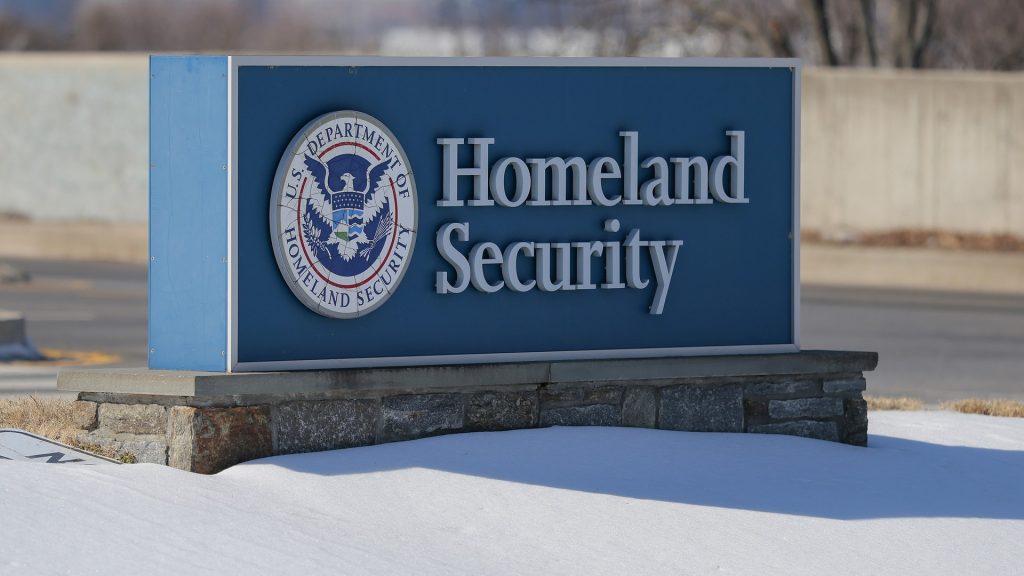
Funding for the Department of Homeland Security lapsed at 12:01 a.m. on Saturday. While DHS said in a statement to The New York Times that “essential missions and functions will continue,” many employees will be working without pay.
Immigration and Customs Enforcement (ICE) and Customs and Border Protection (CBP) have money through President Donald Trump’s “One Big Beautiful Bill Act.” These two agencies are at the center of a dispute over immigration policy and enforcement that lead to the shutdown.
Democrats say they want reforms to ICE and other enforcement agencies, especially after the killings of multiple people by federal agents since the Trump administration’s immigration crackdown began.
Agencies that aren’t ICE and CBP, though, could see effects stemming from the DHS shutdown.
DHS shutdown impacts
Gregg Phillips, associate administrator of the Federal Emergency Management Agency, told lawmakers that they are still recovering from the last government shutdown.
At a hearing in front of the House Appropriations Committee this week, Phillips said FEMA has enough funds to continue emergency response activities “for the foreseeable future,” but if a catastrophic disaster occurs, the Disaster Relief Fund will be “seriously strained.”
“A government shutdown would severely disrupt FEMA’s ability to reimburse states for disaster
relief costs and to support recovery from disasters,” he said. “Delays in deploying financial assistance to
affected communities could hinder timely disaster recovery efforts. States and communities will
be forced to wait for long-term response work to continue.”
FEMA employees being furloughed because of a lapse in appropriations would also hinder the agency’s ability to coordinate with state and local partners and plan for severe weather events like flooding, wildfires, winter storms and hurricanes, Phillips said.
About 61,000 Transportation Security Administration employees working at over 430 commercial airports, will not get paid during the shutdown, as they are considered essential, acting TSA Administrator Ha Nguyen McNeill said. Many of them, she added, work paycheck to paycheck as it is.
“The ability to pay for rent, bills, groceries, child care, and gas just to get to work becomes very challenging, leading to increased unscheduled absences (call outs) as a shutdown progresses,” she said, adding that this has a real impact on recruitment, retention and morale among personnel as well.
At the Coast Guard, they are forced to suspend all missions besides ones for national security or the protection of life and property. Thomas Allan, acting vice commandant for the Coast Guard, said law enforcement, national defense and emergency response missions continue, though the funding lapse will cause challenges for operational readiness and long-term capabilities. Certain training stops, Allan said, and scheduled maintenance of cutters, aircraft and boats will be deferred.
Pay for about 56,000 active duty, reserve and civilian personnel at the Coast Guard will be paused as the shutdown continues.
Madhu Gottumukkala, acting director of the Cybersecurity and Infrastructure Security Agency, said CISA is designating 888 of its 2,341 employees as “excepted,” meaning they will continue working in the shutdown.
“A shutdown forces many of our frontline security experts and threat hunters to work without pay —
even as nation-states and criminal organizations intensify efforts to exploit critical systems that
Americans rely on — placing an unprecedented strain on our national defenses,” Gottumukkala warned.
This delays deploying cybersecurity services and capabilities to federal agencies, so there will be significant gaps in security programs, Gottumukkala said. CISA cannot plan, develop cybersecurity advice and guidance or develop new technical capabilities during the shutdown. The limited activities CISA can continue include responding to imminent threats, sharing timely vulnerability and incident information, maintaining its 24/7 operations center, and operating cybersecurity shared services.
While a “casual observer” may see no difference in the Secret Service during a shutdown, the gaps in funding will have a “profound” impact on the agency’s future, Matthew Quinn, deputy director of the Secret Service, said. The “ripple effects” of the shutdown include delayed contracts, diminished hiring and halted
new programs.
“The work left undone during a shutdown does not fall neatly within our core functions. Instead, it
manifests itself in areas where the results are not readily recognizable — sometimes, for years,” Quinn said. “At the top of the list is needed reform.”
Lawmakers not likely to return early
Lawmakers left Washington on Thursday for an 11-day recess after failing to pass a short-term funding extension. If a deal over DHS funding is reached, Republican congressional leaders could call them back.
NPR reported that Senate Majority Leader John Thune, R-S.D., told reporters this is unlikely.
“I just think at the moment we’re not close,” he said.
During a press conference Thursday, Senate Minority Leader Chuck Schumer, D-N.Y., said if Republicans want DHS funded, “they need to get serious.”
“They need to sit down, they need to negotiate in good faith, produce legislation that actually reins in ICE and stops the violence,” he said.
The post DHS shutdown: What agencies are affected during funding lapse? appeared first on Straight Arrow News.
Ella Rae Greene, Editor In Chief